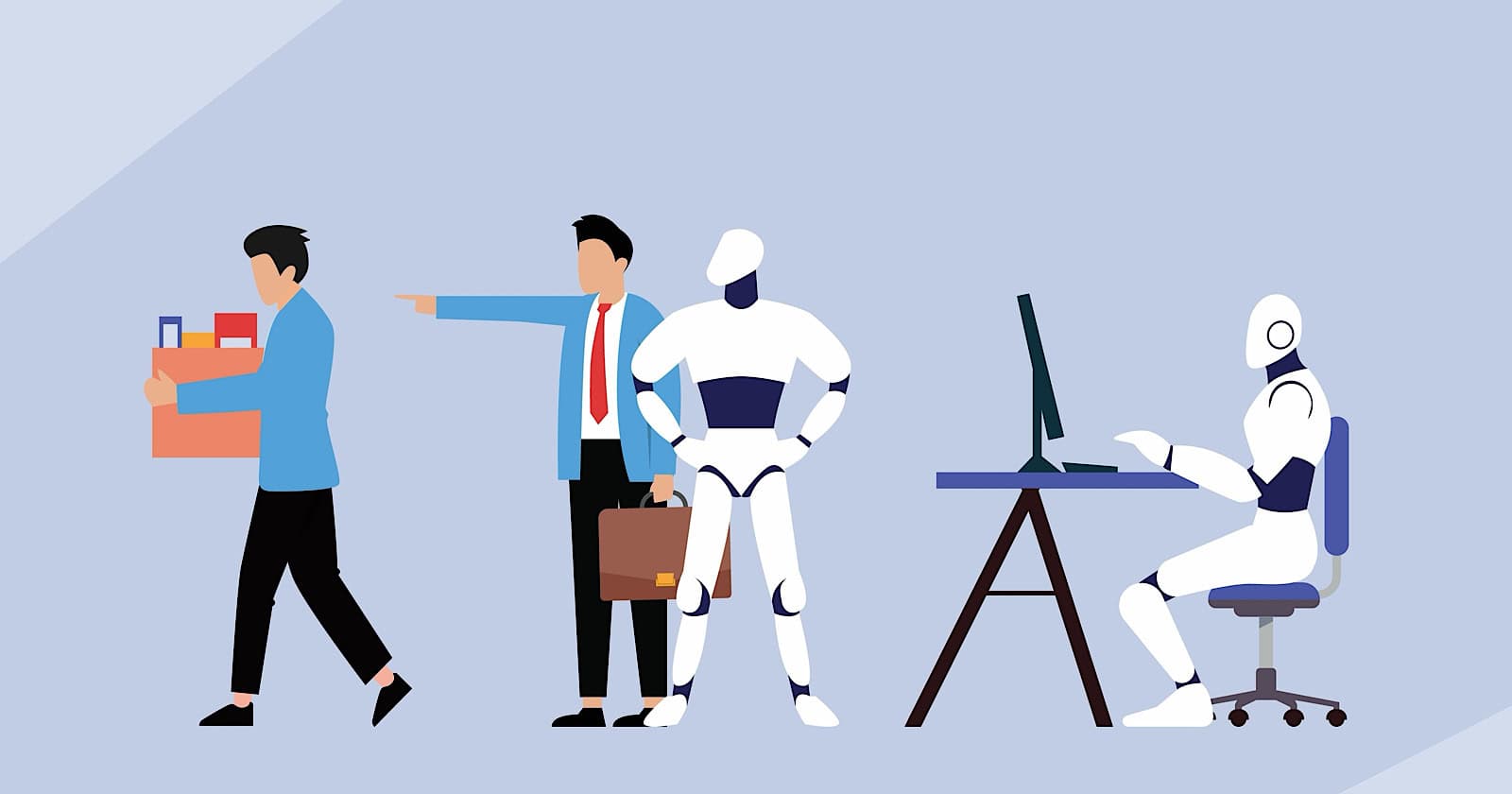
The rise of artificial intelligence in the workplace has sparked a significant debate: is AI a boon or a bane for employment? Recently, AI has been cited as the leading cause of job cuts in the U.S., accounting for 25% of the total layoffs in March, as reported by Challenger, Gray & Christmas in Search Engine Journal. This statistic paints a worrying picture for the workforce, leading to mounting anxiety over job security and the future of employment.
Why Businesses Are Turning to AI Over Humans
The appeal of AI in the workplace isn't hard to understand. It's not just about cutting costs; it's about efficiency and reliability. According to a SaaStr Blog post, companies find it easier to work with AI agents than humans. These AI agents can handle tasks without the unpredictability that comes with human employees. They don’t require breaks, they don’t call in sick, and they can work tirelessly around the clock.
Moreover, AI agents are capable of managing tasks and even the humans who oversee them. The efficiency of these systems is undeniable, and as businesses strive to remain competitive, the allure of AI becomes irresistible. However, this shift raises critical questions about the value we place on human labor and the potential consequences of sidelining human workers.
The Misguided Assumption of AI Superiority
While AI can undoubtedly enhance productivity, the assumption that it can fully replace human workers is flawed. Human intuition, creativity, and emotional intelligence are irreplaceable assets that AI cannot replicate. The belief that AI can handle all tasks better than humans is overly simplistic and ignores these unique human qualities.
AI's current capabilities are largely limited to repetitive and predictable tasks. The complexity and nuance of human interactions in business contexts are areas where AI still falls short. This assumption of AI superiority might lead organizations to overlook the value of a balanced workforce that leverages both AI and human strengths.
The Real-World Consequences of AI-Driven Job Cuts
The real-world impact of AI-driven job cuts is already being felt across industries, creating a tension between technological advancement and employment stability. The significant percentage of job cuts attributed to AI, as highlighted in the Search Engine Journal, is a stark reminder of this ongoing conflict.
"AI led all cited reasons for U.S. job cuts in March at 25% of the total, according to outplacement firm Challenger, Gray & Christmas."
This statistic underscores the urgency of addressing the implications of AI on the workforce. Without proactive measures, the gap between those who benefit from AI and those who are displaced by it will only widen, exacerbating social and economic inequalities.
Embracing a Balanced Future with AI and Humans
As we navigate this technological era, finding a balance between AI and human roles is crucial. Rather than viewing AI as a threat, businesses can approach it as a tool to complement human capabilities. By doing so, companies can innovate and improve efficiency without sacrificing human jobs.
Investing in upskilling and reskilling programs can help workers adapt to the changing landscape and ensure that they remain an integral part of the workforce. This approach not only enhances productivity but also fosters a workforce that is resilient and adaptable to future technological shifts.