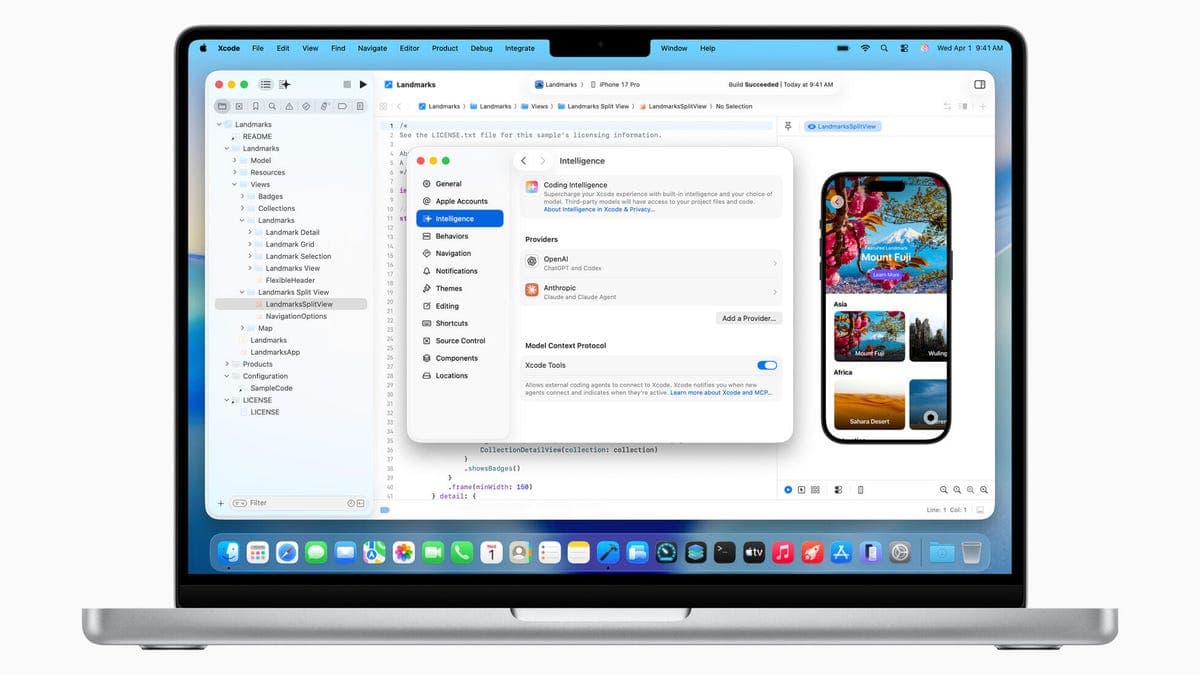
The latest update from Apple, Xcode 26.3, is sparking a heated debate in the developer community. This version introduces autonomous AI coding agents, elevating the capabilities of software development tools but also raising questions about the future of coding practices. The shift from simple prompts to autonomous agents promises to revolutionize the field, yet not everyone is convinced this is a step in the right direction.
AI Coding Agents: A Double-Edged Sword?
The inclusion of AI agents like Anthropic's Claude and OpenAI's Codex in Xcode 26.3 represents a significant leap forward. According to The Verge, these agents can write and edit code, update project settings, and search documentation autonomously, potentially streamlining development processes. However, this capability brings with it a host of concerns. Some developers fear that the increasing reliance on AI could erode fundamental coding skills and creativity.
Apple's decision to integrate these AI tools directly into Xcode suggests a commitment to advancing developer efficiency. As ZDNet notes, this shift could be Apple's biggest leap in AI coding tools, but it also sets the stage for a broader conversation about the role of AI in creative professions.
Current Beliefs: Efficiency Over Creativity?
Many in the industry currently view AI tools as a means to boost productivity. By automating routine coding tasks, developers can ostensibly focus on more complex and creative aspects of software development. However, this perception is not universally held. The fear among traditionalists is that such tools might lead to a dependency on AI, stifling the development of new skills and the individual's ability to innovate independently.
There is a clear divide in the community. Proponents of AI argue that these tools are merely extensions of the developer’s toolkit, much like compilers and IDEs were once revolutionary. Critics, however, see them as potentially diminishing the craft of coding, reducing it to a series of automated processes that could eliminate the need for deep technical understanding.
Real-World Tension: An Industry at a Crossroads
The introduction of autonomous coding agents is not just a technical innovation; it has real-world implications that extend beyond the immediate benefits. The The Verge highlights the potential impact on job roles and the nature of work in the tech industry. As AI becomes more integrated into development environments, the skills required by employers could shift dramatically, potentially leading to job displacement in roles traditionally filled by junior developers.
"Apple’s integration of OpenAI and Anthropic’s AI agents into Xcode marks a pivotal moment in software development, but also raises questions about the future of developer skills and employment." - The Verge
Furthermore, there is an underlying concern about accountability. As AI takes on more responsibilities, determining who is responsible for errors or bugs becomes murkier, complicating quality assurance and legal accountability.
Embracing or Resisting the AI Evolution?
With the advent of Xcode 26.3, the developer community stands at a crossroads. Embracing these tools could lead to unprecedented efficiency and innovation in software development. However, it also risks undermining the foundational skills upon which the industry is built. As we move forward, the balance between leveraging AI for efficiency and preserving the integrity of coding as a craft will be critical.
The debate around Xcode 26.3 exemplifies the broader tension between technological advancement and the preservation of traditional skills. The future of coding will likely depend on finding a middle ground where AI augments rather than replaces human creativity.