What is SEO ROI?
SEO ROI is how you measure the return you get from the time, effort, and money you put into search engine optimization. You’re essentially asking, “Is all this SEO work actually worth it?”
To figure that out, you compare the value of the organic traffic you’re getting to the cost of getting it there. That value usually shows up in the form of leads, sales, or other conversions. But SEO doesn’t work like paid ads—it takes time to build, and the results aren’t always immediate. So tracking the return can feel a bit tricky.
Here’s where you shift your thinking. Instead of just looking at direct sales, you look at how SEO supports the full customer journey. Are more people finding your site? Are they spending more time there? Are they coming back?
Then you weigh that against your investment—content creation, technical fixes, tools, maybe even agency fees.
It’s not just about traffic. It’s about qualified traffic that actually converts.
When you connect those dots, you’ll know if your SEO is pulling its weight—or if it’s time to change course.
Fundamentals of Attribution in Marketing
Attribution in marketing is all about figuring out what actually led someone to convert—whether that's buying a product, filling out a form, or signing up for a newsletter. You’re probably using multiple channels to bring in traffic: SEO, social media, email, maybe even ads.

But which one deserves the credit? That’s where attribution comes in. It helps you assign value to each touchpoint in a customer’s journey. Instead of guessing what worked, you use data to guide decisions. This is especially useful when you're investing in long-term strategies like SEO, where the payoff isn’t always immediate.
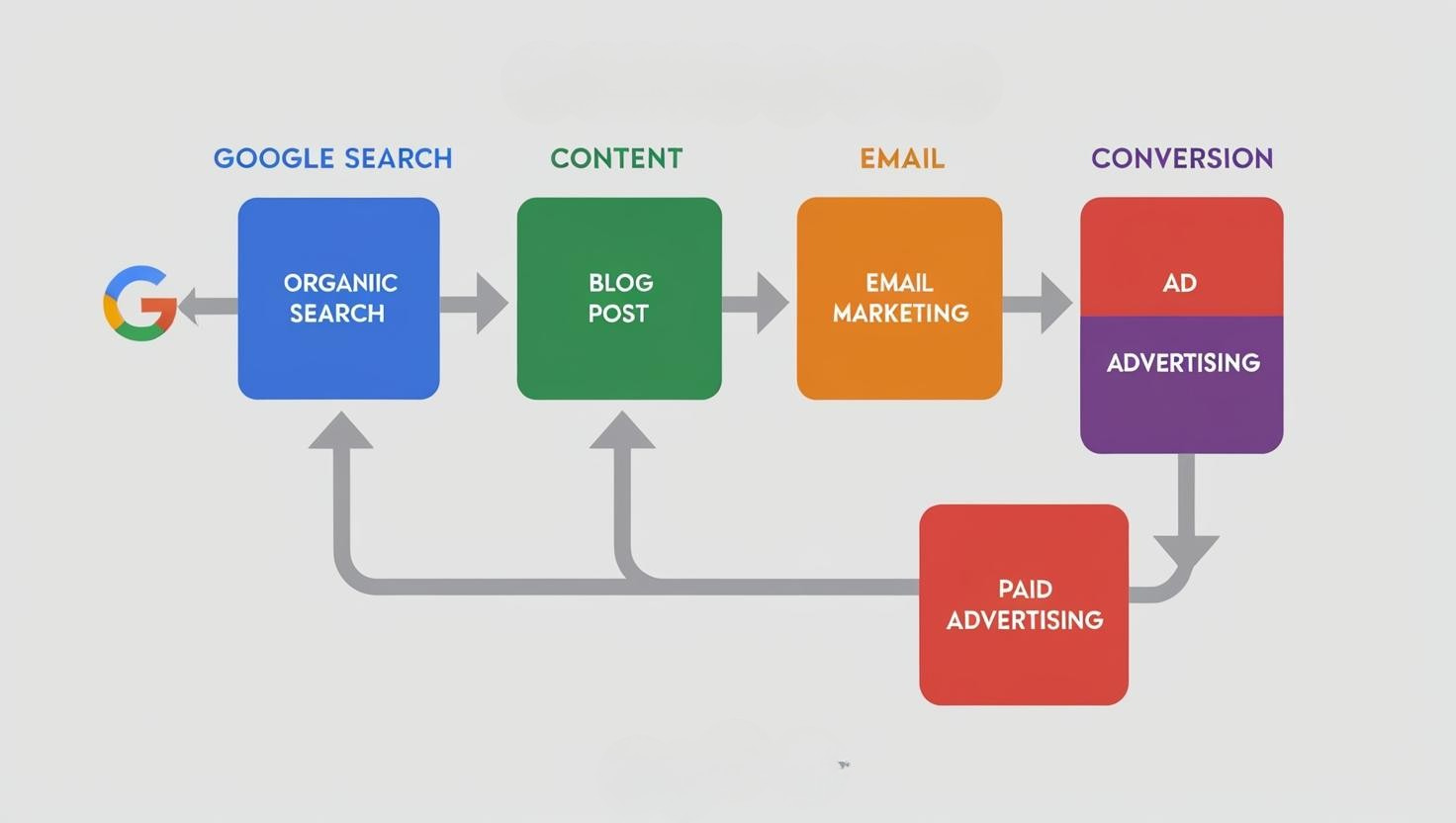
Now imagine a user finds your blog through Google, returns later via an email, and finally converts after clicking a remarketing ad.
Who gets the credit?
That depends on the attribution model you choose. Each one tells a different story. Some give all the credit to the first click. Others focus on the last interaction. And then, there are smarter ones that share credit across multiple steps.
Understanding attribution isn't about being perfect. It’s about making smarter choices.
Traditional Attribution Models
When you're trying to figure out which parts of your SEO strategy are really working, attribution models help you connect the dots. Traditional attribution models are the starting point. They’re simple, but that’s also their biggest weakness—they don’t reflect how people actually behave online.
These models give all the credit for a conversion to just one touchpoint in the customer journey. That might sound clean and easy, but real-world journeys are rarely that straightforward.
Here’s how they work:
- First-Touch Attribution gives full credit to the very first interaction. Say someone finds you through a blog post—this model assumes that’s what made them convert, even if they came back five more times.
- Last-Touch Attribution flips that. It gives 100% credit to the final click before the conversion, like a product page visit, and ignores everything before.
Sounds a bit extreme, right? That's the catch.
If you rely only on these models, you're missing out on the full picture. They don’t tell you what’s working in between—the nurturing steps that matter just as much. They're useful to get started, but you’ll want to go deeper as your SEO grows.
Advanced Multi-Touch Attribution Models
Let’s break down advanced multi-touch attribution models in a detailed and digestible way. This is where you move beyond simplistic models and start giving credit to all relevant touch points along a user’s journey—not just the first or last one. It’s especially important for SEO, where value is often spread across multiple interactions over time.
1. Linear Attribution
When you're trying to figure out how much each step in your SEO journey contributes to a conversion, linear attribution offers a straightforward way to look at it.
The basic idea is that every touchpoint gets equal credit.
Say someone finds your site through a blog post, then visits again from a newsletter, and finally converts after clicking a product link from search. With linear attribution, each of those steps gets one-third of the credit.
It doesn’t matter which came first or last—what matters is that each played a part.
This model works best when all your interactions are relatively equal in importance.
If your goal is to keep things simple and avoid overthinking which part of your funnel deserves more praise, this is a solid choice.
Just keep in mind—it doesn’t tell you which step was most persuasive. It treats everything as equal, which isn’t always realistic, but it can be a good starting point if you're just beginning to track SEO ROI.
2. Time-Decay Attribution
Time-decay attribution is all about timing.
It gives more credit to touchpoints that happen closer to the conversion. Why? Because those last few interactions usually have a bigger influence on the final decision.
Think about it—if someone clicks your blog post three weeks ago and then signs up after seeing a product page yesterday, which one really pushed them over the edge?
This model assumes the closer the interaction is to the conversion, the more impact it has. It’s a smart fit for longer customer journeys where people take time before converting.
You don’t treat all touchpoints equally here—you weigh them based on how recent they are.
So when you’re trying to figure out which parts of your SEO strategy really matter, time-decay can show you what’s actually moving the needle right now.
3. Position-Based (U-Shaped) Attribution
Think of position-based attribution like giving credit where it’s most due—at the start and the finish. When someone discovers your site and later comes back to convert, those two moments matter most, right?
This model splits the credit, often giving 40% to the first touch, 40% to the last, and dividing the rest among everything in between. Why? Because the first click sparks interest, and the last one seals the deal.
It’s useful when you care about both awareness and conversions, not just one or the other. If someone finds you through search, browses a blog, clicks a few links, and then signs up later via an email—this model captures that journey better.
So, if you're juggling long paths to conversion, this is your balanced, no-drama approach to tracking ROI.
4. W-Shaped Attribution
W-shaped attribution is perfect when your customer journey has three key moments: the first touch, the lead creation, and the final conversion.
Why? Because each of those touchpoints plays a major role in driving results. You don’t want to ignore how someone found you, when they became serious, or when they finally said yes.
This model gives 30% credit to each of those points and spreads the last 10% across the rest. It's a great fit if you're tracking leads and sales separately.
You get a clearer picture of what’s really working—and where to double down.
5. Data-Driven (Algorithmic) Attribution
Data-driven attribution is where things get smart. Instead of guessing which touchpoint mattered most, you let the data decide. It uses machine learning to figure out how much credit each channel deserves in the journey that led to a conversion.
Not every click is equal, right? Some touchpoints push users forward, others just hang around. This model looks at both converting and non-converting paths to spot real patterns.
You don’t have to assign value manually—it learns from behavior over time. That means your SEO, paid ads, emails—everything—gets credit based on actual influence.
Is it more complex to set up? Yes. But if you’ve got enough data, the insights are gold.
It’s the difference between educated guesses and real, tested decisions. Once you start using it, your strategy gets sharper.
6. Custom Attribution Models
Custom attribution models are for when the standard ones just don’t cut it. You know your business, your customers, and how they interact with your content better than any one-size-fits-all model. So instead of forcing your data into a fixed mold, you build a model that actually reflects your customer journey.
Where do you start? First, look at the patterns—what touchpoints matter most, and when? Then decide how much weight each one deserves. It’s like designing your own scoring system based on what moves people closer to converting.
Let’s say your blog drives traffic, but conversions usually happen after a product demo. Your model can reflect that balance.
You’ll need good data and a clear goal, but when done right, a custom model gives you sharper insights and way more control over how you measure SEO ROI.
How to Implement Advanced Attribution Models for SEO
Implementing advanced attribution models for SEO takes a clear plan to really understand how different touchpoints influence a customer’s journey. Let’s break it down step by step so you can see what’s working and make smarter decisions.
1. Familiarize Yourself with Different Attribution Models
You’ve already seen the different attribution models we discussed earlier — linear, time-decay, position-based, and data-driven.

Now, the key is understanding how to work with them, not just what they are.
So where do you start? Think about how your audience behaves. Do they take a long time to convert? Do they bounce around different channels? That tells you whether a simple or more layered model fits best.
You don’t need to overthink this. Just ask: what’s the goal here? If you're focused on brand discovery, maybe that first click matters more. But if you're trying to close sales, the last few interactions might carry more weight.
Each model gives you a different lens to see the same journey. That’s why it helps to compare a few. Look at your data through one model, then another. Notice the shifts in value. This isn’t about picking a “perfect” model. It’s about choosing the one that gets you closer to the truth.
Once you get comfortable switching lenses, you’ll see your SEO results more clearly—and know exactly where to focus next.
2. Collect and Integrate Comprehensive Data
To get accurate results from any advanced attribution model, you need good data. That starts with collecting everything you can about how users interact with your site. You want to know where they came from, what they clicked, and what they did before converting—or leaving. Without that, your model won’t show the full picture.
First, make sure your analytics setup tracks organic traffic properly. Use tools like Google Analytics or similar to log SEO data like page views, sessions, and conversions.
Then think bigger. Are users also coming in from email, social media, or paid ads? You’ll need to connect those channels too. Attribution is all about the journey, not just the final step.
The goal is to bring all your marketing data into one place. That way, your attribution model can see the entire path, not just one slice.
It’s a bit of setup work, sure—but without it, you're basically guessing how SEO performs. You want insights, not assumptions.
3. Choose and Implement the Appropriate Attribution Model
Once you've got your data in place, the next step is picking the right attribution model. This isn’t just about choosing a fancy tool—it’s about understanding how your audience interacts with your content and what role SEO plays in that journey.
Think about your goals. Are you trying to prove that SEO builds awareness? Or that it drives conversions closer to the end? Your answer shapes the model you need.
For example, if someone finds you through search, explores your site, then returns through email to convert, a last-click model won’t tell the full story. A position-based or time-decay model might.
Don’t just guess—look at your funnel. Where does organic traffic fit in? Is it the opener, the closer, or always somewhere in the middle?
Test different models in tools like Google Analytics. See how the story changes. Let data guide you, not assumptions.
And remember, no model is perfect—but the right one is a lot more honest.
4. Analyze Attribution Data and Derive Insights
Once you've set up an attribution model, the real value comes from analyzing the data it gives you. This is where things get interesting. You're no longer guessing which SEO efforts are working—you’re looking at actual patterns.
Start by focusing on which pages, keywords, and content paths are getting the most credit in conversions. Are users discovering you through blog posts and later converting through product pages? That’s gold. You now know where your SEO is pulling weight and where it needs help.
Don't just skim the top-level data. Look at assisted conversions, page depth, and how often users return before converting. These clues tell you how SEO fits into the bigger picture, not just the last click.
Let this analysis shape your decisions. If a specific article constantly shows up early in the journey but doesn’t lead directly to conversions, maybe it needs a stronger CTA. Or if users bounce after landing on a certain page, it’s time for an update.
Attribution isn’t about over analyzing—it’s about finding signals in the noise and using them to fine-tune your strategy.
5. Adjust SEO Strategies Based on Attribution Insights
Once you've got attribution insights in hand, it’s time to do something with them—adjust your SEO strategy where it counts. The point isn’t just to gather data, but to act on it. You’re looking for what’s working, what’s not, and where your efforts make the biggest impact.
Start by identifying which pages or keywords are actually influencing conversions across the customer journey—not just the last click. Then ask yourself: are you putting enough focus there?
Let’s say certain blog posts drive a lot of first interactions, but you’ve barely updated them. That’s a clear signal to double down.
Here’s where attribution helps you fine-tune your strategy:
- Prioritize content that initiates or supports conversions
- Cut or revise pages that rarely appear in successful paths
- Optimize high-performing paths for faster load, better UX
- Align keyword targeting with stages in the customer journey
- Invest more in topics and formats that lead users down the funnel
Don't wait for perfect data. Test, tweak, and monitor. Attribution isn't a report card—it’s a feedback loop. When you use it this way, your SEO becomes smarter, sharper, and more connected to real business results.
6. Leverage Advanced Tools and Technologies
Attribution models can get overwhelming, right? That’s where advanced tools come in—they help simplify things and give you better insights. You don’t have to guess which SEO touchpoints matter most. These tools do the heavy lifting by analyzing patterns and assigning value based on actual behavior.
Start with what you already have—Google Analytics. It offers data-driven attribution, which uses machine learning to show what really influences conversions. That’s smarter than just looking at the first or last click.
If you want more flexibility or deeper insights, third-party platforms like AgencyAnalytics can give you customizable reports and multi-channel views.
Pick tools based on your team’s skills and what you want to track. Are you just measuring traffic? Or trying to see how SEO supports the whole funnel?
Choose what fits, test it, and keep refining. That’s how you turn raw SEO data into real ROI clarity.
7. Address Challenges and Ensure Data Accuracy
When you're dealing with advanced attribution models, your results are only as good as your data. If your tracking isn’t accurate or complete, everything else falls apart. So first, make sure your analytics setup is tight. That means all SEO touchpoints—like organic clicks, landing page visits, and conversions—are tracked properly.
Then there’s the issue of users switching devices. Someone might find your site on mobile, then convert later on desktop. If you're not set up to track that journey, you miss a big part of the story. Use tools that can handle cross-device tracking to fix that.
Now think about privacy. You can’t just collect any data you want. Stay compliant with privacy laws like GDPR and always be transparent with users.
Also, clean your data regularly. Messy URLs, bot traffic, or broken tags can skew attribution. The goal is simple: build a clean, reliable dataset.
That way, the insights you get from your attribution model are actually worth trusting.
Common Problems and Things to Watch Out For
Tracking the ROI of SEO efforts with advanced attribution models isn’t always easy. There are a lot of challenges to think about. Some major hurdles include figuring out how different strategies contribute to success, dealing with gaps in tracking data, and making sense of multiple traffic sources.
1. Data Accuracy and Completeness
To measure SEO ROI effectively, you need accurate and complete data. Sounds simple, right? But here's the problem—data often comes from many different sources. If even one piece is missing or incorrect, the entire picture gets blurry.
Before you even think about attribution models, ask yourself: is your data clean and connected?
You can’t trust insights from broken tracking, missing sessions, or misaligned campaigns. That’s like trying to solve a puzzle with half the pieces gone.
Start by syncing your analytics tools. Make sure tracking codes are in place. Use UTM parameters consistently. Then, test everything.
When your data is solid, your ROI insights become way more reliable—and a whole lot more actionable.
2. Cross-Device and Cross-Platform Tracking
When you’re trying to track SEO performance, one big hurdle is knowing what your users are doing across different devices.
Think about it—someone might start searching on their phone, browse more on a laptop, and finally buy on a tablet. If you only track one of those steps, you’re missing the full story.
So how do you fix that? You need tools that connect user behavior across devices using login data, cookies, or machine learning.
Google Analytics 4, for example, is designed to help with this. It won’t be perfect, but it gives you a much clearer picture of your SEO’s real impact.
4. Attribution Model Selection and Complexity
Choosing the right attribution model can feel overwhelming, right? That’s because each one tells a different story about how your SEO efforts impact results.
You need a model that matches how your customers actually behave. Are they converting after a single visit, or do they come back multiple times before taking action? Start with your business goals—brand awareness, lead generation, or conversions. Then pick a model that aligns.
For example, time-decay works well if most value happens closer to conversion.
Avoid using a one-size-fits-all approach. The wrong model can make you underestimate SEO’s role—or worse, steer strategy in the wrong direction.
5. Extended Sales Cycles and Attribution Windows
SEO often works like planting seeds. You publish content, optimize pages, and wait. But conversions don’t always happen right away, right? Some users might take weeks—or even months—before making a decision. That’s what we call a long sales cycle.
Now, here’s the catch: most attribution models use short “attribution windows.” If your model only tracks conversions for 7 or 30 days, it might miss the real impact of your SEO work.
So, what should you do? Choose longer attribution windows when your sales cycle is slow. That way, you don’t lose credit for the organic efforts that actually drove results.
6. Offline Interactions and Their Impact
When you think about SEO ROI, your mind probably jumps to clicks, sessions, and conversions on your site. But what about the stuff that happens offline? Maybe someone finds your business through Google, reads your blog, and then walks into your store or calls your office. That’s SEO doing its job—just not in a way that shows up in your analytics.
So how do you measure that?
Start by linking phone inquiries or in-person visits to online searches, using tools like call tracking or unique URLs. It’s not perfect, but it helps.
Ignoring these offline actions means undervaluing SEO’s real impact.
7. Resource Intensiveness
Advanced attribution models sound great on paper, right? But here’s the thing—they’re resource-hungry. You need tools, time, and talent. If you’re managing SEO on a tight budget or small team, it can get overwhelming fast.
Before jumping in, ask yourself: do you have the bandwidth to collect, clean, and analyze all that data? You’ll also need someone who actually understands how these models work—and how to interpret them.
If that’s not in place, you might end up spending more time than the insights are worth.
So be realistic. Start with what you can manage, and build up from there.
Turn Your SEO into Measurable Growth
Measuring SEO ROI isn’t just about tracking numbers. It’s about knowing where your traffic comes from, what moves the needle, and what’s just noise.
When you use advanced attribution models, you start to see the bigger picture. No more guessing which part of your SEO strategy actually works.
Start by choosing a model that fits your goals. Are you nurturing long journeys or capturing quick wins? Let the data guide your next move.
Over time, you’ll spend smarter, optimize faster, and make SEO a predictable growth engine—because now, you’re not just doing SEO. You’re proving its value.
FAQs
What makes SEO hard to measure compared to paid ads?
SEO takes time to show results and has many touchpoints. People might visit a site many times before buying. Unlike paid ads, it’s hard to track exactly which SEO effort led to the sale.
Why is last-click attribution bad for SEO ROI?
Last-click only credits the final step before a sale. SEO often brings visitors early in the journey, so it gets ignored. This makes SEO seem less valuable than it really is.
How does a data-driven attribution model help SEO?
It uses real user data to figure out which steps helped most in a conversion. This gives fair credit to SEO, especially when it plays a role early in the buying process.
Can SEO ROI be tracked without advanced tools?
Yes, but it’s harder. You can track rankings, clicks, and sales using basic analytics. Still, without advanced models, you might miss how SEO really helps throughout the customer journey.
How often should I review my SEO attribution model?
Every few months is smart. Customer behavior changes, and your site grows. Reviewing helps make sure your model still gives SEO the right credit and supports smart decision-making.