
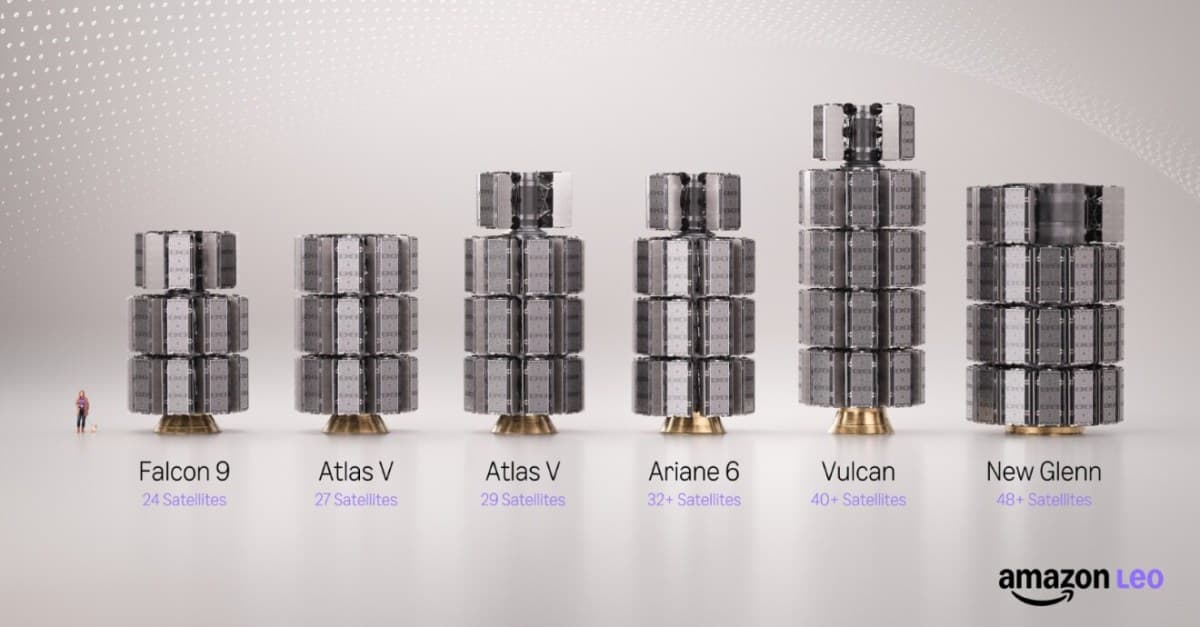
Amazon's recent announcement that it has deployed enough low-Earth orbit satellites to begin offering its internet service marks a significant milestone in the space internet race. With 396 satellites now in orbit, Amazon Leo is on track to launch commercially by mid-2026. However, this achievement is only the beginning of a complex journey that could reshape global internet access.
Amazon's Ambitious Leap Into a Crowded Sky
The deployment of these satellites positions Amazon as a formidable competitor to SpaceX's Starlink. SpaceX, which began its beta service in 2020 with approximately 900 satellites, has a substantial head start. This early entry allowed SpaceX to establish a presence and refine its service over several years. Amazon, on the other hand, is entering a more mature but equally competitive environment. The challenge for Amazon will be to deliver reliable service at scale, a feat SpaceX is still perfecting despite its head start.
Chris Weber, VP of Amazon Leo, highlights that the initial satellite deployment is sufficient to offer continuous service across key latitudes. However, as The Verge notes, consumers should manage their expectations for the service's early days. The initial roll-out might not be seamless, reflecting the complex logistics of managing a satellite internet service.
Why SpaceX's Head Start Matters
SpaceX's early mover advantage cannot be understated. By 2020, it had already rolled out its "Better than nothing beta," giving it years to troubleshoot and optimize its offerings. This head start has enabled SpaceX to cultivate a customer base and gather valuable operational insights. Amazon, in contrast, must navigate these challenges while catching up to SpaceX's established infrastructure and market presence.
The competition between Amazon and SpaceX could drive innovation, benefiting consumers. However, Amazon's late entry means it will need to differentiate itself through pricing, coverage, or technology to gain market share.
The Real-World Impact of Satellite Internet
The introduction of a new player like Amazon Leo could dramatically alter the landscape of global internet access. Satellite internet holds the promise of connecting remote and underserved areas, potentially narrowing the digital divide. Yet, the deployment of satellite constellations also raises concerns about orbital congestion and environmental impact. The addition of Amazon's satellites adds to the growing number of objects orbiting Earth, which could increase the risk of collisions and space debris.
Meanwhile, other satellite projects, like Google's FireSat, are deploying technology to tackle global challenges such as wildfire detection. This highlights the diverse applications of satellite technology beyond internet provision, demonstrating its potential to address pressing global issues.
What Changes Next in the Satellite Race?
As Amazon gears up for its mid-2026 launch, the competitive dynamics of satellite internet will likely intensify. Companies will need to focus on scalability, reliability, and affordability to attract and retain customers. Regulatory challenges and international cooperation will also play crucial roles in shaping the future of this industry.
In the coming years, consumers can expect more competitive pricing and improved service quality as Amazon and SpaceX vie for market dominance. However, the broader implications of satellite expansion, including regulatory hurdles and sustainability concerns, will need careful management to ensure that the benefits of satellite internet are realized without compromising the safety and longevity of space activities.