
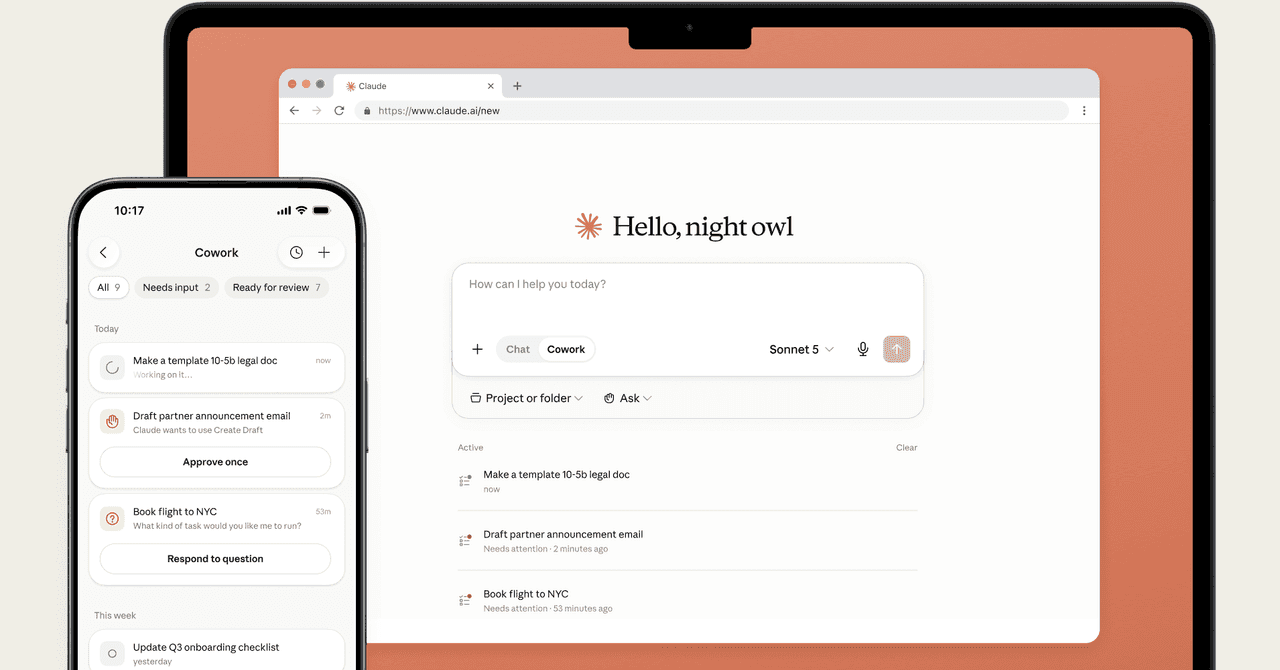
As smartphones become the primary interface for many digital tasks, the recent move by Anthropic to put its Claude Cowork agent on mobile platforms represents a significant shift. This decision aligns with a broader trend of making AI more accessible, but it also raises questions about the implications of such integration.
Why AI on Mobile is More Than a Convenience
The motivation behind Claude Cowork's transition to mobile isn’t just about convenience. According to recent data, 90% of the sessions involving Claude Cowork are not for coding, which indicates a vast potential market beyond its original scope. This expansion suggests that AI is becoming an integral part of everyday tasks, from organizing schedules to managing communications.
As reported by Wired, the ability for AI to continue working even when a laptop is closed is a leap towards seamless task automation. Users now expect their digital assistants to handle tasks autonomously, reducing the need for constant interaction and supervision.
Beyond Coding: A New Era of AI Use
The fact that most sessions with Claude Cowork are not related to coding signals a shift in AI utility. As ZDNet highlights, this move is not just about reaching more users but about redefining what AI can do for them. By moving to the cloud and mobile, Claude Cowork taps into new user bases who use AI for varied purposes, from managing personal tasks to enhancing creative projects.
This broadens the scope of AI applications, challenging the notion that AI's primary function is technical problem-solving. Instead, it becomes a versatile tool for everyday life, much like the role smartphones play today.
What Changes Next: Privacy and Control
While the integration of AI into mobile devices offers convenience, it also brings privacy concerns to the forefront. As AI agents like Claude Cowork become more embedded into personal technology, they collect and analyze more personal data, raising questions about data security and user privacy.
For users, this means a trade-off between convenience and control. The more integrated these agents become, the more they will need to trust AI systems with sensitive information. Companies will need to address these concerns transparently to maintain user trust.
Ultimately, as AI continues to evolve and become a staple in personal tech, the balance between accessibility and privacy will define its future trajectory.