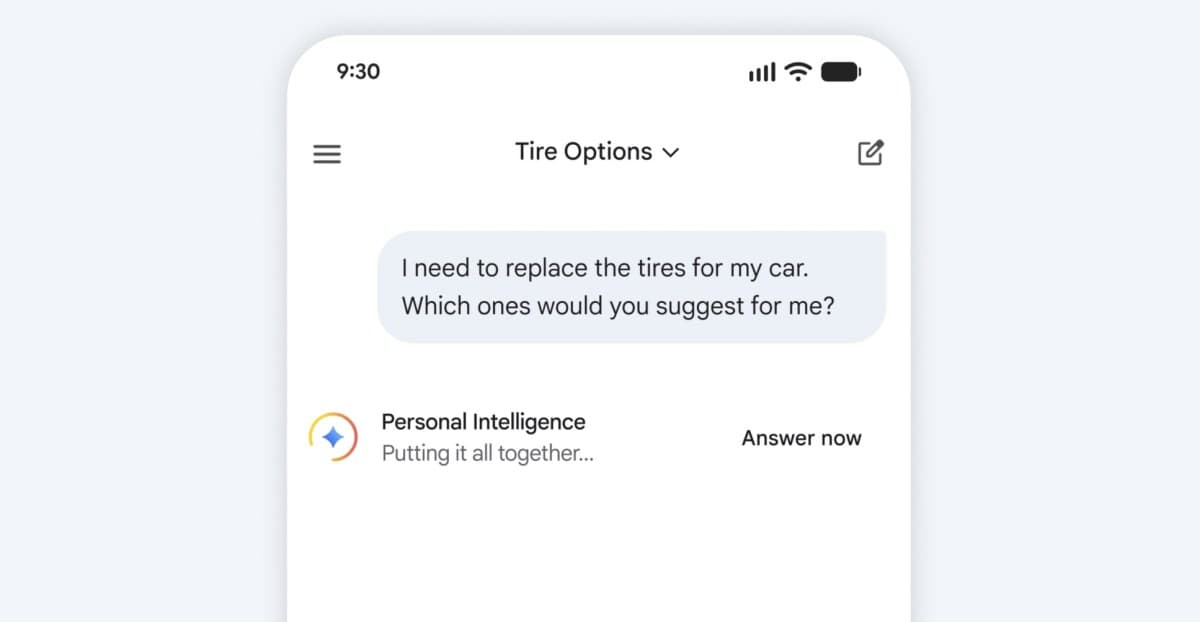
Google's recent decision to roll out its Gemini AI to all users in the United States has sparked a heated debate. What was once a feature limited to a select group is now available to everyone, thanks to the integration of Personal Intelligence technology. But as this AI convenience becomes more accessible, questions about privacy and data usage are coming to the forefront.
Why Is Google Pushing Gemini AI to Everyone?
The expansion of Google's Gemini AI is not just about democratizing access to advanced technology. It's a strategic move to integrate AI into the daily lives of users, potentially increasing dependency on Google's ecosystem. According to The Verge, the feature allows users to connect various Google apps like YouTube, Google Photos, and Gmail to enhance the AI's responses and suggestions. This seamless connectivity is marketed as a tool for convenience and personalization.
However, the underlying motivation is likely more complex. By expanding the AI's reach, Google can collect more data, refine its algorithms, and ultimately deliver more targeted advertising. This move aligns with the company's longstanding business model of leveraging user data for profit.
What Privacy Costs Are Hidden in Convenience?
While the accessibility of Gemini AI offers undeniable benefits in terms of personalization and ease of use, it also raises significant privacy concerns. Personal Intelligence relies heavily on data from connected apps to function effectively. This means more user data is being collected and processed than ever before.
Critics argue that this level of data integration poses risks to user privacy. As Search Engine Land reports, the feature is currently only available to personal Google accounts, leaving enterprise users out of the loop. Yet, for individual users, the trade-off between AI-driven convenience and personal data security remains a pressing issue.
Real-World Tension Between Privacy and Technology
The tension between privacy and technology is not new, but it is becoming increasingly pronounced as AI technologies like Gemini become more pervasive. Users are often unaware of the extent of data being collected and how it is used. The convenience offered by such technologies can be enticing, yet it comes at the cost of surrendering a degree of personal privacy.
"Personal Intelligence uses data from connected apps, like YouTube, Google Photos, and Gmail, to provide context for Gemini's responses and suggestions," reports The Verge.
This quote highlights the potential for data overreach. As AI becomes more ingrained in everyday life, the balance between convenience and privacy is more fragile than ever.
Where Do We Go from Here?
In the face of advancing technology, users must be informed and cautious about the privacy implications of tools like Gemini AI. While Google has made strides in making AI more accessible, it must also address the growing concerns about data privacy.
The onus is on both the company and its users to ensure that the benefits of AI do not come at the cost of personal security. Users need to be proactive in managing their privacy settings and understanding how their data is used. Meanwhile, Google must strive for transparency and robust data protection measures to maintain trust in its AI offerings.