The recent shooting involving an Immigration and Customs Enforcement (ICE) agent in Minneapolis has ignited a firestorm of controversy and conflicting narratives. At the heart of the issue is the stark contrast between the federal government’s account of the incident and the video footage widely circulated on social media platforms. As the public grapples with these competing stories, the resulting tension underscores a deeper crisis of trust in official narratives.
Currently, the federal government’s narrative, as reported by Wired, paints the shooting as a justified action in response to an alleged act of domestic terrorism. The Department of Homeland Security Secretary, Kristi Noem, labeled the woman's actions as such, suggesting a threat level that necessitated the use of deadly force. This official stance aligns with a broader governmental push to frame immigration enforcement as a matter of national security, casting ICE agents as frontline defenders against domestic threats.
However, this narrative is incomplete and, crucially, at odds with the evidence presented by video footage from the scene. As reported by The Verge, the videos show the woman, later identified as 37-year-old Sarah Good, waving agents past her car before beginning to drive away. This depiction contradicts the federal claim of an imminent threat and suggests a non-confrontational scenario that did not warrant lethal intervention.
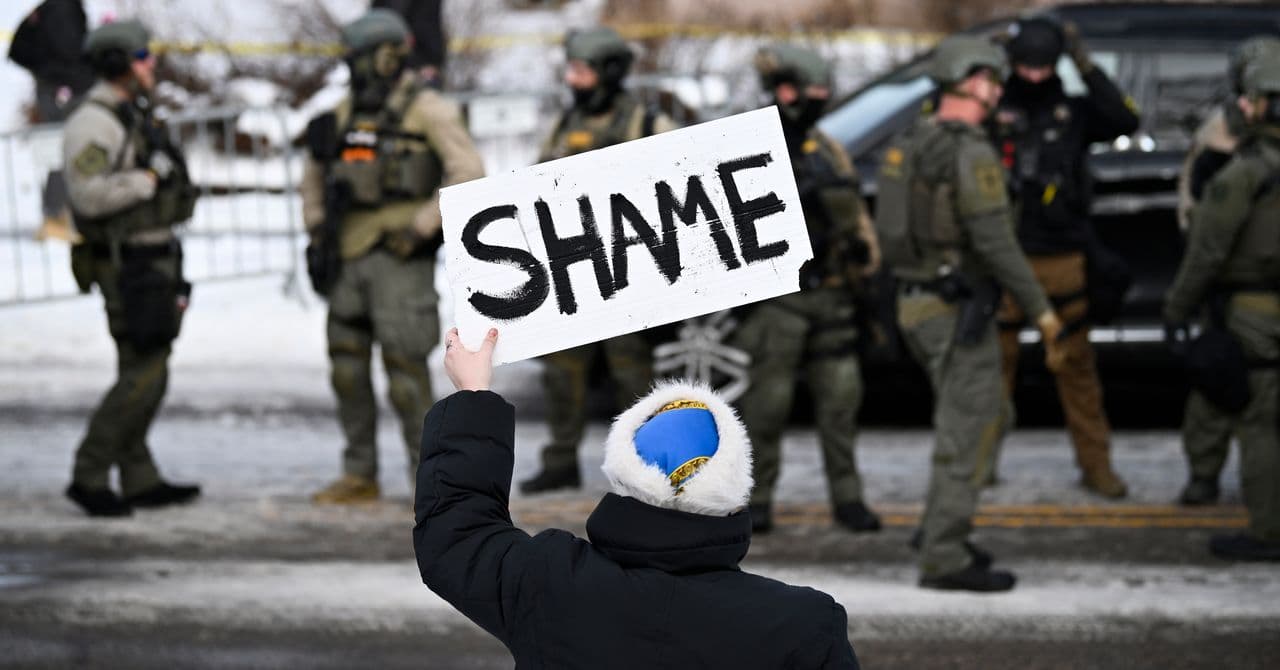
The real-world implications of these conflicting accounts are profound. Public reaction has been swift and intense, with hundreds of protesters taking to the streets in New York City. These demonstrations, as detailed by The Verge, highlight a growing skepticism towards federal narratives, especially when they clash with publicly available evidence. The presence of video footage creates a tangible, albeit sometimes ambiguous, record that empowers citizens to question and challenge official versions of events.
Social media’s role in disseminating these videos cannot be underestimated. Platforms like TikTok, Reddit, and Bluesky have become critical spaces for sharing and analyzing footage, allowing for a multiplicity of interpretations. The Verge notes how these videos, though filmed from different angles and at varying lengths, consistently capture the gunshots and reactions of bystanders, providing a visceral counter-narrative to the official version. This democratization of information, while empowering, also complicates the quest for truth, as it invites a range of interpretations that can muddy public understanding.
Our editorial stance is clear: transparency and accountability must be prioritized in the wake of such incidents. The government’s narrative should not be accepted at face value when there is conflicting evidence that suggests otherwise. The public deserves a thorough, independent investigation that considers all available evidence, including video footage, to ascertain the facts of the case. Without this, trust in public institutions will continue to erode, further polarizing an already divided society.
Moreover, the incident highlights the need for a reevaluation of law enforcement protocols, particularly regarding the use of force. The current incident raises critical questions about when and how lethal force is deemed necessary, especially in situations involving civilians. As public scrutiny intensifies, there is an urgent need for policies that prioritize de-escalation and preserve life, aligning law enforcement practices with the values of justice and accountability.
In conclusion, the Minneapolis ICE shooting represents more than a single tragic event; it is a flashpoint in the ongoing struggle over narrative control and accountability in law enforcement. As videos continue to surface and protests persist, the call for truth and justice remains paramount. Only through transparent investigation and meaningful reform can public trust be restored, ensuring that future incidents are met with clarity and accountability rather than confusion and skepticism.