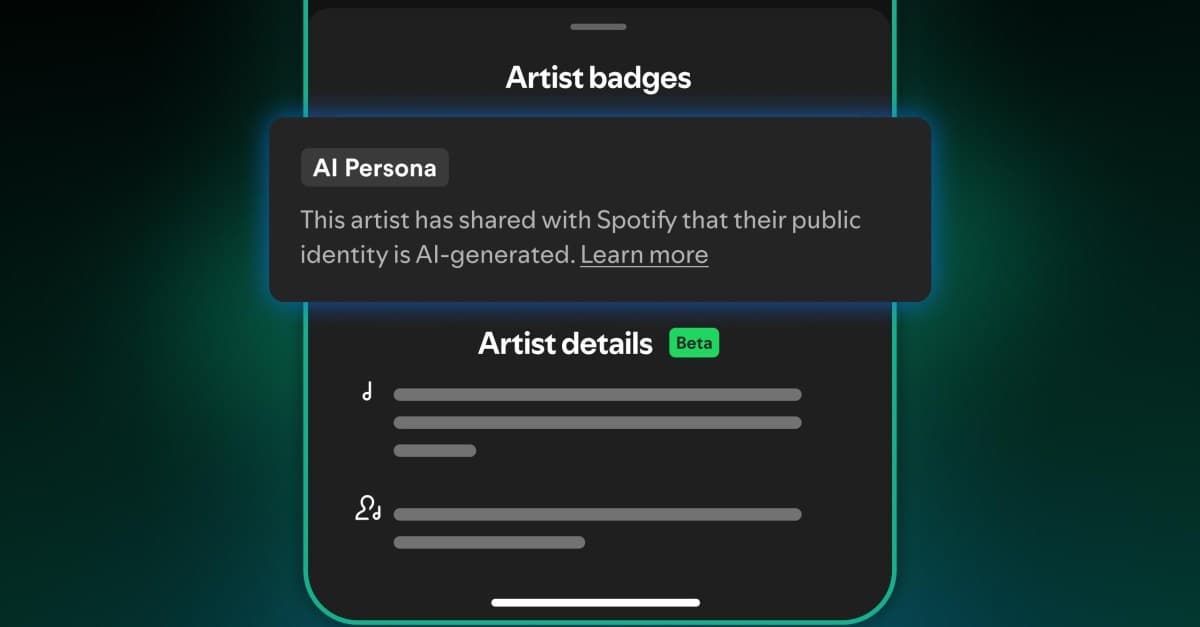
In a bold move that signals a significant shift in how music is curated and consumed, Spotify announced its decision to label and exclude AI-generated music—referred to as 'AI Personas'—from its recommendations. This development arises as the music industry grapples with the proliferation of AI-generated content, which some argue dilutes the artistry and authenticity traditionally associated with music.
Why the Hype Around AI Music Is Losing Its Shine
AI in the music industry initially promised to remove creative barriers and democratize music production. It allowed anyone with access to technology to create music without traditional skills. However, this ease of creation led to a flood of content that platforms now find challenging to manage. Spotify's move to identify and label AI Personas addresses concerns about an overwhelming presence of AI-generated tracks that might not meet listeners' diverse tastes or expectations for authenticity.
Spotify's upcoming policy, set to roll out in mid-September, will involve tagging AI artists with a distinct label and removing them from music recommendations. By combining human review with AI tools, Spotify aims to ensure that artist profiles accurately reflect whether they represent real individuals. This change is not just about filtering content; it's about redefining what constitutes an artist in the digital age.
The Unseen Impact on Music Discovery and Creativity
While some may welcome this decision as a return to authenticity, others view it as a potential stifling of creativity. By sidelining AI-generated music, Spotify could inadvertently limit the exposure of innovative sounds that might not fit traditional molds but still resonate with listeners. The challenge lies in balancing the authenticity listeners crave with the novelty that AI can offer.
Simultaneously, Suno, another player in the AI music space, is taking a different approach. The company is implementing watermarking technology to combat spammy AI tracks and enhance transparency. By aligning with emerging industry standards, Suno aims to partner with distribution platforms to tackle fraud and misuse, ensuring that AI-generated content is disclosed appropriately.
What This Means for Artists and Listeners
The actions by Spotify and Suno reflect a broader industry trend towards distinguishing between human and AI-created content. For artists, this could mean navigating new disclosure norms and potentially facing challenges in reaching audiences through traditional recommendation systems. For listeners, this shift could either enhance their experience by providing more genuine artistry or limit their access to innovative, AI-driven soundscapes.
As watermarking and labeling practices become more common, the industry may see a clearer delineation between human and AI music. This could lead to new categories within streaming services, offering users the choice to explore AI-generated music intentionally. However, the success of these measures depends on effective implementation and industry-wide cooperation.
Looking Ahead: The Future of AI in Music
The next phase for AI in music is not about eliminating it but rather integrating it transparently and ethically. Spotify's and Suno's strategies indicate a move towards more accountable AI usage, where listeners are informed and artists are recognized fairly. As platforms adapt, the music industry must continue to evolve, ensuring that innovation does not come at the cost of creativity and authenticity.