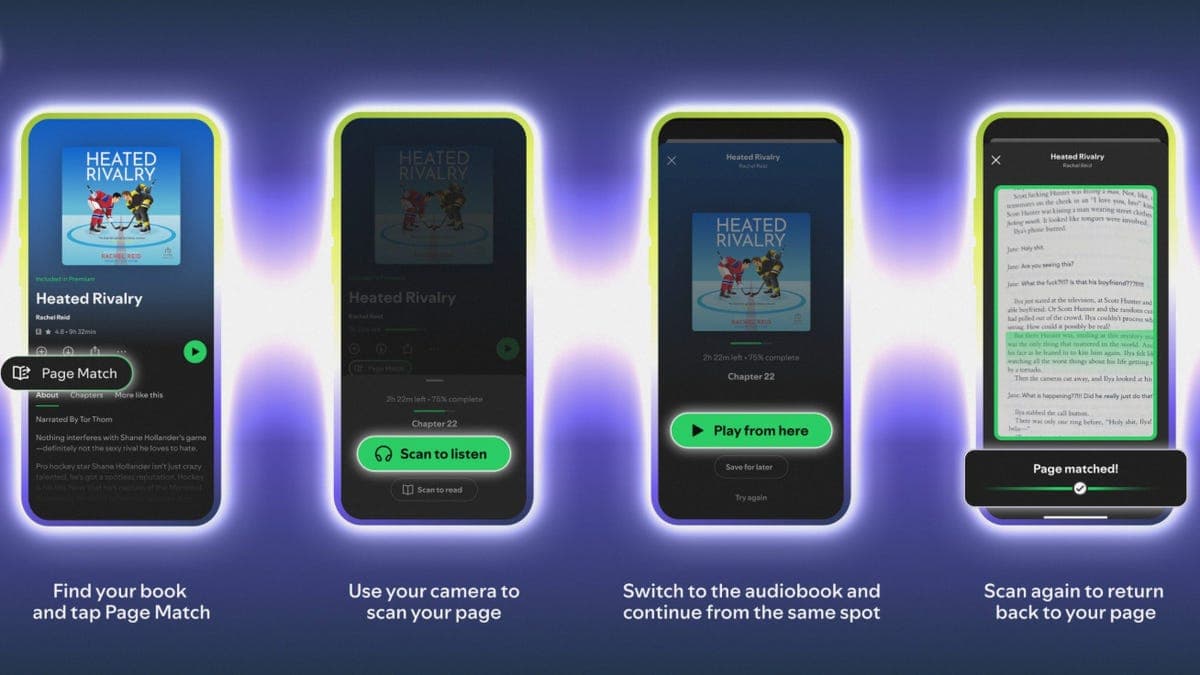
Spotify's latest innovation, Page Match, marks a significant shift in how we consume literature. The feature allows users to sync their physical or ebooks with audiobooks seamlessly, a concept that challenges our traditional notion of reading. With the integration of such technology, Spotify is not just enhancing user experience but also redefining the boundaries between physical and digital media.
Why Spotify's Page Match Exists
The introduction of Page Match seems to answer a growing demand for flexibility in how we engage with books. Readers today are no longer confined to a single medium, and Spotify recognizes this shift. The feature allows users to switch between reading and listening without losing their place, addressing a common frustration among audiobook listeners.
According to ZDNet, the process involves pointing your camera at a page, and the app uses computer vision to match text with audio, a convenience that is especially appealing to multitaskers and commuters. This development positions Spotify as a direct competitor to Amazon's Whispersync for Voice, which offers similar functionality but is limited to Kindle and Audible books.
Is This the Future of Reading?
Despite the excitement, there are questions about whether Page Match truly enhances the reading experience or just complicates it. On one hand, it caters to our increasingly digital lifestyle, supporting our need to consume content on the go. On the other hand, it might detract from the immersive experience of reading a physical book.
A The Verge article highlights how this feature might disrupt the traditional book market. By partnering with Bookshop.org, Spotify is also moving into physical book sales, potentially affecting local bookstores and community-driven book culture.
Real-World Implications of Spotify's Book Strategy
Spotify's venture into books, particularly with their partnership with Bookshop.org, underscores a strategic pivot in their business model. As reported by The Verge, this partnership will launch in the US and UK, allowing users to purchase physical books directly from the app, thus integrating the digital and physical book-buying experience.
This move raises concerns about the impact on local bookstores, which have long been the backbone of communities. While it supports local retailers through Bookshop.org, the convenience of one-stop shopping in the Spotify app might sway consumers away from traditional bookstores, highlighting a tension between technological advancement and community preservation.
Spotify's Page Match: A New Chapter in Reading
Ultimately, Spotify's Page Match could be seen as a double-edged sword. It offers unprecedented convenience and flexibility, which aligns perfectly with our fast-paced, multitasking lifestyles. However, it also challenges the traditional ways we consume literature, potentially impacting local bookstores and the tactile joy of reading physical books.
As we venture further into this digital age, the balance between technological innovation and preserving traditional experiences will continue to be a central theme. Spotify's Page Match exemplifies this tension, prompting us to reconsider how we define reading and listening in the modern world.