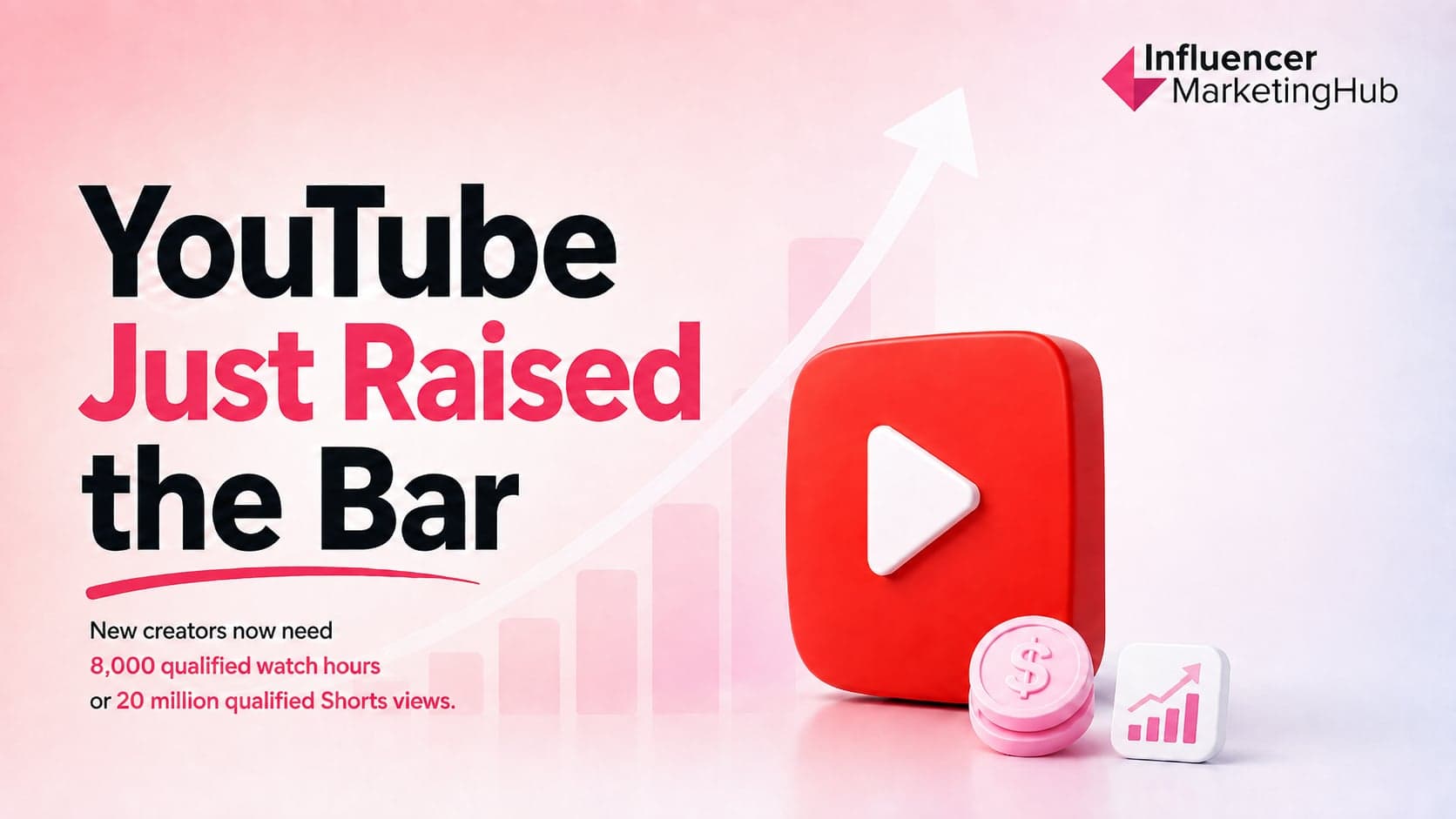
YouTube's recent overhaul of its Partner Program is set to reshape the landscape for creators looking to monetize their content. As reported by Influencer Marketing Hub, starting February 2027, the requirements for joining the program will significantly increase. This move has sparked a heated discussion among YouTubers, particularly smaller creators who now face a steeper climb to profitability.
Why YouTube Raised the Bar for Monetization
The decision to raise the bar for monetization comes at a time when YouTube is trying to balance quality control with expanding revenue opportunities. According to The Verge, the new requirements demand that channels have at least 1,000 subscribers coupled with either 8,000 watch hours over the past year or 20 million Shorts views in the last 90 days. This is double the previous watch hour requirement and a significant increase from the former 10 million Shorts views requirement.
YouTube argues that these changes will help ensure that the content being monetized meets a certain standard of quality and engagement. By raising these thresholds, the platform aims to reward creators who are deeply invested in building their channels and engaging their audiences.
Is This a Welcome Change or a Barrier?
The reaction to these changes has been mixed, with some seeing it as a necessary step toward improving content quality, while others view it as a barrier that could stifle smaller creators. A Reddit discussion highlighted that many creators feel the increased requirements could widen the gap between established creators and newcomers. Smaller channels, which may already struggle with visibility, could find it even harder to reach these new thresholds.
Critics argue that while the new rules might ensure better content, they also risk alienating new talent who bring fresh perspectives to the platform. Many fear that this could lead to a homogenization of content, where only those who can afford to invest heavily in production will thrive.
The Real-World Impact of YouTube's New Rules
The implications of these changes are significant. For one, small creators who rely on YouTube as a primary source of income may need to seek alternative platforms or revenue streams. This shift may also encourage creators to explore other social media platforms where monetization is more accessible, potentially driving traffic away from YouTube.
Moreover, the newly added activity checks and terms deadlines, as noted by Search Engine Journal, add another layer of complexity, requiring creators to be more strategic in their planning and content production.
What Changes Next for YouTube Creators?
Moving forward, creators will need to adapt to these new standards. For some, this may mean investing more time and resources into content creation to meet the required thresholds. Others might look to diversify their content strategies or build a stronger presence on multiple platforms to spread their risk.
YouTube's changes are a clear signal that the platform is prioritizing content quality and viewer engagement. However, the challenge will be to balance these goals without stifling the diverse voices that have made YouTube a unique space for creators and viewers alike.