.png&w=3840&q=75)
What if your next customer never visits your website first — or even searches for your brand by name?
That is where the search is heading.
AI assistants are changing how people research, compare, and choose. Instead of clicking through multiple websites, users are increasingly relying on tools like ChatGPT, Gemini, and Perplexity to surface the best option.
That is why your AI resume matters.
If AI is helping shape the shortlist, your brand needs to be easy to understand, easy to trust, and easy to recommend. Because the goal is no longer just visibility. It is becoming the brand AI feels confident choosing.
Search Has Shifted From Navigation to Recommendation
For years, search worked like a map.
A person had a question, searched for answers, clicked through a handful of results, compared a few options, and moved toward a decision. SEO was built around helping brands show up at the right stage of that funnel.
AI changes that flow.
Instead of simply sending people to information, AI increasingly acts like a guide. It can explain the landscape, narrow the shortlist, compare options, and suggest the next step in the same interaction. That creates a BigTech walled-garden AI conversational acquisition funnel, where awareness, consideration, and decision happen inside closed AI environments rather than across the open web.
That shift feels uncomfortable for marketers because it removes the parts we used to control: the click, the landing page, and the journey between them.
But for users, it makes perfect sense. Most people do not want more tabs. They want one direct, trusted answer.
That is why the goal has changed too. It is not just to appear. It is to earn the perfect click — the moment when AI behaves like a trusted advisor and chooses your brand as the best commercial answer.
The Three AI Research Modes You Need to Understand
To understand how search is changing, you need to understand the three ways AI now helps people discover and choose brands:
- Explicit research
- Implicit research
- Ambient research
These are not just labels. They describe how recommendation happens across the user journey. They also explain why brand is becoming the unifying strategy behind modern search visibility.
1. Explicit Research: the Brand Check Before the Decision
Explicit research happens when the user includes your brand name directly in the query.
That might be a branded search, a request for reviews, or a comparison like “Brand A vs Brand B.” These are bottom of funnel, high intent moments. The person already knows you exist and is now validating whether you are the right choice. It is not always a buyer doing that validation. It may also be a potential client, partner, or investor doing an AI assisted due diligence check.
This is where your digital business card shows up.
When AI answers a branded query about you, it is presenting the version of your company it understands. If that summary is accurate, positive, and convincing, you build momentum. If it is vague, inconsistent, or underdeveloped, you create friction right at the point of decision.
That is why explicit research is the foundation of AIEO or AI assistive engine optimization. Before you worry about broad category discovery, you need to win the moments where people are already looking for you. Branded queries are the lowest hanging fruit in the AI funnel. They are also the most important conversion opportunities.
What does this mean in practice?
You want AI to answer four questions cleanly and consistently:
- Who are you?
- What do you do?
- Who do you help?
- Why should anyone trust you?
If your site, brand messaging, and proof points make those answers obvious, you are already improving your chances of winning the perfect click.
2. Implicit Research: When AI Decides Whether You Belong in the Answer
This is where the competition gets tougher.
Implicit research happens when the user does not mention your brand at all. Instead, they ask a category question, a topical question, or a problem based question.
A user might ask: Who are the best personal injury law firms in Los Angeles? Or they might ask: What are my legal options after a car accident? In both situations, the AI has to decide which brands deserve to be mentioned long before the user asks about any specific company.
This is why implicit research is not just about ranking for keywords anymore.
It is about becoming top of the algorithmic mind.
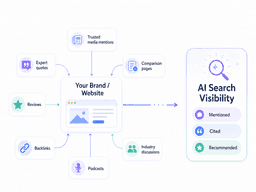
That means your brand is so well understood, so credible, and so clearly tied to a topic that the AI naturally brings you into the answer. You are not simply ranking a page. You are being selected as a trusted entity the system already recognizes.
For that to happen, three things need to be in place:
- the algorithms need to understand who you are,
- they need enough credibility signals to trust you,
- and you need content that demonstrates topical authority.
That credibility layer is especially important. It goes beyond the usual E E A T conversation and moves into N E E A T T, which adds notability and transparency to the equation. The takeaway is simple. AI is more likely to include brands it can both understand and justify.
What does this mean in practice?
If you want to win implicit research, your content cannot feel scattered.
Your site needs to look like a body of work built around real expertise. Your content should reinforce what your brand is known for, cover the right subtopics with depth, and make your authority obvious enough that the AI does not have to guess.
You are not only trying to rank pages.
You are teaching algorithms what your brand stands for.
3. Ambient Research: When Software Recommends You Before the User Starts Researching
This is the biggest shift in the entire framework.
Ambient research is proactive discovery. The user is not actively researching yet, but AI powered software suggests your brand anyway. That places ambient research beyond the funnel and almost before awareness itself.
Picture what this looks like in real life. Gemini might suggest your brand while someone models ROI in Google Sheets. Gmail or Outlook might surface your profile as a recommended consultant. A Google Meet or Microsoft Teams summary might identify your company as the expert most likely to solve a challenge that came up in the meeting.
Notice what changes here. The user is no longer pulling information from the system.
The AI is pushing a solution.
At that point, the system is no longer acting like a neutral search layer. It is acting more like an advocate. That is why ambient research is such a strong signal of brand power. If AI recommends you before the user starts actively comparing options, it means your digital footprint has taught the system that your brand is the safest, clearest default answer in context.
This works a lot like permission marketing, except now the permission is effectively being granted by the algorithms.
That may sound like an edge case today, but it will matter more as AI ecosystems become more closed and more assistive. This is the rise of AI walled garden 2.0.
And then comes the next stage: AI assistive agents.
These systems will not stop at recommendations. They will take action. They will book the flight, order the product, hire the consultant, or complete the next step on the user’s behalf. Once that happens, the environment becomes much more zero sum. There is no real comfort in being a second choice if the agent only acts on one recommendation. If you are not the trusted default, you may not get included at all.
What does this mean in practice?
Start thinking beyond search result pages.
Ask yourself where your brand could become the natural recommendation inside workflows, inboxes, meeting summaries, productivity software, and AI assistants. Then work backward. What would those systems need to understand about your credibility, usefulness, and fit to recommend you automatically?
That is the strategic challenge ambient research creates.
Why Brand Is the One Strategy That Works Across All Three Modes
This is the real conclusion.
A strategy focused only on explicit research is too narrow. It protects the bottom of the funnel, but leaves the top and middle open for competitors.
A strategy that expands into implicit research is stronger, but still reactive. You are still waiting to be included in a list.
Ambient research changes the stakes because that is where AI makes the first introduction. Once the system controls the introduction, brand becomes the one advantage that carries across every stage of discovery.
Here is the pattern:
- In explicit research, AI recommends you because it understands the facts of your brand.
- In implicit research, AI recommends you because it trusts your credibility on the topic.
- In ambient research, AI advocates for you because it has learned that your brand is the most helpful default solution.
That is why a brand first strategy is not fluff here. It is the only strategy that works across all three research modes.
A practical way to think about this is through three goals: Understandability, credibility, and deliverability. If AI can understand you, trust you, and comfortably deliver you as the answer, you are no longer optimizing for one query type. You are training the system to choose you across multiple forms of discovery.
The Strategic Roadmap: What to Do with This
Knowing the three modes is useful. Acting on them is what matters. A practical roadmap looks like this:
1. Fix the bottom of the funnel first
Audit your branded presence. Tighten your homepage, about page, service pages, author signals, reviews, and comparison positioning. This is your explicit research layer. It is the fastest place to reduce friction.
2. Build topic ownership steadily
Create deeper clusters around what your brand genuinely knows. Strengthen internal linking. Publish examples, proof points, and expert led content. This is how you improve implicit research and move closer to the top of algorithmic mind status.
3. Prepare for recommendation environments
Look at the workflows around your audience. Where might AI assistants, inboxes, software tools, summaries, or agents recommend a provider like you? Then strengthen the signals that would make your brand feel like the safest default choice in those environments.
That is where the leverage is heading. Not just showing up in search, but becoming the brand AI is most comfortable carrying forward.
Final thought
The traditional funnel is not gone.
It has been absorbed into AI.
People still move through awareness, consideration, and decision. But increasingly, AI is shaping what they see, which names make the shortlist, and which option feels safest to choose.
That is why the brand wins.
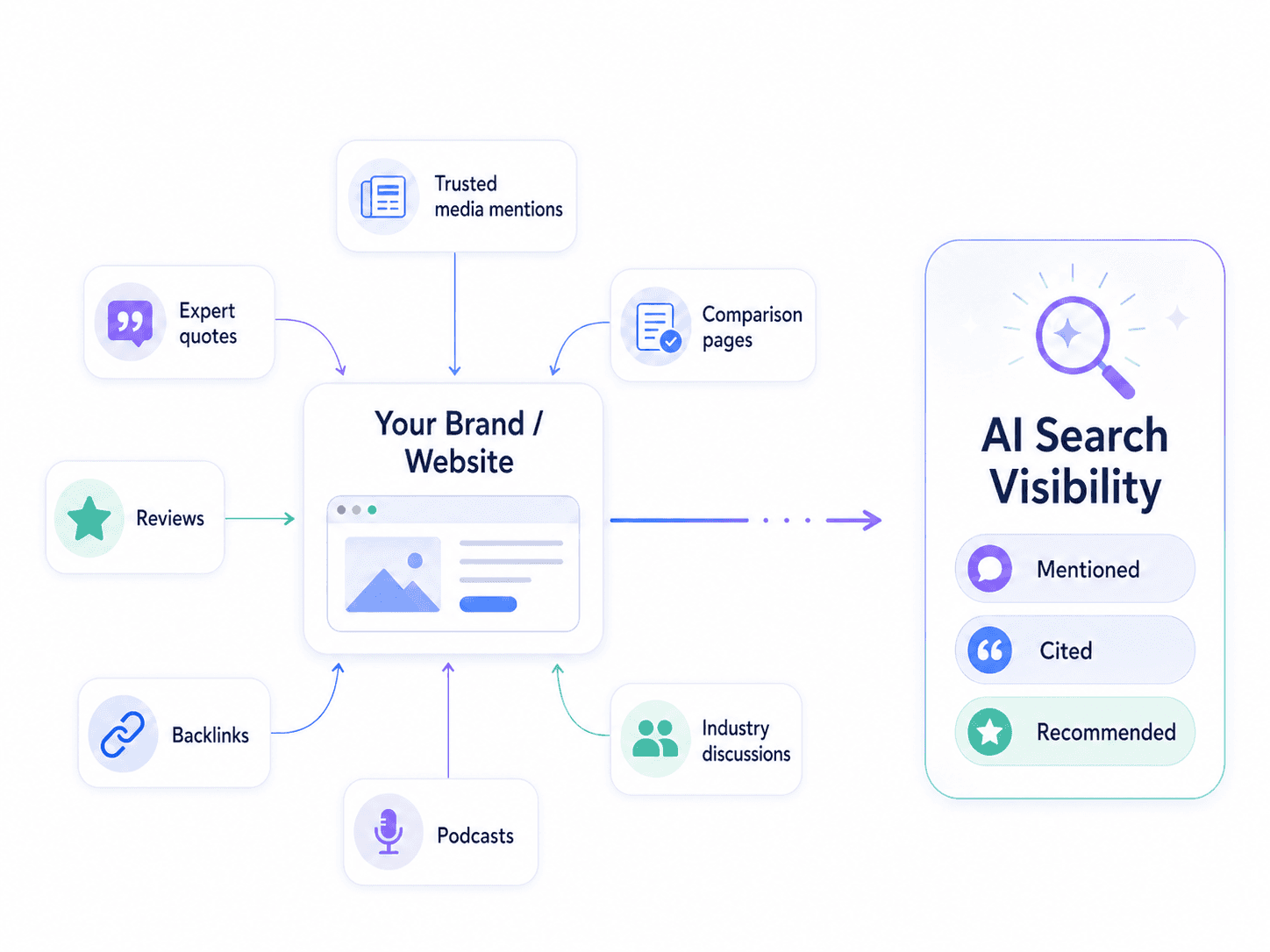
Not because SEO stopped mattering. Not because content stopped mattering. Brand wins because AI systems need a shortcut to trust, and the clearest, most credible brands give them one. If you make your business easier to understand, easier to believe, and easier to recommend, you are not just improving visibility.
You are improving the odds that AI picks you.