
SERP feature optimization for AI answers is now a core part of SEO.
Ranking alone is not enough when Google can show AI Overviews, featured snippets, People Also Ask, product results, and local packs before a user clicks anything. That change is already affecting behavior.
In a large March 2025 analysis, AI summaries appeared in 18% of Google searches. When they appeared, users clicked a traditional search result in just 8% of visits. When they did not appear, that number was 15%.
Google has also expanded these AI search experiences to 120+ countries and territories and added more language support, showing how quickly this shift is growing.
So if you want stronger visibility, you need content that is easy to understand, trust, and extract across the SERP features that influence AI-generated answers.
This guide will show you how to optimize those features so your content has a better chance of appearing in AI answers.
What “SERP Feature Optimization for AI Answers” Actually Means
SERP Feature Optimization for AI Answers means improving your content so it can rank in search and also support AI-generated answers, featured snippets, People Also Ask, and other search result features.
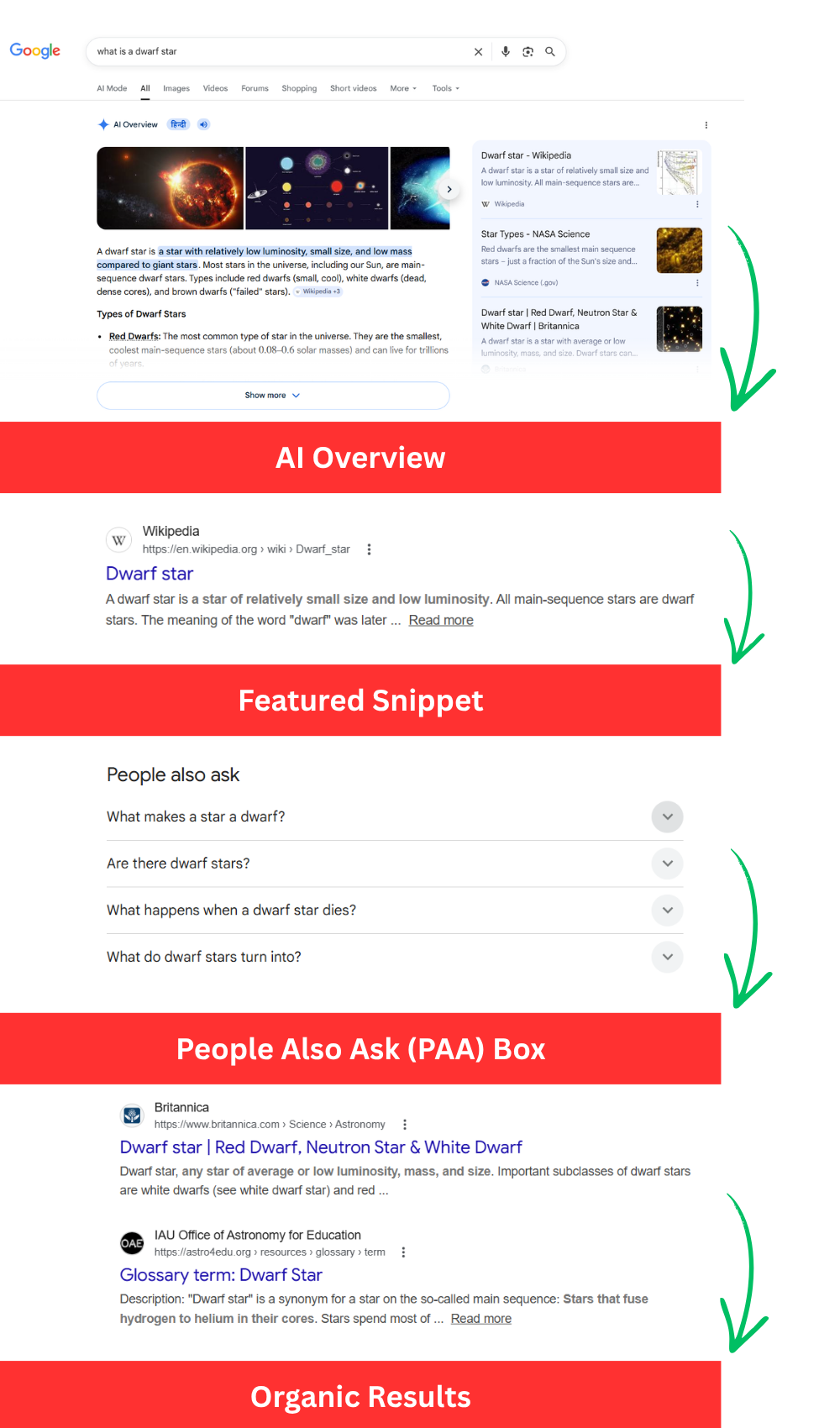
Example of a modern Google SERP where AI Overview, Featured Snippet, and People Also Ask all shape visibility.
In simple words, you are not just trying to get visibility. You are making your content easy for search engines and AI systems to find, understand, trust, and reuse.
That means your page should have:
- clear answers
- strong headings
- clean structure
- useful lists and tables
- relevant schema
- real trust signals
This matters because AI systems often prefer content that is direct, organized, and easy to extract.
So the goal is not only to rank.
The goal is to create content that can be featured, summarized, and cited in modern search experiences.
That is what SERP feature optimization for AI answers really means.
How AI Answers Use the Same Signals Behind Strong SERP Features
AI answers use many of the same signals behind strong SERP features.
Search engines reward content that is clear, well-structured, and trustworthy. That is why some pages earn featured snippets, People Also Ask results, product highlights, and other SERP features.
AI systems look for the same strengths.
They prefer content that answers the query directly, uses strong headings, adds useful context, and includes reliable information. When your page is easy to scan and easy to understand, it becomes easier to extract and summarize.
This is why SERP feature optimization for AI answers matters. If your content is built to win SERP features, it is often better prepared for AI answer visibility too.
The SERP Features That Most Influence AI Answer Visibility
SERP features are enhanced search results like featured snippets, People Also Ask, local packs, product results, image packs, and video results. They matter because they help search engines decide which content is the clearest, most useful, and most trustworthy.
That is exactly what AI systems look for too.
If your page is strong enough to earn or support these features, it becomes more likely to influence AI answers, AI Overviews, and other answer-first search experiences.
1. Featured Snippets
Featured snippets are one of the strongest signals for AI answer visibility.
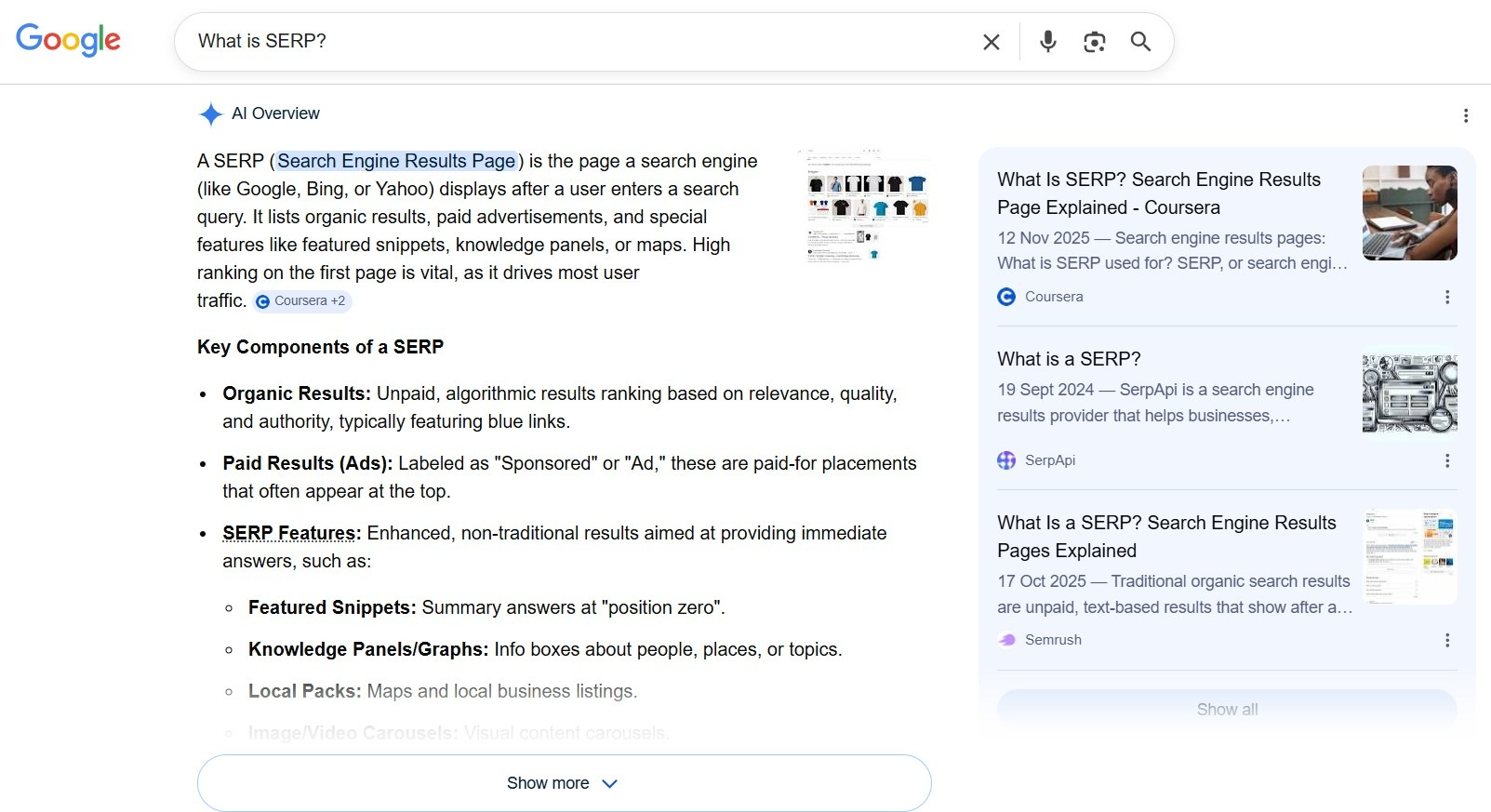
They usually reward pages that answer a question in a short paragraph, list, or table. That format works because it is easy to scan, easy to extract, and easy to summarize.
AI systems prefer content that does the same thing. They want a direct answer first, not a long introduction.
So if your content gives a clean answer near the top, you improve its extractability. And better extractability gives your page a stronger chance of supporting AI-generated answers.
Optimization tip: Answer the main question in 40–60 words before expanding.
2. People Also Ask
The People Also Ask section shows the follow-up questions connected to the main search intent.
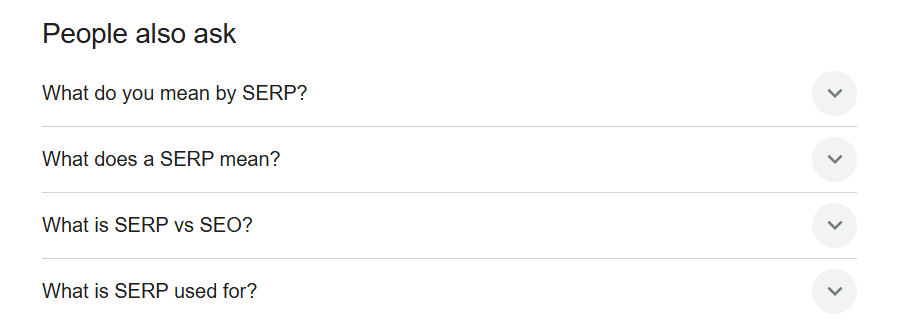
This matters because AI answers rarely stop at one basic response. They often try to cover the next layer of the topic too.
So your page should not only answer the primary question. It should also address the related questions users are likely to ask next.
That helps in two ways. First, it improves topical depth. Second, it shows search engines that your content covers the subject more completely.
And when a page covers the topic more completely, it becomes more useful for AI answers.
Optimization tip: Add short, clear answers to the most relevant follow-up questions under separate subheadings.
3. Knowledge Panels and Entity Signals
AI systems need to know who is behind the content.
That is where knowledge panels and entity signals matter.
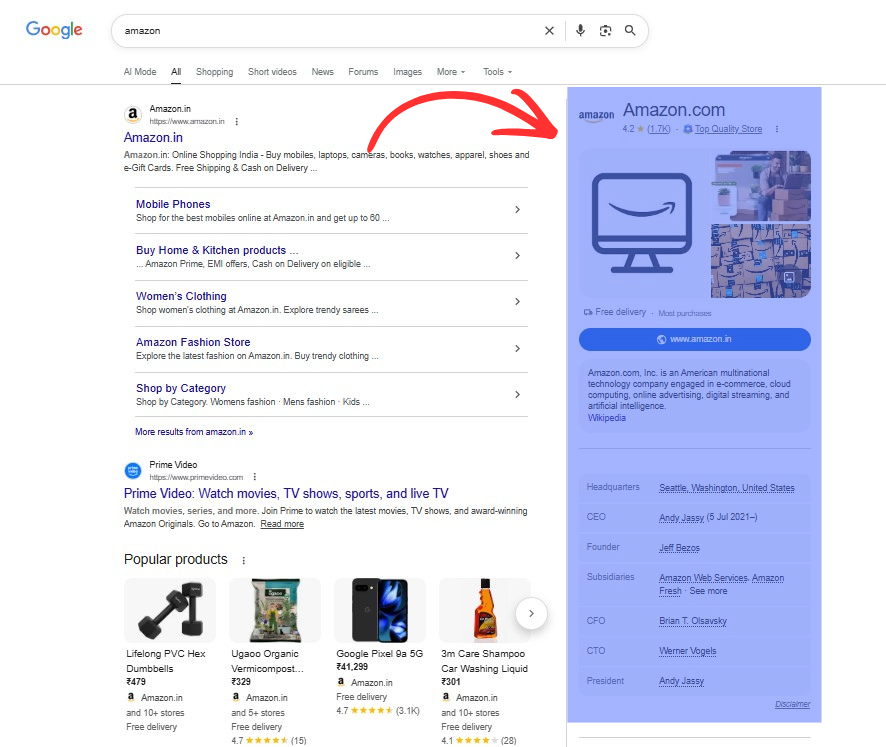
Search engines want clear connections between the page, the brand, the author, and the topic. If your site makes those relationships obvious, your content becomes easier to trust.
This is a big part of source trust.
A page with a clear author, a defined brand, a strong About page, and consistent business details looks more reliable than a page with weak identity signals. That reliability can improve how confidently AI systems use your content.
Optimization tip: Make your brand, author, expertise, and business identity easy to verify across the site.
4. Local Pack and Business Features
For local searches, the local pack is a major trust signal.
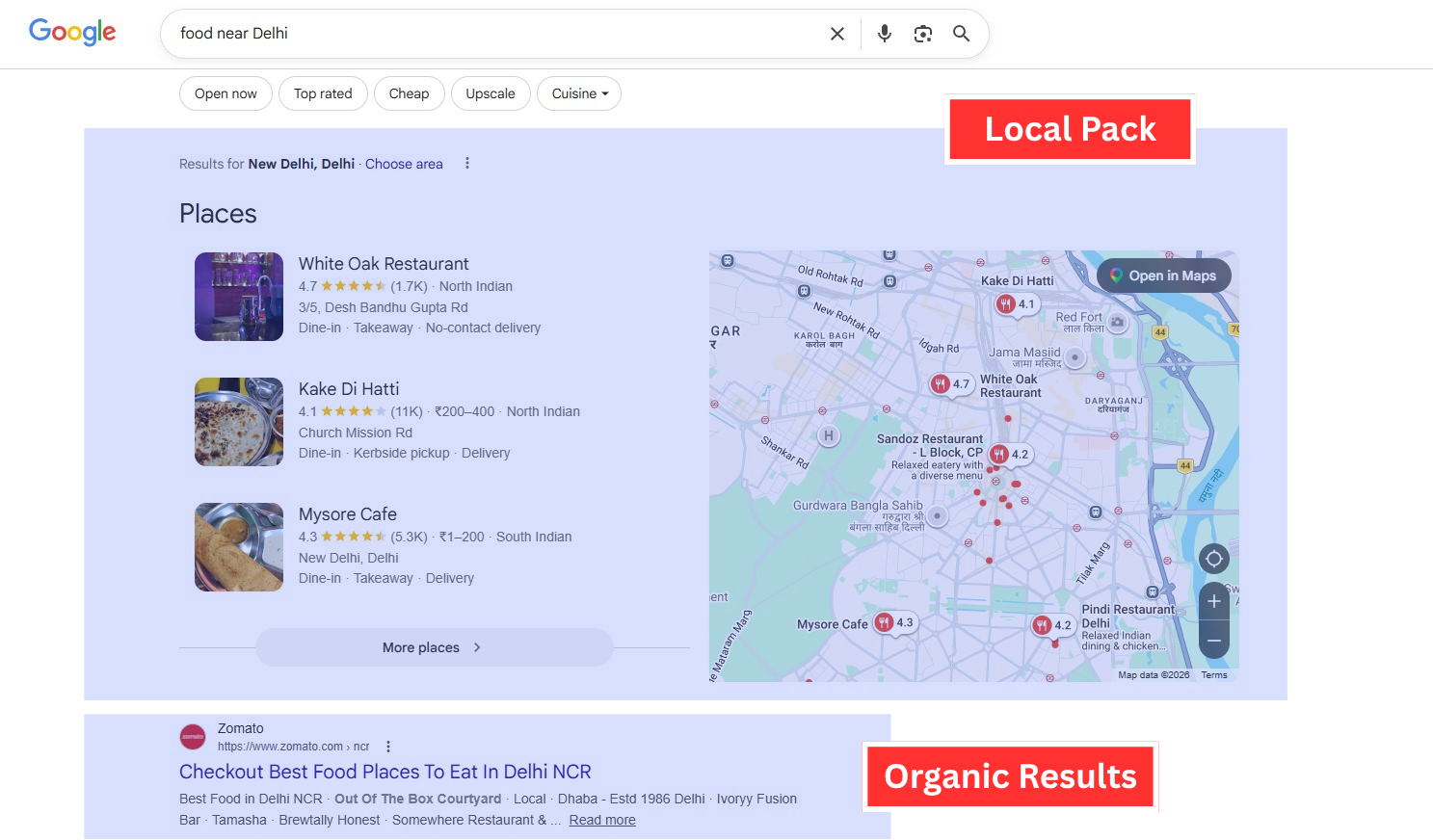
When users search for nearby services or businesses, search engines lean on business details, reviews, categories, location accuracy, and local relevance. AI systems often rely on those same signals when forming local answers.
So if your business information is inconsistent, incomplete, or weak, your chances of showing up in local AI answers drop.
But if your business profile is strong, your reviews are credible, and your service pages are clear, your content becomes easier to recommend.
Optimization tip: Keep your business details accurate everywhere and support them with strong local landing pages.
5. Key Product Attributes inside SERP Features
For commercial searches, product and review SERP features matter a lot.
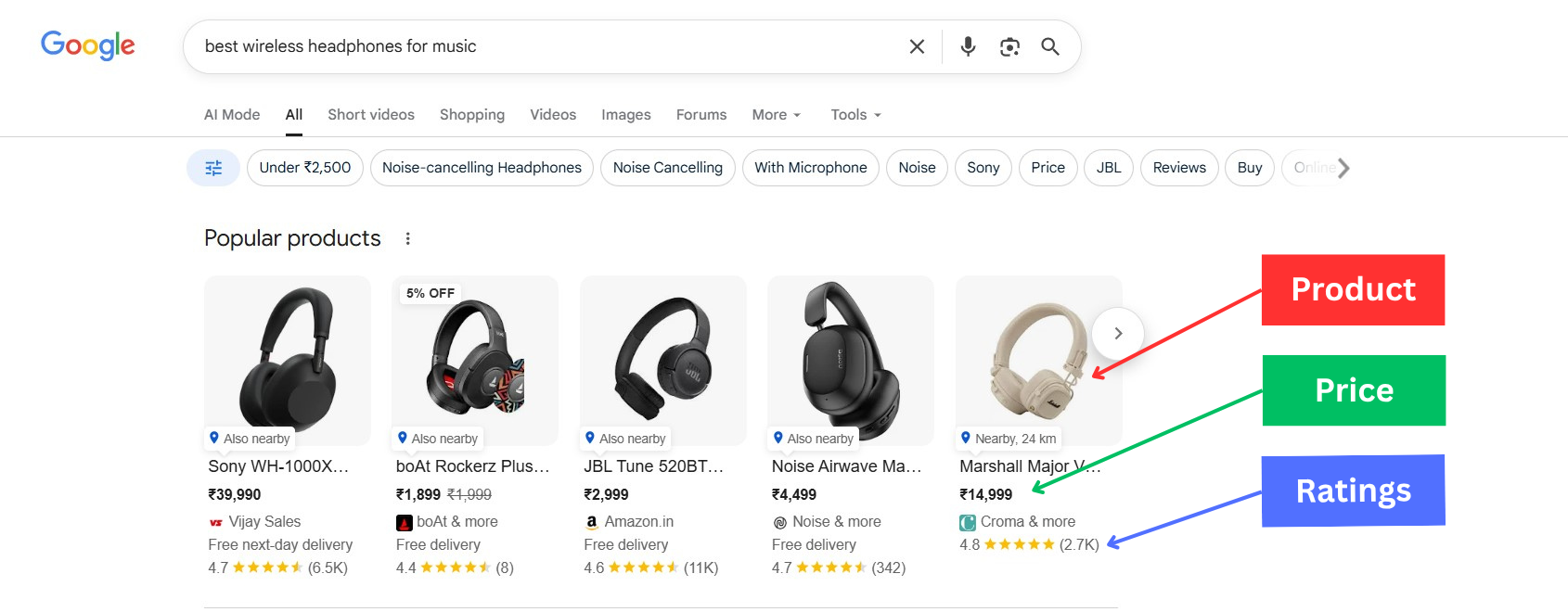
These features help search engines understand what a product is, what it costs, how it compares, and why it may be worth considering.
That is important for AI answers because commercial AI responses need structured facts. They need pricing, features, pros and cons, comparisons, and trustworthy review signals.
If your product or comparison page is easy to scan and rich in useful detail, it becomes much more usable for AI-generated buying answers.
Thin product pages do not help much. Clear, detailed, comparison-friendly pages do.
Optimization tip: Use scannable product information, real comparisons, and clear value points instead of generic sales copy.
6. Image and Video Features
Image and video features strengthen content quality and make pages easier to understand.
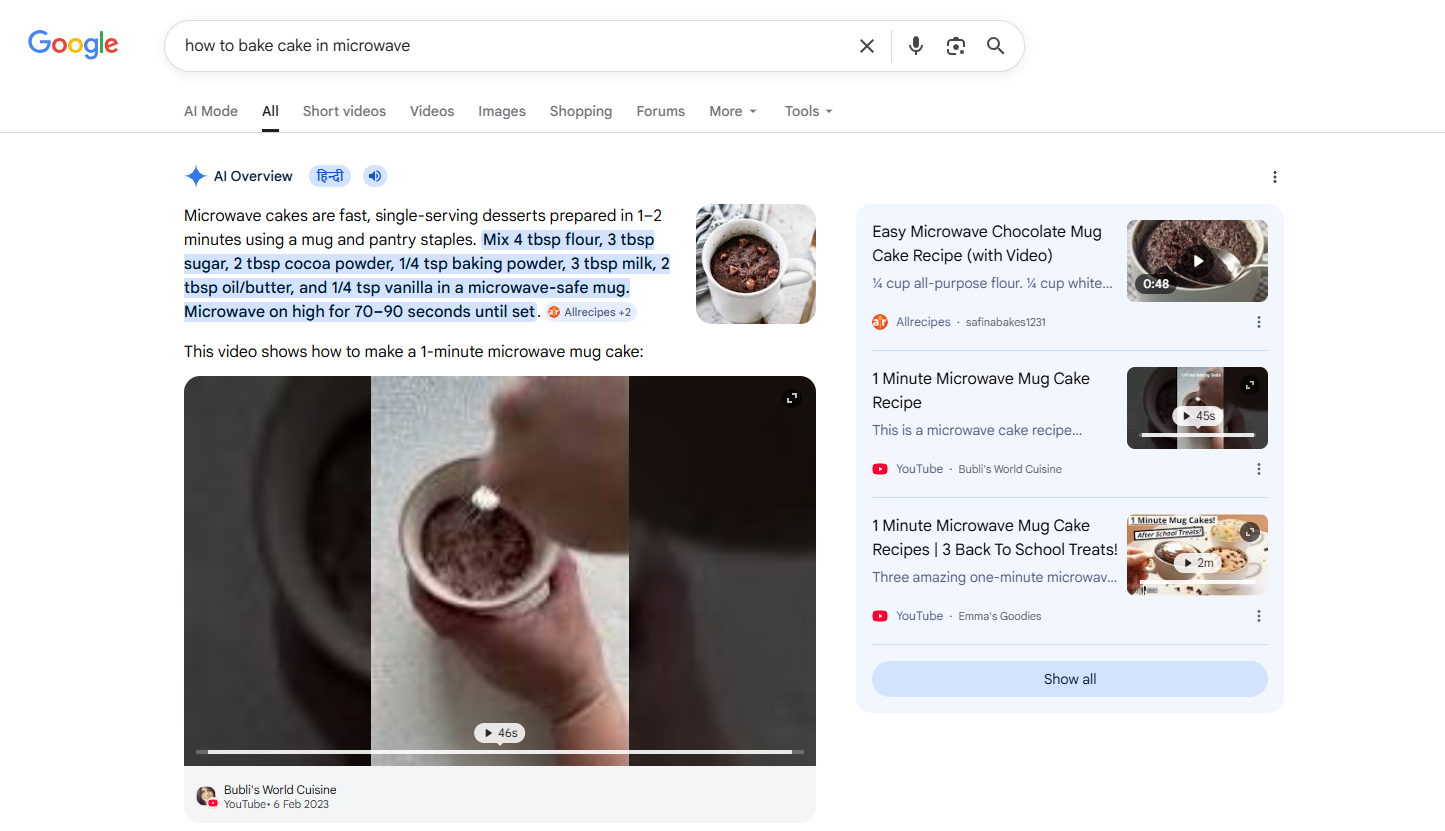
A good visual can explain a process, show a product, or support a concept faster than text alone. That improves the overall usefulness of the page.
And usefulness matters for AI-first SEO.
Search engines can use visuals as supporting relevance signals. AI systems may not “rank” an image the same way a user sees it, but richer content still makes the page more complete and more helpful.
That can improve the page’s ability to support AI answers.
Optimization tip: Add visuals that clarify the topic, not visuals that only decorate the page.
7. Top Stories and Freshness-Based Results
For time-sensitive topics, freshness becomes a major visibility signal.
Search engines often highlight recent pages in features like Top Stories or other freshness-driven results.
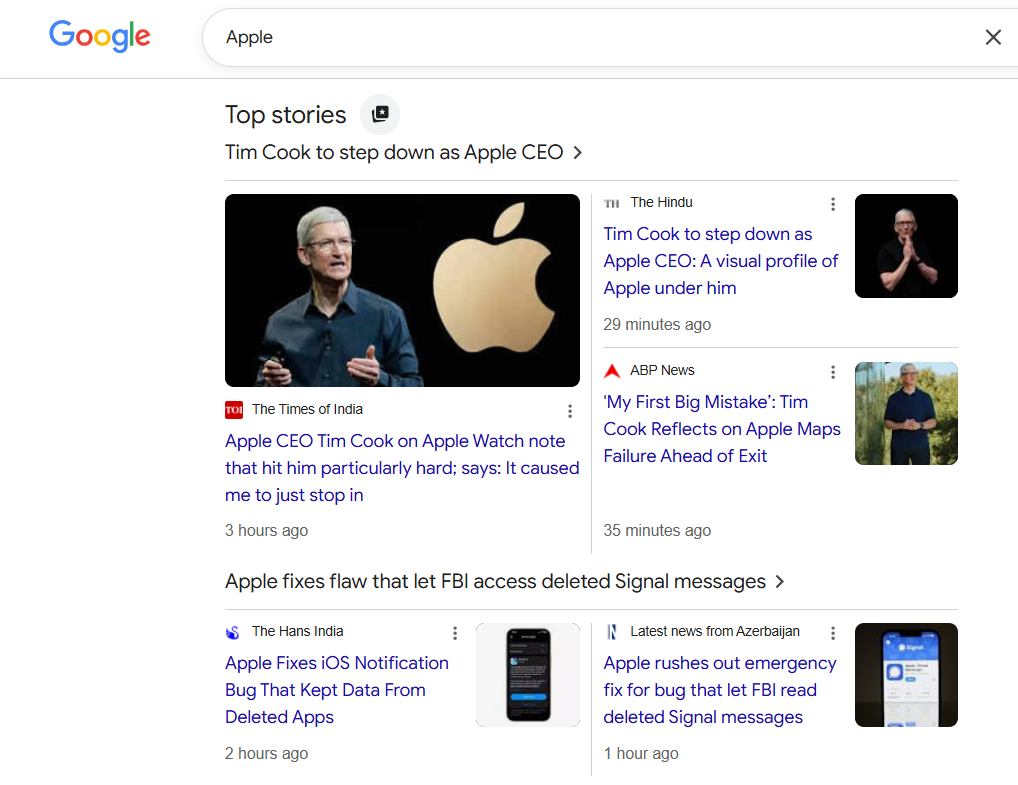
AI systems usually follow the same logic when generating answers on current topics.
So if your content is outdated, it becomes harder to trust for fast-moving queries. But if it is recently updated, clearly maintained, and aligned with the latest developments, it becomes more useful.
This matters even more in areas like AI, SEO, technology, finance, and digital marketing, where change happens fast.
Optimization tip: Update pages regularly when the topic changes quickly, and make sure the new value is visible in the content.
Search Intent Mapping: The First Step in SERP Feature Optimization
Search intent mapping is the process of understanding what the user wants from a query, then aligning your page with the SERP features most likely to satisfy that need.
This matters because Google does not rank pages in isolation. It builds a results page based on intent.
If the search is informational, Google may show AI Overviews, featured snippets, or People Also Ask. If the search is commercial, it may surface comparison results, review content, or product-focused features. If the search is transactional, you are more likely to see shopping results, local packs, or service listings.
That means your job is not just to target a keyword.
Your job is to understand the type of outcome the searcher expects.
If someone wants a quick explanation, your content should answer fast. If they want to compare options, your page should make evaluation easy. If they want to take action, your page should remove friction and support the next step clearly.
This is why search intent mapping comes before every other optimization step.
Before you think about schema, headings, internal links, or content depth, you need to know what kind of search experience Google is trying to create for that query.
Once you understand that, you can build content that fits the result.
And when your content matches the intent behind the search, it has a much better chance of appearing in the right SERP features and being useful enough to support AI-generated answers.
In short, search intent mapping helps you optimize for how the query is meant to be answered, not just how it is worded.
Core Content Elements That Make Pages More Usable for AI Answers
To make your page more usable for AI answers, your content needs to be clear, trustworthy, well-structured, and easy to extract.
That is the foundation.
AI systems look for pages that explain things quickly, organize information clearly, and support claims with useful detail. So your content should help both the reader and the system understand the main point fast.
1. Clear Answer-first Structure
Start with the answer.
Do not make readers work through a long intro before they reach the main point. Put the direct answer near the top of the section. Then expand with explanation, examples, or proof.
This improves usability because the page becomes easier to understand right away. It also makes the core point easier to identify and summarize.
A simple structure works best:
- answer first
- explain it next
- support it with proof
When your content follows that flow, it becomes much easier to use in AI-generated responses.
2. Strong Heading Hierarchy
Your headings should clearly say what each section covers.
This helps readers scan the page faster. It also helps AI systems understand how the page is organized and how each section connects to the main topic.
Use direct headings that reflect real questions or clear subtopics. Avoid vague headings that sound polished but do not explain much.
For example, “How to Structure Content for AI Answers” is much clearer than “Why This Matters.”
Clear headings improve relevance, structure, and topical understanding.
3. Concise Answer Blocks
Each section should explain one idea clearly.
That means short definitions, short explanations, short lists, and short summaries. The goal is not to make the content thin. The goal is to make the main point easy to isolate.
When one block answers one question well, it becomes easier to extract, interpret, and reuse.
That is why concise answer blocks matter. They make your content more useful without removing depth.
4. Evidence and Proof
Clear writing is important. Proof makes it credible.
If you want your content to be trusted, support your claims with something solid. That can include:
- data
- examples
- case studies
- expert insights
- research
- product details
This strengthens the page because it shows that the content is not based on opinion alone. It is supported by real information.
Pages with proof usually feel more useful, more specific, and more dependable.
5. Entity Clarity
Your page should clearly show who created the content and why that source matters.
This includes the author, brand, company, or publication behind the page. It should also be obvious what topic the page covers and what expertise supports it.
This matters because AI systems look at the source behind the content, not just the wording on the page. They want to understand who is speaking and whether that source is relevant to the topic.
So make sure your content clearly reflects:
- who wrote it
- what the brand does
- what the page covers
- why the source is credible
This helps strengthen trust and makes the page easier to evaluate.
6. Multiformat Content
Not every answer should sit inside a paragraph.
Some information works better in other formats, such as:
- bullet points
- tables
- FAQs
- comparison charts
- visuals
- step lists
This makes the page easier to scan and easier to understand. It also gives AI systems more structured ways to interpret the information.
For example, a comparison table can explain differences much faster than a long paragraph. A short FAQ can answer follow-up questions in a cleaner format.
The strongest pages use the format that fits the information best.
7. Context Depth
A useful page answers the main question.
A stronger page also answers the next one.
That is where context depth matters. After giving the direct answer, you should add supporting detail that helps the reader fully understand the topic.
This can include:
- follow-up questions
- exceptions
- trade-offs
- use cases
- practical next steps
This makes the page more complete. It also helps AI systems understand the meaning around the answer, not just the answer itself.
That extra context often makes the content more useful in generated responses.
On-Page SEO Tactics That Support SERP Features and AI Extraction
The job of on-page SEO is no longer just to help you rank.
Now it also needs to help your page get understood, extracted, and surfaced in feature-heavy results and AI answers. That matters because Google says people are using AI search experiences to ask longer, more specific questions, and then asking follow-up questions to go deeper.
So your page has to do more than “cover the topic.” It has to make the answer easy to find, easy to trust, and easy to reuse.
1. Optimize for Extractable Paragraphs
Start each important section with a clear, direct answer.
The first paragraph under your heading should explain the point in simple language. Then you can expand with examples, detail, and proof.
This works because Google’s featured snippet guidance shows that Search actively pulls short descriptive passages and can also surface them inside People Also Ask.
So write like this:
- heading
- short answer
- deeper explanation
That structure makes your content easier to scan. It also makes it easier for search systems to isolate and reuse the most helpful part of the page.
If the answer is buried under a long intro, your page becomes harder to extract.
2. Use List Structures When the Query Needs Structure
Lists help search systems and readers process information faster.
Use them when the query involves:
- steps
- priorities
- best practices
- pros and cons
- checklists
This matters because feature-heavy results often appear together. In Advanced Web Ranking’s study of 8,000 keywords, when AI Overviews showed up, People Also Ask appeared in 99.5% of cases, videos in 69.7%, and featured snippets in 59.5%.
That tells you something important:
When the search results are modular, your content should be modular too.
Use numbered lists for the process, Bullets for grouped points, and short pros-and-cons sections for evaluation.
Do not force every idea into a list. But when the intent is structured, your formatting should match it.
3. Use Tables For Comparison-heavy Topics
If your topic involves choices, differences, pricing, features, or trade-offs, use a table.
Tables make comparison easier for the reader. They also make comparison easier for search systems.
That is useful on pages like:
- product comparisons
- alternatives pages
- pricing pages
- software comparisons
- feature breakdowns
Google’s current guidance for AI search keeps returning to the same principle: create content that is helpful, satisfying, and easy to understand. A clean table supports that directly by reducing confusion and making the information easier to interpret.
Just keep the table focused. One table should solve one comparison job.
If you try to compare everything at once, the page becomes noisy. Clean structure is what helps.
4. Add FAQ Sections For Real Follow-up Questions
FAQ sections still have value. But the reason has changed.
Google reduced FAQ rich result visibility in 2023. It now says FAQ rich results are shown regularly only for well-known, authoritative government and health sites.
So for most websites, FAQs should not be there to chase a visual enhancement.
They should be there to answer the next question.
That is especially important now because Google says users in AI search experiences ask follow-up questions to dig deeper.
A strong FAQ section extends the topic naturally.
For example, if your page explains internal linking, the follow-ups might be:
- How many internal links should a page have?
- What anchor text should you use?
- Can internal links improve discoverability?
That kind of FAQ block adds useful depth. It also expands the page’s coverage without making the main copy messy.
5. Improve Internal Linking So Pages Have Context
Internal links do more than help users move around your site.
Google says links help it understand pages and discover more content. It also says good anchor text should be descriptive, reasonably concise, and relevant.
That matters because a page becomes more useful when it is clearly connected to:
- supporting guides
- definitions
- examples
- subtopics
- related use cases
So do not use vague anchors like, “click here”, “read more”, and “learn more”
Instead, use anchor text that tells both the reader and Google what the next page adds.
For example:
- technical SEO audit checklist
- structured data examples
- product comparison framework
That creates stronger topical relationships across the site. And stronger topic relationships make your content easier to interpret in context.
6. Write Stronger Title Tags and Meta Descriptions
Your title tag and meta description shape the first impression of the page.
Google recommends writing descriptive and concise title elements, and says it may use the meta description when it provides a more accurate summary for users. Google also describes meta descriptions as a short, relevant pitch for what the page is about.
So your title should clearly say what the page helps the reader do.
Your meta description should explain the value in simple language.
That means:
- be specific
- match intent
- avoid filler
- avoid vague labels
- avoid repeated keywords
A strong title improves clarity. A strong meta description improves relevance. Together, they help frame the page before the click even happens.
Structured Data: What It Helps With and What It Does Not
Structured data is code that helps search engines understand the meaning of your page more clearly. It tells them, in a machine-friendly format, whether a page is about a product, a review, an organization, an article, an FAQ, or something else. Google says it uses structured data to understand page content and to show some content in richer search results.
That matters because AI systems work better when your content is easier to classify, connect, and extract. Structured data helps with that clarity. It can support features like richer product results. For example, Google says Product structured data can help show details like price, availability, review ratings, and shipping information directly in Search.
It also matters because this is no longer a niche. W3Techs reports that 53.4% of websites use JSON-LD as of April 24, 2026. That tells you structured data is now a normal part of the modern web, not an advanced extra.
But here is the important limit.
Structured data does not improve weak content by itself. It does not guarantee rankings. It does not guarantee rich results. And it does not guarantee inclusion in AI answers. Google’s own guidance is clear that structured data makes pages eligible for certain rich results, but eligibility is not the same as visibility. Pages still need to meet Search requirements, quality guidelines, and content policies.
The same rule applies to AI search. Google’s guidance for AI Overviews and AI Mode does not introduce a special “AI schema” that gets you included. The foundation is still the same: helpful content, crawlability, strong page quality, and compliance with normal Search rules.
So the best way to think about it is simple: Structured data supports understanding and feature eligibility, but it does not guarantee rankings or AI inclusion.
Use it to make your content easier for search engines and AI systems to read. Just do not treat it like a shortcut. Your content, structure, trust signals, and intent match still do the heavy lifting.
The Role of E-E-A-T in AI Answer Selection
E-E-A-T matters because AI systems do not want weak sources. They want content they can trust.
That is why E-E-A-T matters so much here. If your page looks credible, clear, and useful, it has a better chance of being surfaced in AI answers.
Google makes this pretty clear. Its guidance says AI features like AI Overviews still follow the same core search principles. So there is no separate trick for AI search. Your content still needs to be helpful, reliable, and easy to understand.
The most important part is Trust. In Google’s Search Quality Evaluator Guidelines, Trust is described as the most important part of E-E-A-T. That means your page should feel safe to rely on.
The data supports this too. We studied 432,000 keywords and found that 97% of AI Overviews included at least one source from the top 20 organic results. In fact, BrightEdge also found that 54.5% of AI Overview citations overlapped with organic rankings, up from 32.3% earlier. That tells you something important. AI answers still lean on strong search signals.
So what should you do?
- Make your trust signals easy to spot.
- Show real authors.
- Add clear sources.
- Use accurate claims.
- Keep your About page, contact details, and business information visible.
- Update content when needed.
- Be specific.
- Not vague.
If AI systems are going to summarize your page, they need a reason to believe it. E-E-A-T gives them that reason.
Common Mistakes That Kill SERP Feature Visibility in AI Search
If you want your page to show up in AI answers, it has to be easy to understand, easy to trust, and easy to pull from.
A lot of pages fail because they make that job harder than it should be.
1. You Bury the Answer Too Deep
This is one of the biggest mistakes.
A lot of pages spend too much time on long intros. The actual answer shows up after three or four paragraphs. That is a problem.
Search engines and AI systems want to find the main answer fast. If your page takes too long to get there, it becomes harder to extract and summarize.
Put the direct answer early. Then add detail under it.
2. Your Headings Are Vague
Weak headings confuse both readers and machines.
If your subheadings say things like “What this means” or “A deeper look,” they do not explain the section clearly. AI systems work better when each section has a clear purpose.
Use headings that say exactly what the section covers.
For example, write “How Featured Snippets Support AI Answers” instead of something generic.
3. Your Content Says a Lot, But Proves Very Little
AI-friendly content is not just clear. It also needs to feel reliable.
If your page makes claims without examples, data, comparisons, or specifics, it looks thin. Thin content is much less useful for AI summaries.
Add proof. Use stats, real examples, expert insight, or short comparisons.
4. Your Formatting is Hard to Extract
Big walls of text make your content harder to use.
AI systems prefer structures they can follow. That means short paragraphs, clear lists, clean tables, direct definitions, and simple question-answer blocks.
If everything is packed into long text, your page becomes harder to scan and harder to surface.
Structure helps visibility.
5. You Do Not Match the Search Intent Behind the Query
Sometimes the page is well written, but it is built for the wrong kind of search.
A query may need a quick definition, a comparison, a step-by-step answer, or a product breakdown. If your content format does not match that need, it becomes less useful for SERP features and AI answers.
So before writing, ask: What is the searcher really expecting here?
Then build the page around that.
How to Know If Your SERP Feature Strategy Is Helping AI Visibility
Measurement means checking whether your content is showing more signs of being selected, trusted, and surfaced across search features that also support AI answers.
So instead of looking at rankings alone, you watch signals like featured snippet wins, more People Also Ask visibility, stronger CTR, more impressions in Search Console, richer product or local results, and growth in branded searches. These are the signs that your page is becoming easier for search engines to understand and easier for AI systems to extract.
You should also track whether pages built for clear answers are driving better engagement and assisted conversions.
If a page gets more visibility, better clicks, and stronger feature placement after you improve structure, schema, clarity, and trust signals, your strategy is likely helping AI visibility too.
The goal is not just position. It is a search presence.
Final Thoughts
SERP feature optimization is no longer optional if you want visibility in AI answers.
It is not just about ranking anymore. It is about making your content easy to find, understand, trust, and extract.
So what should you focus on? Clear answers. Strong structure. Real proof. The right format for the query.
When you do that, you are not just improving SEO. You are making your content more useful for both search engines and AI systems.
That is the real goal now. Not just to appear in search, but to show up where answers are being built.
.png&w=256&q=60)
.png&w=256&q=60)


.png&w=3840&q=60)
.png&w=3840&q=60)


