The B2B Buyer Journey Now Starts in ChatGPT: How SaaS Brands Can Show Up Earlier
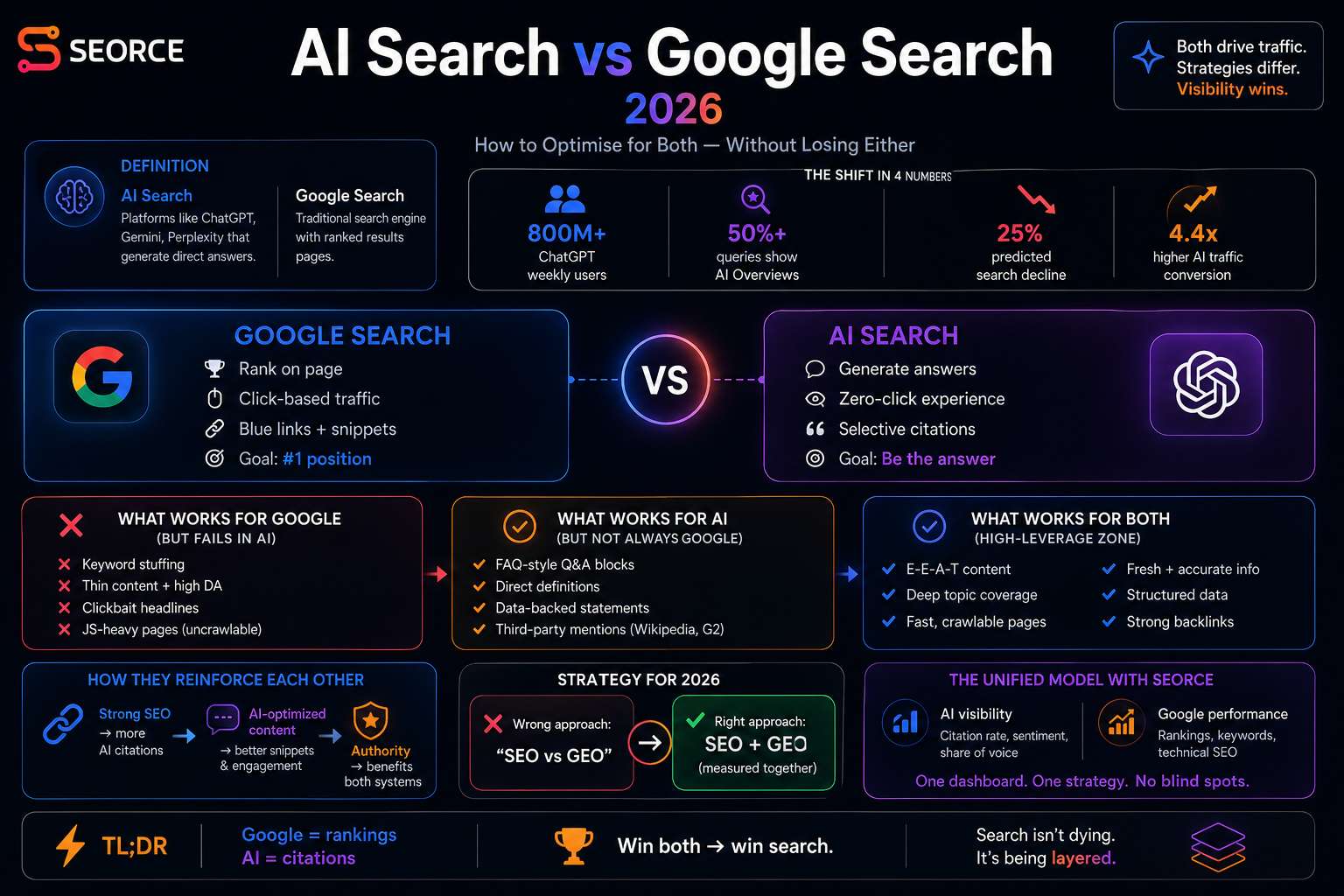
B2B buyers do not always start with Google now.
Many start by asking ChatGPT simple buying questions like, “Which SaaS tool is best for customer onboarding?” or “What are the top alternatives to this platform?”
The answer they get can decide which brands make the first shortlist.
Forrester found that 94% of B2B buyers use AI, and many now see generative AI or conversational search as a more important information source than vendor websites or sales teams.
For SaaS brands, this creates a clear challenge.
If your product is not easy to understand, compare, and trust online, buyers may skip you before they ever visit your website.
This guide will show how SaaS brands can appear earlier when B2B buyers use ChatGPT to research solutions.
Why the B2B Buyer Journey Is Changing
B2B buyers now research long before they speak to sales.
They check tools, compare features, scan reviews, and look for pricing signals on their own. Many now use ChatGPT to make this process faster.
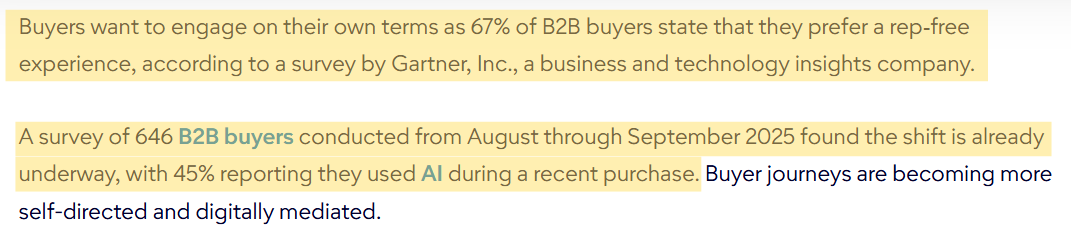
Gartner found that 67% of B2B buyers prefer a rep-free buying experience, and 45% used AI during a recent purchase. That shows how much early product research has moved away from sales teams and into self-service channels.
For SaaS brands, this changes where the first impression happens.
A buyer may not start on your homepage.
They may ask ChatGPT:
- “Best SaaS tools for customer onboarding.”
- “Top alternatives to [competitor name].”
- “Which CRM works best for a small B2B team?”
If your brand is not part of those answers, you may lose the buyer before they reach your website.
B2B buyers want faster research, fewer sales barriers, and more control over the buying process.
So your content needs to answer real buyer questions clearly. It should explain what your product does, who it is for, how it compares, and why buyers should trust it.
What This Means for SaaS Brands
For SaaS brands, visibility is no longer limited to search rankings, ads, or direct website visits.
Your brand also needs to be clear enough for AI tools to understand and mention in buyer research.
That starts with sharp product messaging.
Your website should clearly show what your product does, who it helps, which problem it solves, and when a buyer should choose it over another option.
If this information is vague, your brand becomes harder to place in the right category.
And that matters.
A buyer may not search your brand name first. They may search by problem, use case, team size, industry, or software category.
So your SaaS content should answer those paths directly.
Build pages around product use cases, competitor comparisons, pricing questions, customer proof, integrations, and common buying objections.
The clearer your product story is, the easier it becomes for AI systems to connect your brand with the right buyer query.
How ChatGPT Chooses Which SaaS Brands to Mention
ChatGPT is more likely to mention SaaS brands that are easy to understand, easy to place in a category, and easy to verify.
It needs clear public information about your product.
That includes your category, main use case, target audience, and proof from trusted sources.
Your brand should clearly answer:
- What type of SaaS product is this?
- Who is it built for?
- What problem does it solve?
- Where does it fit in the market?
- What makes it credible?
This matters because ChatGPT is now part of how buyers research software. OpenAI CEO Sam Altman said ChatGPT reached 800 million weekly active users in 2025.
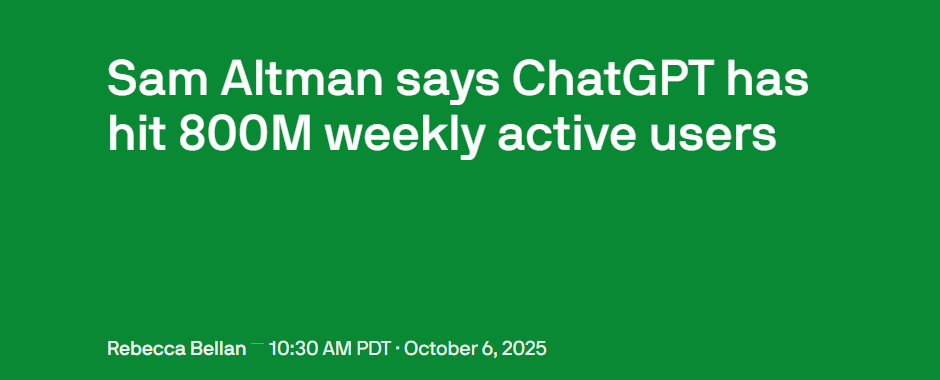
That means many buyers are not only searching. They are also asking, comparing, and shortlisting tools inside ChatGPT.
For SaaS brands, this creates a clear job.
Your product information should be specific, consistent, and easy to verify across the web.
That includes your product pages, comparison pages, customer stories, review profiles, integration pages, and third-party mentions.
If ChatGPT can quickly understand what your product does and why it matters, your brand has a better chance of being mentioned when buyers ask for SaaS recommendations.
The New SaaS Visibility Funnel
The SaaS visibility funnel is no longer built around clicks alone. Buyers now move through small research moments before they ever visit your site.
Your job is to show up in those moments with content that connects your product to a real buyer's need.
1. Problem Awareness
The buyer does not know which tool they need yet. They only know something is slowing them down.
For example, they may search for: “Why does customer onboarding take so long?”
Your content should explain the problem in plain language. Talk about the delays, missed handoffs, manual work, and revenue impact. This helps your brand get associated with the actual pain, not just the software category.
2. Solution Research
Once the problem is clear, the buyer starts looking for possible fixes.
They may ask: “How can SaaS companies improve customer onboarding?”
This is where your content should connect the problem to a solution category.
Explain what kind of tool helps, which features matter, and when a team should stop managing the process manually.
Keep it simple: Problem> solution > use case.
3. Vendor Comparison
Now the buyer is shortlisting options.
They may ask: “Best customer onboarding tools for B2B SaaS teams.”
This is where vague messaging hurts you.
Your content should clearly explain who your product is built for, what makes it different, and which use cases it handles best.
Be specific. A clear fit is easier to understand, compare, and recommend.
4. Validation
Before taking action, the buyer wants proof.
They may ask something like: “Is this tool reliable for a mid-sized SaaS company?”
Your content should answer that with customer stories, reviews, pricing clarity, feature depth, and real outcomes.
This stage is not about more claims. It is about trust.
How SaaS Brands Can Show Up Earlier in ChatGPT
Showing up in ChatGPT does not happen only because you publish more blogs.
It happens when your SaaS brand is described clearly across the web, connected to the right problems, and backed by enough proof that it can be recommended with confidence.
When a buyer asks ChatGPT for software advice, they are usually not looking for a random list of tools. They are trying to solve a specific problem. Maybe they want to reduce churn, improve onboarding, automate sales follow-ups, or compare two platforms before booking a demo.
Your content needs to meet them at that stage.
1. Write for Real Buyer Questions, Not Just Keywords
B2B buyers do not always search like this anymore: “CRM software”
They ask more specific questions, such as:
- “What is the best CRM for a small B2B sales team?”
- “Which SaaS tool helps reduce customer churn?”
- “What are the best HubSpot alternatives for startups?”
- “Which customer onboarding platform is good for B2B SaaS?”
Here is the hxample of how B2B buyers now ask detailed SaaS questions inside ChatGPT instead of searching with short keywords.
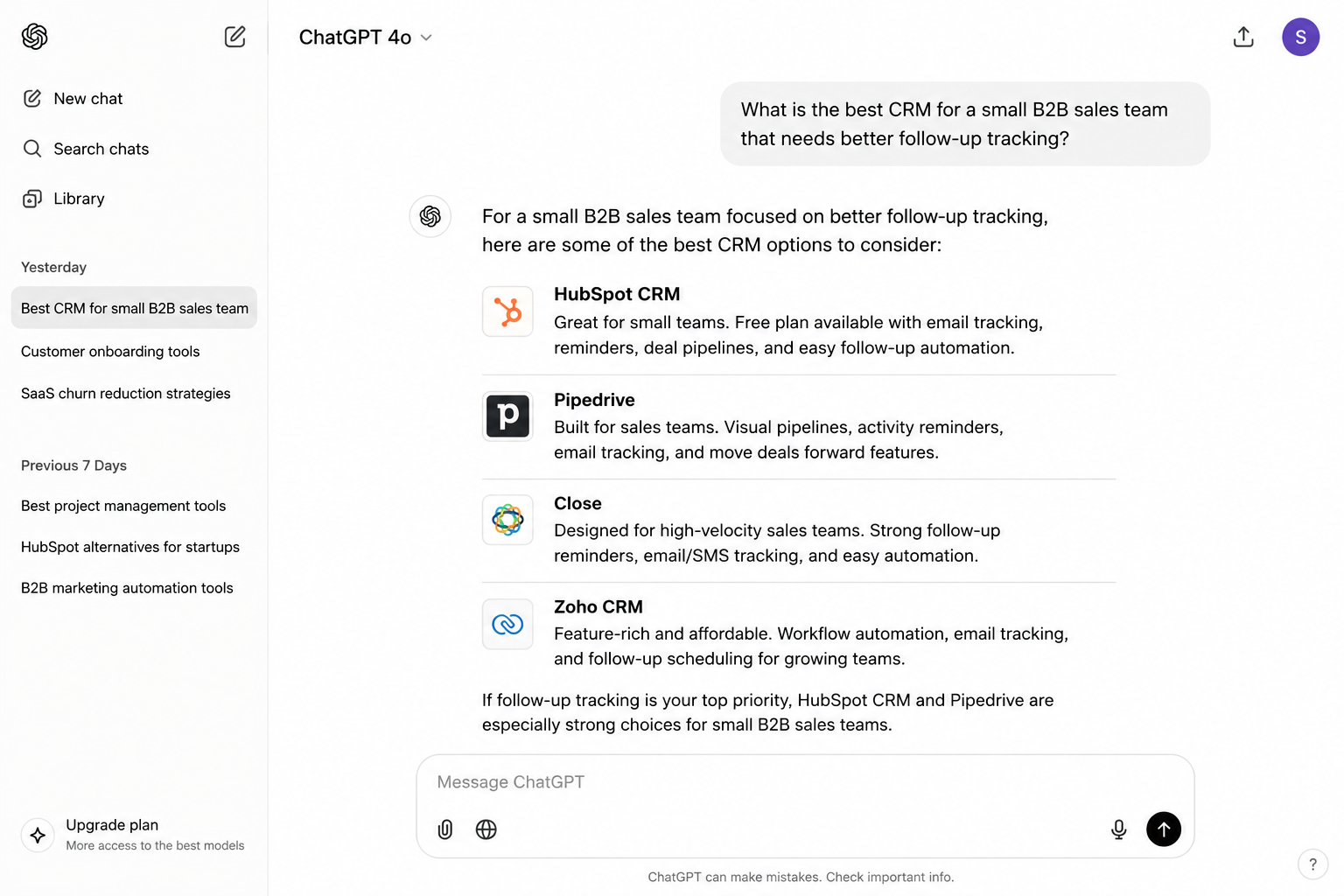
That is the shift you need to write for.
Instead of creating a broad article like “Benefits of CRM Software,” create something more direct, such as “Best CRM Software for Small B2B Sales Teams That Need Better Follow-Up Tracking.”
This gives ChatGPT more useful context. It connects your product with a problem, an audience, and a buying situation.
That is what helps your brand show up earlier.
2. Make Your Product Category Obvious
If your website makes people work hard to understand what you do, ChatGPT will struggle too.
Your homepage and product pages should quickly answer:
- What is the product?
- Who is it for?
- What problem does it solve?
- What category does it belong to?
- What makes it different?
Avoid vague lines like “we help teams grow faster.” It sounds nice, but it does not say much.
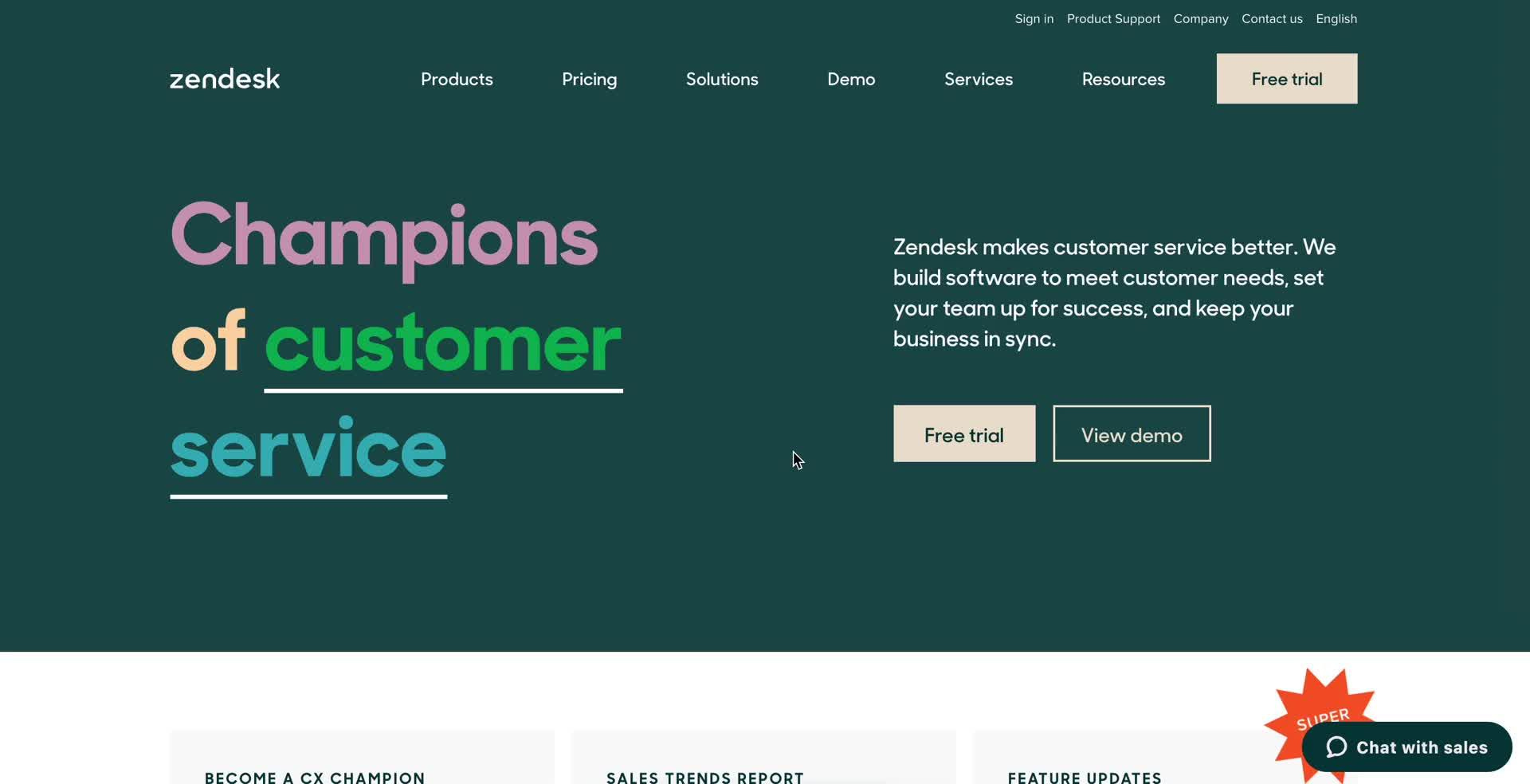
Here is the screenshot of the homepage hero section showing customer service software positioning, short product description, and CTA buttons.
A better line would be:
“A customer onboarding platform for B2B SaaS teams that want to improve product adoption and reduce churn.”
That sentence is more useful because it names the category, audience, use case, and outcome. It gives both buyers and answer engines a clean way to understand your product.
3. Create Comparison Pages Before Buyers Ask for Them Elsewhere
A lot of SaaS research starts with comparison.
Buyers want to know which tool fits their budget, team size, use case, and workflow. Many of them ask ChatGPT before they visit review sites or talk to sales.
Here is a real example of how SaaS comparison research can begin inside ChatGPT.
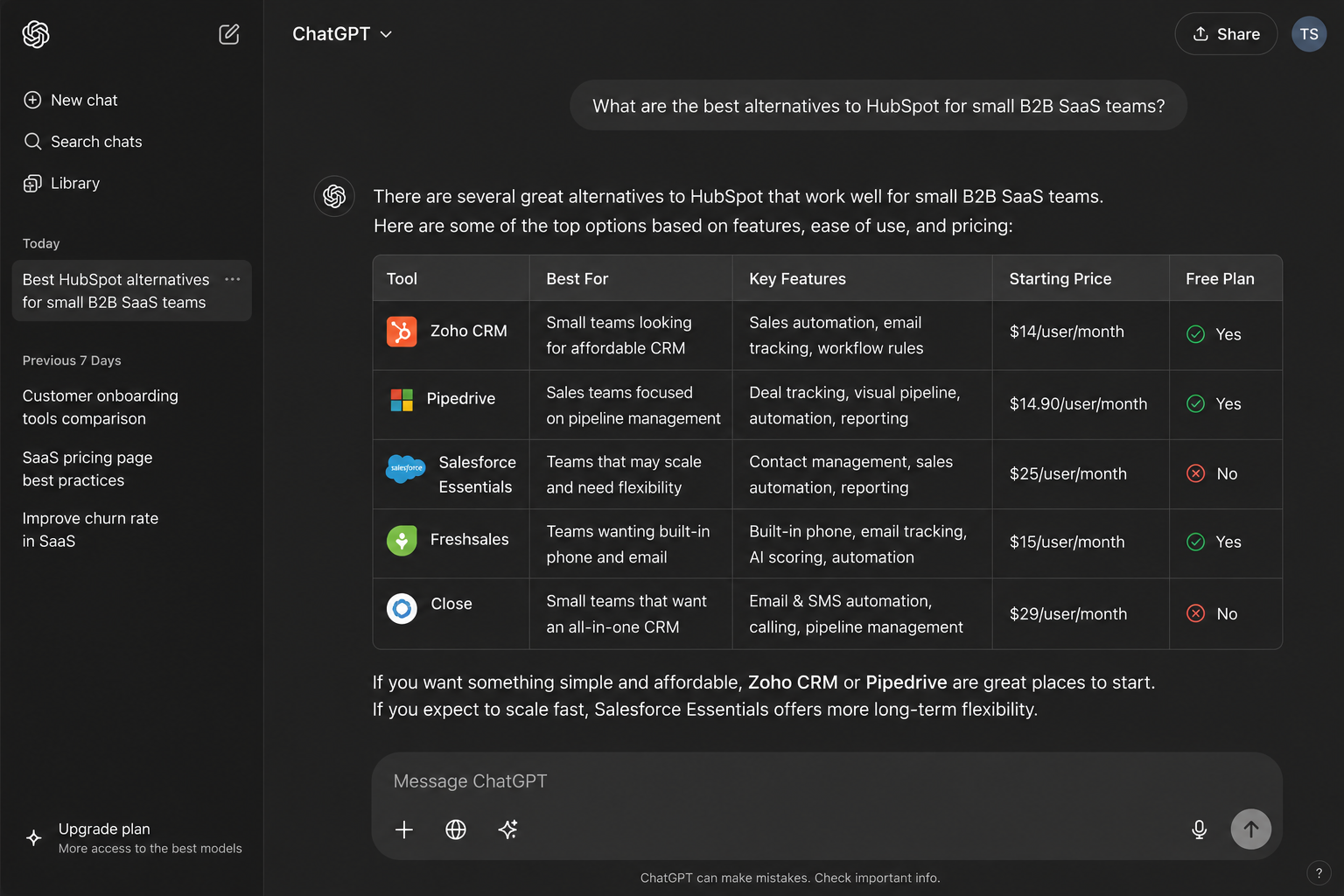
So your website should already have content around:
- Your product vs a direct competitor
- Best alternatives to a popular SaaS tool
- Best tools for a specific use case
- Best software for a specific company size
- When your product is a good fit
- When another option may be better
That last part matters.
A fair comparison page feels more trustworthy than a page that says your product is best for everyone. When you explain the right fit clearly, it becomes easier for ChatGPT to match your brand with the right buyer query.
4. Build Proof Outside Your Own Website
Your website is important, but it should not be the only place where your brand is explained.
SaaS buyers, search engines, and AI answer tools also look at outside signals. These can include review sites, SaaS directories, partner pages, customer stories, podcasts, expert mentions, and industry articles.
Here is a SaaS product profile on a third-party review platform showing product category, customer reviews, and rating details.
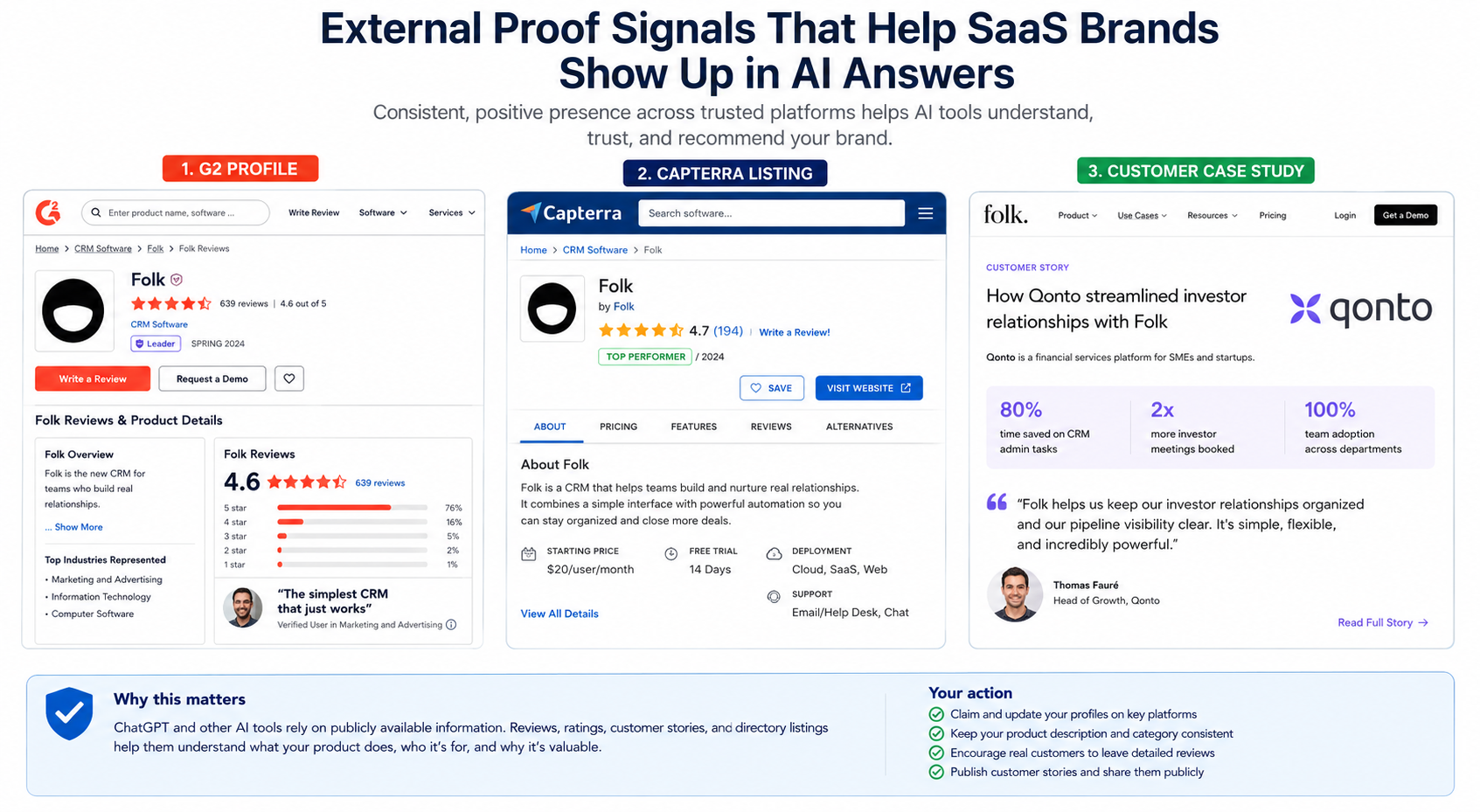
Your brand information should be consistent across these places.
Focus on:
- G2
- Capterra
- Product Hunt
- SaaS directories
- Partner websites
- Customer case studies
- Guest articles
- Founder or product interviews
Use the same product category and positioning everywhere.
If your website calls you a customer onboarding platform, but directories call you a customer success tool and guest posts call you a workflow automation tool, the message becomes messy.
Consistent wording makes your brand easier to understand and recommend.
5. Give Each Page One Clear Job
Do not make one page answer ten different buyer questions.
For AI-first SEO, each important page should focus on one main intent. This makes the page easier to scan, easier to summarize, and easier to pull into AI-generated answers.
For example:
- A use-case page should focus on one problem.
- A comparison page should compare specific tools.
- A pricing page should explain cost and value.
- A feature page should explain one core capability.
- An FAQ page should answer direct buying questions.
- A case study should show one clear result.
Each page is a possible source for one answer.
The sharper the page, the easier it is for ChatGPT to know when to use it
6. Structure Your Content So Answers Are Easy to Extract
Good SaaS content should not feel like a wall of text.
Use clear headings, short explanations, bullet points, comparison tables, FAQs, and direct definitions where they make sense. This helps readers move quickly and gives answer engines cleaner information to work with.
For example, a line like this is useful:
“Customer onboarding software helps SaaS teams guide new users from sign-up to product adoption.”
It is simple, direct, and easy to reuse in an answer.
That is the kind of writing you want across your product pages, category pages, and educational content.
7. Keep Important Pages Updated
SaaS content gets old fast.
If your comparison or product pages have not been updated in a long time, newer sources may look more reliable.
Update your key pages with:
- New product features
- Current pricing details
- Fresh competitor information
- Recent customer examples
- Updated FAQs
- New screenshots
- Better use-case explanations
This does not mean rewriting everything every month.
It means keeping your most important pages accurate enough to trust.
Common Mistakes SaaS Brands Should Avoid
Many SaaS brands are still writing for old search behavior.
But buyers now ask ChatGPT things like “best SaaS tool for X” or “which platform should I choose for Y?” So, your content needs to make your product easy to understand, easy to compare, and easy to recommend.
1. Writing Only for Google Rankings
Ranking on Google still matters, but it is not the full game anymore. If your content only targets keywords and does not answer real buyer questions, it may not get picked up in AI-driven answers.
Instead, write pages that clearly answer: “Who is this tool best for?”, “What problem does it solve?”, and “How is it different from competitors?”
2. Using Vague Product Messaging
Lines like “we help teams grow faster” sound nice, but they do not explain much.
Be specific. Say what your SaaS product does in plain language. For example, instead of saying “growth platform,” say “email marketing software for B2B SaaS teams.”
Clear positioning helps buyers, search engines, and AI tools quickly understand where your product fits.
3. Ignoring Comparison Content
Buyers compare tools before they book a demo. If you do not create comparison pages, you leave that conversation to competitors, review sites, or third-party summaries.
Create helpful pages around topics like your product vs competitor, best alternatives, and best tools for a specific use case. Keep them fair, clear, and useful.
4. Hiding Important Product Details
If your pricing, use cases, integrations, or best-fit customers are unclear, buyers get confused.
You do not need to reveal everything, but you should explain enough for someone to know whether your product is relevant.
5. Publishing Generic Blog Content
Generic SaaS blogs do not help much anymore. There is already too much broad advice online.
Focus on content that shows real expertise. Use customer problems, product use cases, industry examples, decision guides, and practical buying advice.
6. Not Building Third-party Trust Signals
Your own website is important, but outside proof matters too. Reviews, directories, customer stories, expert mentions, and partner pages can all support your brand visibility.
If your brand is barely mentioned outside your website, it becomes harder to build trust before buyers reach your site.
7. Focusing Only on Demo-ready Buyers
Not every buyer is ready to talk to sales. Many are still exploring the problem.
Create content for early-stage questions too. Help buyers understand the issue, compare solutions, and shortlist vendors. That is how you show up before they are ready to book a demo.
Final Thought
B2B buyers are not always starting with Google anymore.
Many of them are asking ChatGPT things like, “Which SaaS tool is best for this problem?” before they visit any website.
That changes how SaaS brands need to think about visibility.
Your product pages, comparison pages, case studies, reviews, and FAQs should make it clear what your software does, who it is for, and why a buyer should trust it.
The earlier your brand appears in that research, the better chance you have of making the buyer’s shortlist.
And that shortlist may be created before your sales team even knows the buyer exists.
Frequently Asked Questions (FAQs)
1. How can a SaaS brand appear in ChatGPT before buyers search on Google?
Build pages that say exactly what your product does, who it helps, and which problems it solves. Add use cases, pricing context, comparisons, FAQs, reviews, and customer proof so your brand is easier to understand.
2. Does ChatGPT replace SEO for SaaS brands?
No. SEO still matters because your content needs to be found, crawled, and trusted. The shift is that buyers now use answer tools earlier, so your pages must explain things with more clarity.
3. What content helps SaaS brands get recommended by ChatGPT?
Content that matches buying questions works best. Create comparison pages, alternative pages, use case guides, pricing explainers, customer stories, and practical FAQs. These help connect your product with real buyer problems.
4. Why are third party mentions important for SaaS AI visibility?
Third party mentions show that people outside your company recognize your product. Reviews, directories, podcasts, partner pages, and expert blogs give extra proof, which helps your brand look more credible in buyer research.
5. How do SaaS brands measure visibility in ChatGPT?
Test the same questions your buyers would ask about your category, competitors, and use cases. Check if your brand appears, how it is described, and what content may be missing from your site.