Google’s AI results are not looking for “more content.”
They are looking for better sources.
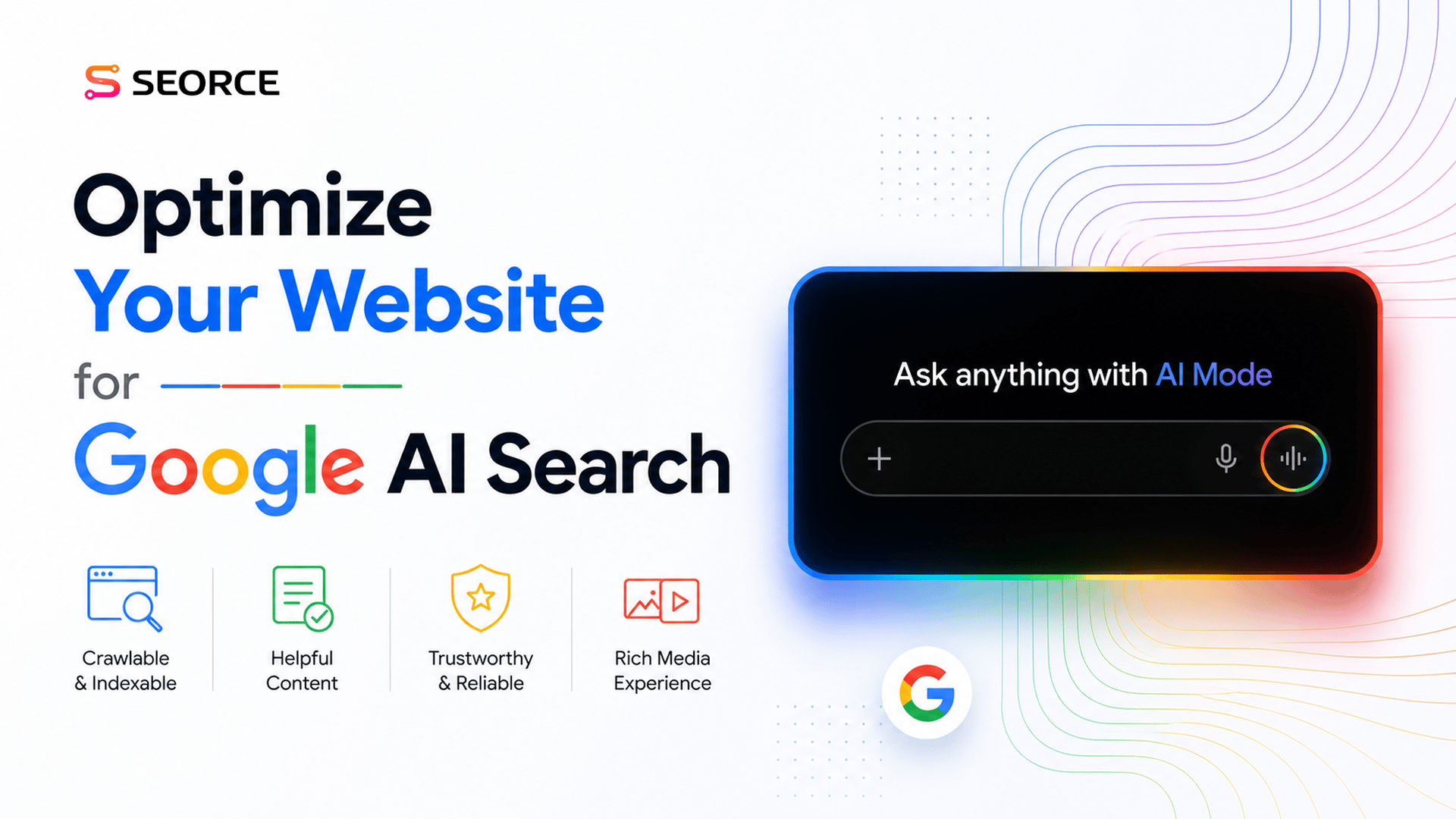
That is the shift most websites are missing. AI Overviews and AI Mode do not reward pages just because they target the right keyword. They need content that is clear, useful, crawlable, trustworthy, and strong enough to support an AI-generated answer.
So optimizing for Google’s generative AI features is not about writing for bots.
It is about making your website the kind of source Google can confidently pull from — and users can confidently click.
That is what this guide will help you do.
Why Does This Matters Now?
This is not a future trend anymore. It is already happening.
Google says AI Overviews have expanded to more than 200 countries and territories and over 40 languages.
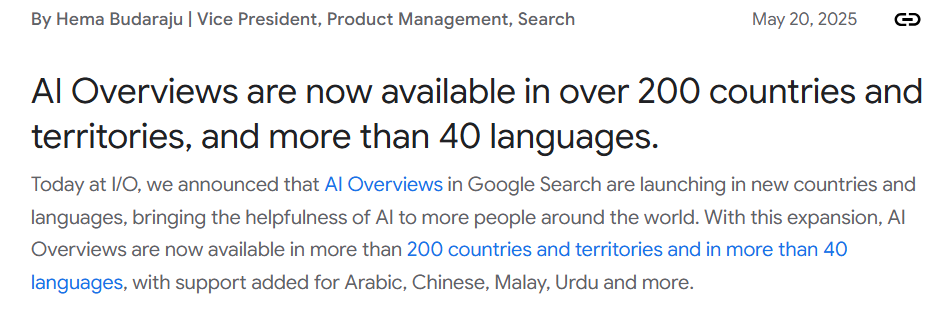
In major markets like the U.S. and India, Google also said AI Overviews are driving more than a 10% increase in usage for the types of queries where they appear.
There is also user behavior data worth paying attention to. Pew Research Center found that users who saw an AI summary clicked a traditional search result in 8% of visits, compared with 15% of visits when no AI summary appeared. Pew also found that users clicked a link inside the AI summary itself in only 1% of visits.
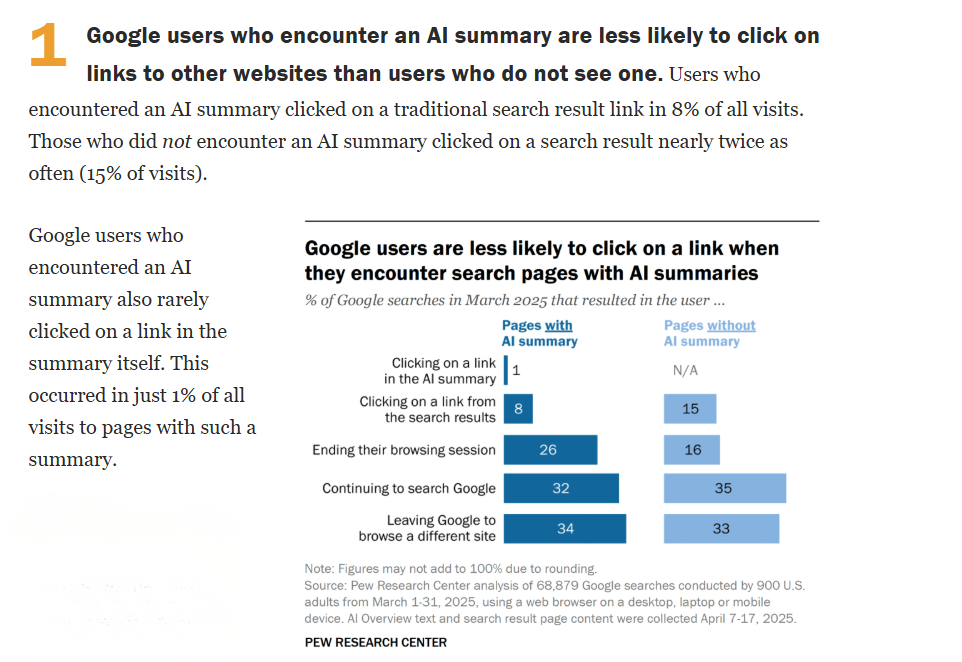
That does not mean SEO is dead. It means the value of each click may change.
If fewer people click casually, the ones who do click may arrive with stronger intent. Google says clicks from search result pages with AI Overviews can be higher quality, meaning users may be more likely to spend more time on the site.
So the goal is not just to get visibility. It is to become the kind of source Google can reference and users can trust.
First, Understand What Google’s AI Features Are Doing
Google’s AI features are not simply pulling one answer from one page. They may use retrieval-augmented generation, also called grounding, to retrieve relevant and up-to-date pages from Google’s Search index. Then the system reviews information from those pages and generates an AI response with clickable links to supporting sources.
Google also uses query fan-out. This means one user query can trigger multiple related searches behind the scenes. For example, if someone searches for “best CRM for a small real estate team,” Google may also explore related subtopics like CRM pricing, lead tracking, WhatsApp integrations, automation, team size, and comparison reviews.
Here is how query fan-out looks like in AI overviews:
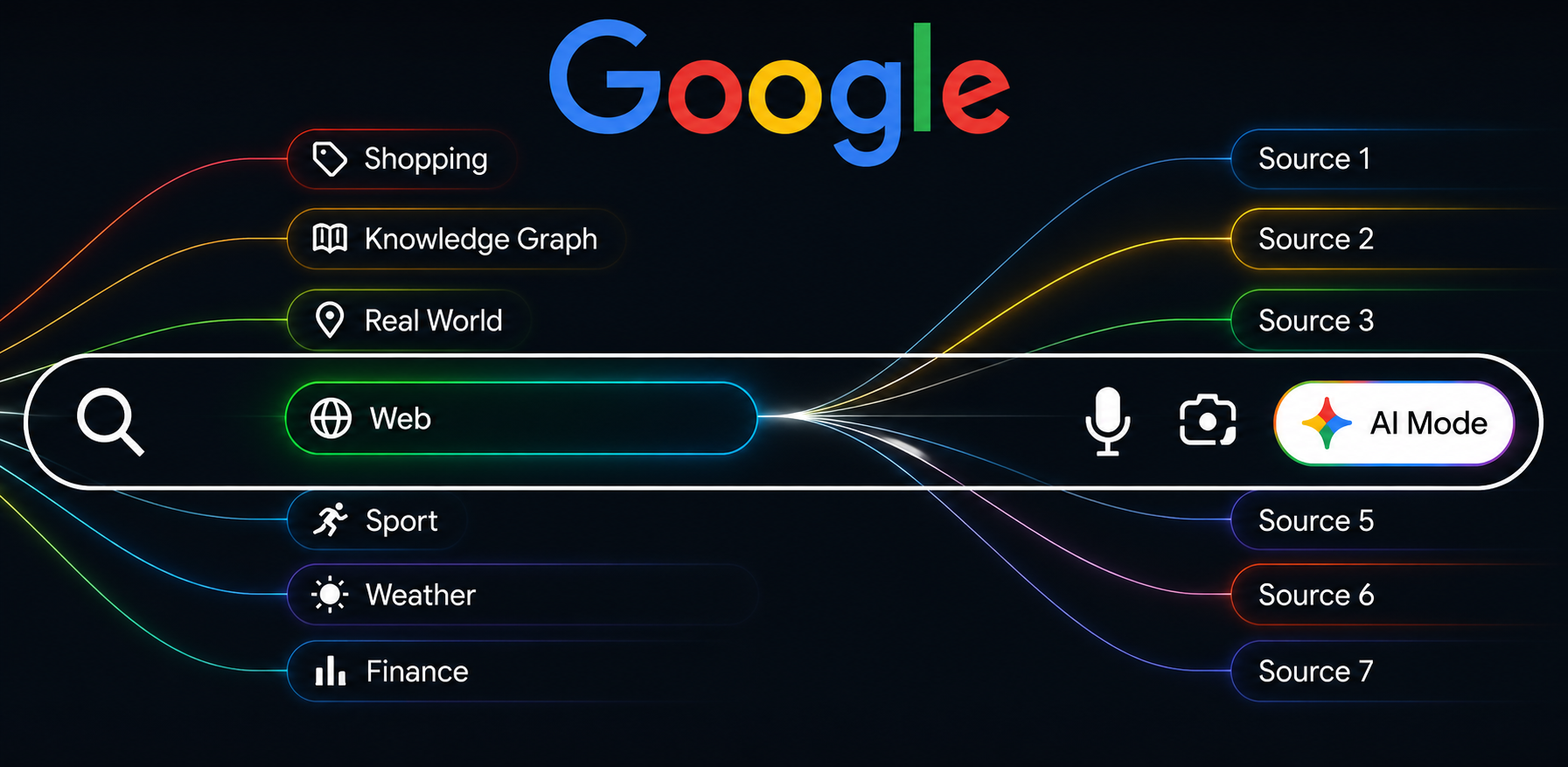
Now, that changes how you should think about content.
You are no longer optimizing only for one exact keyword. You are optimizing for the complete problem behind the search.
SEO Is Still the Base Layer
There is a lot of noise around terms like AEO, GEO, LLMO, and AI visibility. Some of these terms can be useful for internal strategy, but they should not distract you from the main point.
Google says that from its perspective, optimizing for generative AI search is still optimizing for the search experience. AEO and GEO may describe visibility work around AI answers, but for Google Search, the foundation remains SEO.
Here is the practical difference:
Old way of thinking | Better way to think now |
“How do I rank for this keyword?” | “How do I answer the full user problem?” |
“How many pages can I create?” | “How much original value can I add?” |
“Can I add a schema and win?” | “Can Google and users clearly understand this page?” |
“Can I get mentioned by AI?” | “Is my content worth citing?” |
“Should I write for AI?” | “Can humans trust this enough to act?” |
That last point matters the most.
Do not write for AI systems. Write for people, then make the page easy for Google to access, understand, and show.
Create Content That Is Not Generic
Google’s guide puts heavy emphasis on non-commodity content. This means content that offers something beyond common knowledge, rewritten summaries, or basic AI-generated explanations.
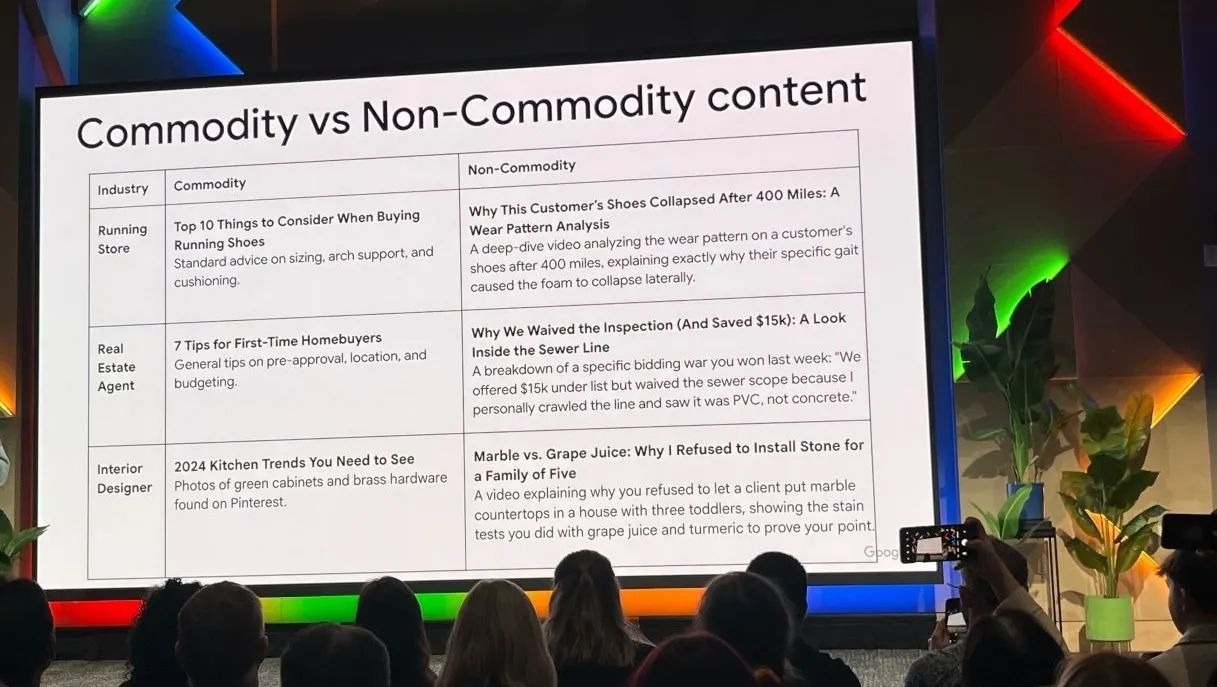
Google says unique, compelling, useful content will likely influence long-term visibility in generative AI search more than any other recommendation in its guide.
Non-commodity content is the only moat left in SEO. The shift from 'Information Retrieval' to 'Value Addition' means that if your content doesn't have a unique POV or proprietary data, it’s just noise.
So, what does that look like in real life?
A generic article says: “Top 10 benefits of CRM software.” |
A generic article says: “How a 6-member sales team reduced missed follow-ups by 38% after changing its CRM workflow.” |
A generic ecommerce page says: “Best running shoes for beginners.” |
A stronger page says: “We tested 7 beginner running shoes on concrete, treadmill, and wet roads. Here’s what actually felt stable after 30 days.” |
A generic service page says: “Affordable homestay near nature.” |
A stronger page says: “What guests actually get at our budget homestay: room types, food options, nearby views, travel distance, and what to expect before booking.” |
See the difference?
The stronger version gives experience, proof, context, and decision-making help. That is harder to copy. It is also more useful for both users and AI systems trying to identify reliable sources.
Add Original Value Wherever Possible
Helpful content guidance encourages creators to assess whether their content provides original information, reporting, research, analysis, complete coverage, and value beyond what is already available in search results. It also highlights the importance of content being written or reviewed by someone with real expertise or first-hand experience.
That means your page should not feel like a cleaned-up version of everyone else’s page.
Add things like:
- First-hand experience.
- Expert commentary.
- Real screenshots.
- Original images.
- Case studies.
- Before-and-after results.
- Customer questions.
- Product testing notes.
- Internal data.
- Mistakes and lessons learned.
- Clear comparisons.
- Practical examples.
For example, if you are writing about website migration, do not just explain what migration is. Show what went wrong in a real migration, which redirects caused traffic loss, how long recovery took, and what checklist prevented the issue next time.
That is useful, and memorable. And that is much harder for AI to replace with a generic summary.
Structure Your Content So People Can Actually Use It
You do not need to break your content into tiny “AI-friendly chunks.” The official guide clearly states that there is no requirement to chunk content for generative AI search, and there is no ideal page length. Short pages can work. Long pages can work. It depends on the audience and the topic.
But structure still matters.
Use clear headings, and paragraphs readable. Add examples. Use bullet points when they make information easier to scan. Use tables when comparison is useful. Make the page feel easy to move through.
A strong article structure usually includes:
- A clear opening that explains the problem.
- Sections that answer specific user questions.
- Examples that make abstract ideas practical.
- Visuals where they help.
- Internal links to deeper resources.
- A conclusion that tells the reader what to do next.
The goal is not to make the page look “optimized.” It is to make the page feel helpful.
Make Sure Your Technical SEO Is Clean
This is the boring part, but it is non-negotiable.
To be eligible as a supporting link in AI Overviews or AI Mode, a page must be indexed and eligible to appear in Search with a snippet.
Here is a Google Search Console URL Inspection report showing whether a page is indexed, crawlable, and eligible to appear in Google Search.
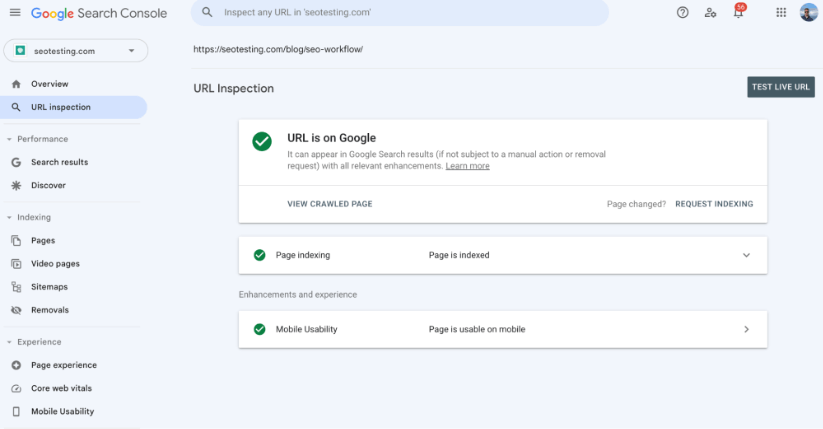
There are no additional technical requirements for appearing in these AI features.
So before chasing AI visibility, check the basics:
- Can Google crawl the page?
- Is the page indexed?
- Is it blocked by robots.txt, CDN rules, or hosting settings?
- Is the important content available in text?
- Can Google show a snippet?
- Is the page internally linked from relevant pages?
- Is the page fast and usable on mobile?
- Does the structured data match the visible content?
- Are there unnecessary duplicate pages?
The AI optimization guide also recommends following JavaScript SEO best practices, improving page experience, reducing latency, making main content easy to distinguish, and reducing duplicate content where possible.
Great content that Google cannot crawl properly is invisible content.
Use Images and Videos When They Add Real Value
Generative AI search features can bring in relevant images and videos, creating more opportunities for websites to appear beyond standard web page links.
But do not add visuals just for decoration.
Use visuals when they help users understand faster. For example, a SaaS page can include annotated product screenshots. A recipe site can show preparation steps. A local business can show real photos of rooms, seating, parking, food, or surroundings. A product review can include side-by-side comparison images.
Remember a simple rule: If the image proves, explains, compares, or demonstrates something, use it. If it only fills space, skip it.
The same applies to videos. A 90-second product demo, room walkthrough, installation guide, or real customer explanation can be more useful than 1,000 words of generic copy.
Keep Ecommerce and Local Business Data Updated
Generative AI responses can include product listings, product details, and local business information. Tools like Merchant Center, Merchant Center feeds, and Google Business Profile can help products and services appear across AI responses and other Search results.
This is especially important for ecommerce stores, service businesses, hotels, restaurants, clinics, agencies, and local providers.
Keep these details accurate:
- Business name.
- Address.
- Phone number.
- Opening hours.
- Product availability.
- Prices.
- Shipping details.
- Return policy.
- Service areas.
- Photos.
- Reviews.
- FAQs.
- Booking or contact options.
If your website says one thing and your Google Business Profile says another, you create confusion. And in AI search, confusion is not your friend.
Do Not Create Hundreds of Thin Pages for Query Fan-Out
Because Google uses query fan-out, some people may think they need to create a separate page for every possible related search.
That is a bad idea.
The official guidance warns that creating separate pages for every possible search variation mainly to manipulate rankings or generative AI responses can violate the scaled content abuse spam policy.
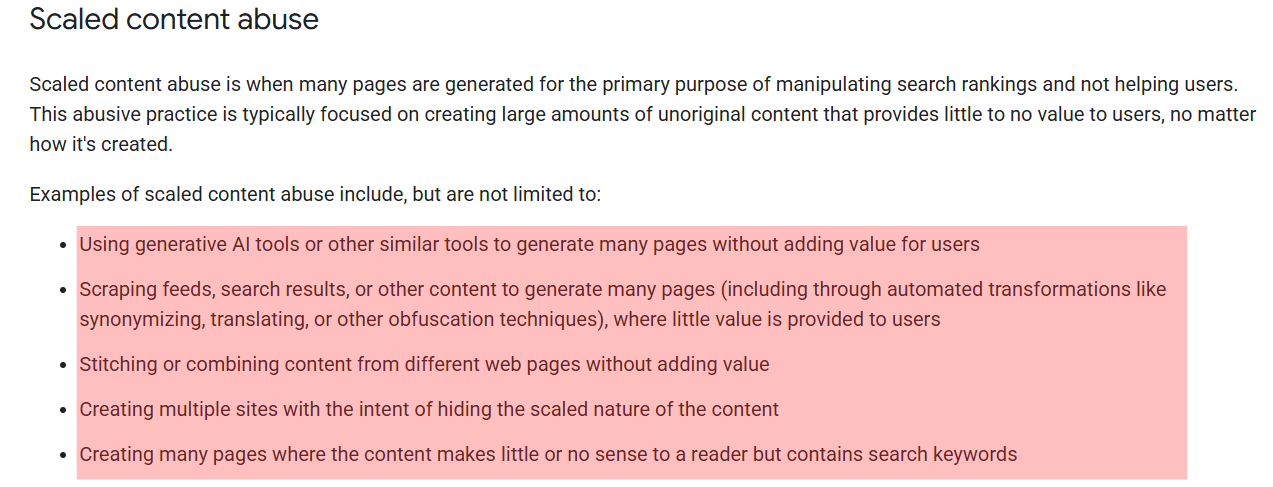
A high quantity of pages does not automatically make a website higher quality or more relevant to users.
So instead of creating 40 thin pages like:
- Best CRM for small teams
- Best CRM for 5-person teams
- Best CRM for real estate teams
- Best CRM for small real estate teams
- Best CRM for agents with WhatsApp
Create one strong guide that covers team size, industry use cases, workflow needs, pricing, integrations, limitations, and decision criteria.
Do Not Fall for Fake AI SEO Hacks
Google is very clear about what you do not need to do for generative AI search.
You do not need:
- LLMS.txt files or special AI text files.
- Special machine-readable markup for AI Overviews or AI Mode.
- Tiny content “chunks” made only for AI systems.
- A special AI writing style.
- Every long-tail keyword variation.
- Inauthentic brand mentions across the web.
- Special schema.org markup for AI features.
Structured data can still help with rich results, but it is not required for generative AI search, and there is no special schema you need to add for AI Overviews or AI Mode.
Also, spam policy language has been updated to include attempts to manipulate generative AI responses in Search. The policy explains that spam includes techniques used to deceive users or manipulate Search systems, including attempts to manipulate generative AI responses.
So do not optimize by manipulation. Optimize by usefulness.
Build Trust into the Page
Trust matters more when AI summaries are involved because users are still cautious.
Pew Research found that 65% of U.S. adults at least sometimes see AI summaries in search results. But among those who have seen them, only 20% find them extremely or very useful, while 52% find them somewhat useful. Pew also found that 53% have at least some trust in AI summaries, but only 6% trust them a lot.
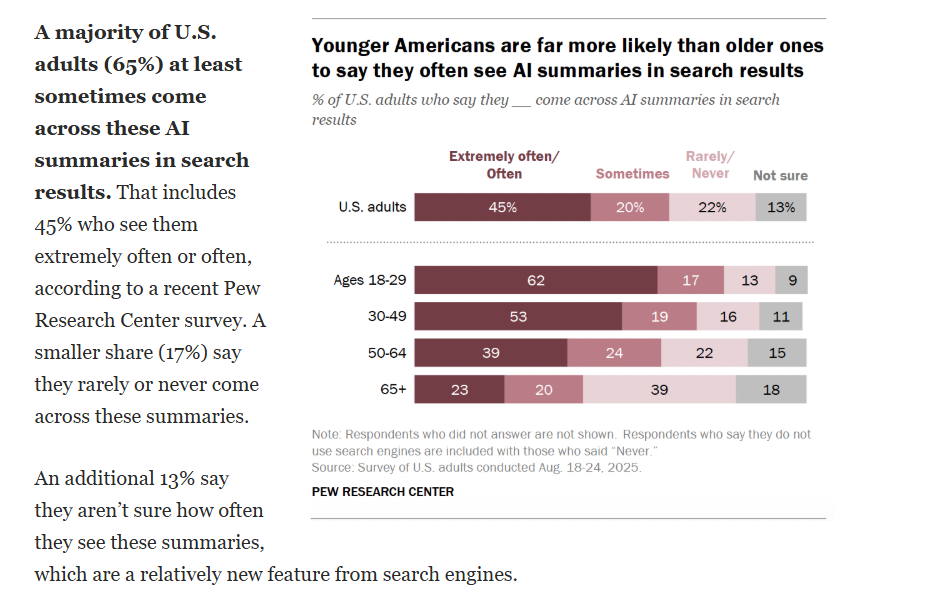
That means users still need proof.
Your page should make trust visible. Add author details. Explain credentials. Link to sources. Show dates when freshness matters. Include real experience. Avoid exaggerated claims. Make contact details easy to find. Show who is responsible for the content.
For YMYL topics — like health, finance, legal, safety, or major life decisions — this becomes even more important. Google explains that its systems aim to identify signals related to experience, expertise, authoritativeness, and trustworthiness, and that trust is the most important part of E-E-A-T.
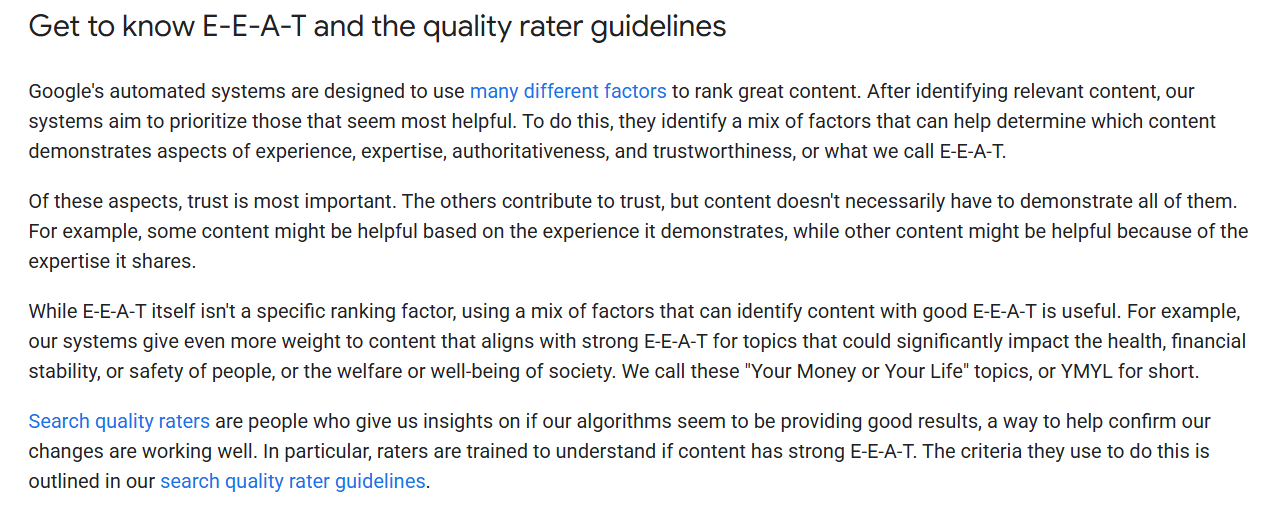
Do not just sound confident. Show why you deserve confidence.
Measure AI Search Impact Differently
Do not expect AI search performance to appear in a neat, separate report.
Sites appearing in AI features are included in overall Search traffic in Search Console, specifically in the Performance report under the “Web” search type.
So you need to look beyond basic clicks.
Track:
- Search impressions.
- Click-through rate changes.
- Longer conversational queries.
- Time on page.
- Scroll depth.
- Assisted conversions.
- Lead quality.
- Revenue from organic search.
- Pages gaining visibility but losing clicks.
- Pages getting fewer clicks but stronger engagement.
This is important because AI summaries may reduce some informational clicks, but they may also send users who are more ready to act.
News: Google Is Making AI Search More Source-Focused
Google recently announced new updates to AI Mode and AI Overviews to help users find more relevant websites, deeper insights, and original content across the web. The update includes more suggestions for exploring new angles, links to unique articles and in-depth analysis, and previews from public discussions, social media, and other first-hand sources.
This was important because it supports the same direction Google gives in its optimization guide: original content, expert views, personal experience, strong sources, and helpful depth are becoming more valuable.
A 2026 academic study comparing Google Search, AI Overviews, and Gemini across 11,500 user queries found that AI Overviews were generated for 51.5% of representative real-user queries in its dataset, and that the sources retrieved by traditional search and generative systems could differ significantly.
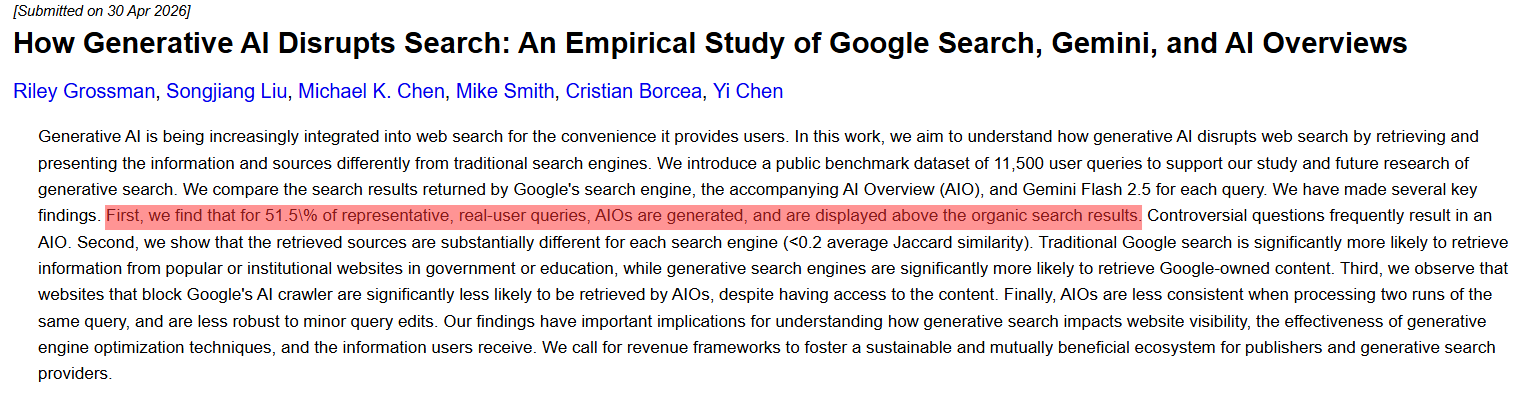
The study was accepted to ACM SIGIR 2026, but it is still important to read it as research context, not as Google’s official guidance.
The takeaway is simple: visibility is becoming more dynamic. Your content needs to be strong enough to appear across different search formats, not just traditional rankings.
Prepare for Agentic Search Experiences
Google also points toward agentic experiences. These are AI agents that can perform tasks for users, like comparing product specifications, booking reservations, or gathering information from websites. Browser agents may analyze visual renderings like screenshots, inspect DOM structure, and interpret the accessibility tree.
This is not something every website needs to obsess over today. But it is a useful direction to prepare for.
Make your site easier for both humans and agents to understand:
- Use clear navigation.
- Keep forms simple.
- Make pricing easy to find.
- Show product specifications clearly.
- Keep policies visible.
- Avoid hiding important details inside messy scripts.
- Use accessible layouts.
- Make booking, buying, or contacting simple.
In the future, your website may not only be read by users. It may be interpreted by AI agents acting on behalf of users.
Final Checklist for AI-ready SEO
Here is what you should focus on:
Area | What to do |
Content | Create original, useful, expert-led, non-commodity content. |
Search intent | Answer the full user problem, not just one keyword. |
Technical SEO | Make sure pages are crawlable, indexable, and eligible for snippets. |
Structure | Use clear headings, readable paragraphs, bullets, examples, and tables. |
Trust | Add author details, evidence, sources, experience, and transparent claims. |
Media | Use real images and videos where they help users understand better. |
Local/ecommerce | Keep Business Profile, Merchant Center, product, and service details updated. |
Structured data | Use it honestly, but do not treat it as an AI visibility shortcut. |
Measurement | Track engagement, conversions, query patterns, and Search Console trends. |
Risk control | Avoid spammy AI manipulation, mass-generated thin pages, and fake mentions. |
Final thought
Optimizing your website for generative AI features on Google Search is not about chasing a new hack.
It is about making your website easier to discover, easier to understand, and easier to trust.
The sites that win will not be the ones publishing the most content. They will be the ones publishing content with the most useful experience, clearest structure, strongest proof, and best answer to the user’s real problem.
So before publishing your next page, just think, would a real person feel satisfied after reading this — or would they still need to search again?
If your page genuinely solves the problem, you are already moving in the right direction.