Content optimization is how you improve a published page so it becomes more useful, easier to find, and easier to trust.
Today, you are not only writing for Google. You are also writing for readers who skim fast, buyers who compare options, and AI systems that pull answers from clear, well-structured pages.
That does not mean you should write like a robot.
It means your content should be clear, specific, current, credible, and easy to cite. The same things that help readers also help search engines classify content and help AI systems retrieve useful passages.
Here are 20 practical tactics we use to improve SEO and AI visibility without making your content sound stiff.
1. Match the Real Search Intent
Before you update a page, make sure it matches what the reader wants to do.
A search for “content optimization tools” usually means the reader wants options, pricing, comparisons, features, and use cases. A search for “what is content optimization” needs a simple explanation before anything else.
Search intent usually falls into informational, transactional, navigational, and commercial categories. Checking the top-ranking results before changing a page helps you understand what users expect to see.
When the intent is clear, adjust the page format around it. A guide may need steps, while a commercial page may need comparisons, proof, pricing signals, and a stronger CTA.
Intent should shape the page before keywords do.
2. Make the Page Complete Without Making it Bloated
A strong page answers the main topic and the next few questions a reader will naturally have.
That does not mean you need to write everything possible. It means you should cover what helps the reader move forward.
Review the top-ranking pages and look at what they include. Then look for what they missed, such as useful examples, better visuals, stronger data, clearer workflows, or more practical explanations.
Your page gets stronger when you add useful depth, not filler.
A good page may include
- Clear definitions
- Practical examples
- Expert insight
- Screenshots
- Comparison tables
- FAQs
- Fresh data
- Next steps
Use only what supports the reader. Anything else adds weight without adding value.
When those missing pieces become a new article, landing page, product page, category page, how-to guide, or comparison, Content Studio is most useful once the strategy is clear. The draft can then stay tied to your brand voice, positioning, and evidence instead of becoming another generic page.
3. Make Every Section Easy to Understand
If a reader has to reread a sentence twice, the page is working too hard.
The writing should feel simple without feeling thin. Use everyday language, explain jargon when it first appears, and keep the main answer close to the beginning of each section. Active voice, specific wording, short paragraphs, examples, and clean editing all make the page easier to follow.
Structure also plays a big role. Use H2s and H3s that tell the reader what each section covers, group related ideas together, and use bullets only when they make a list easier to scan. When comparison is easier than explanation, a table usually works better than a long paragraph.
This is not only about readability. AI systems also work better with clear sections because they can retrieve and summarize passages more easily.
4. Refresh Important Pages Before They Decay
Content does not stay useful forever.
Over time, your stats may become outdated, screenshots may no longer match the current interface, tools may change, search results may shift, and buyer expectations may move. When that happens, even a strong page can start to feel less reliable.
Refresh high-value pages first, especially product pages, service pages, high-traffic posts, and pages that help drive leads or sales. Useful updates include replacing old statistics, updating screenshots, fixing broken links, adding new examples, removing outdated advice, and improving internal links.
Freshness also matters for AI visibility because AI systems need current, reliable pages that still reflect the topic accurately.
You do not always need a new article. Sometimes the best move is improving the page that already has a chance.
5. Use Secondary Keywords to Widen Reach
Your main keyword tells search engines the core topic. Secondary keywords help the page rank for related searches.
For example, a page about content optimization may also cover SEO content optimization, AI visibility, content optimization tools, on-page content optimization, and content optimization strategy.
Find related keywords and use them naturally in headings, introductions, and key sections where they fit the context. Secondary keywords should support the topic, not make the writing feel stuffed or unnatural.
For keyword expansion, Keyword Intelligence works best as an intent map rather than a keyword dump. It helps you group related demand by topic, stage, and buyer need, so secondary keywords support the page instead of making the writing feel stuffed.
If a phrase belongs in the section, use it. If it feels awkward, skip it or build a better section around the idea.
6. Add Semantic Context Around the Topic
Semantic terms are the related ideas that help search engines and AI systems understand your page more deeply.
If you write about growing tomatoes, terms like soil, sunlight, seeds, pots, watering, pests, and containers give the topic more context. These related ideas help both readers and algorithms understand how the topic works.
Use autocomplete, competitor pages, customer questions, and your own expertise to find these ideas. Then improve the page in small, useful ways by adding a helpful explanation, a relevant FAQ, a missing example, or a visual that makes the idea easier to understand.
The page should feel complete, not crowded.
7. Improve On-page SEO for Better Performance
Basic on-page SEO still matters.
Your title tag should describe the page clearly, your meta description should give someone a reason to click, and your H1 should name the actual topic without confusion.
You should also check H2s, URL slugs, internal links, image alt text, canonical tags, and redirects on important pages. These details may look small, but they help both users and systems understand what the page is really about.
Technical Suite is useful at this stage because on-page checks only matter when they lead to real fixes. Meta titles, descriptions, schema, alt text, heading tags, and canonical tags should be reviewed together, not scattered across separate spreadsheets.
Muhammad Sajid, Head of SEO Growth at Osdire, shared a useful case. Osdire found that 502 of its 961 service pages used internal taxonomy-style H1s like “Explore Services in X” instead of naming the actual service. The usability testing page had 1,000 impressions, only 2 clicks, a 0.2 percent CTR, and an average position of 35.6 because Google kept pairing the page with words like developer and programmer from the URL path.
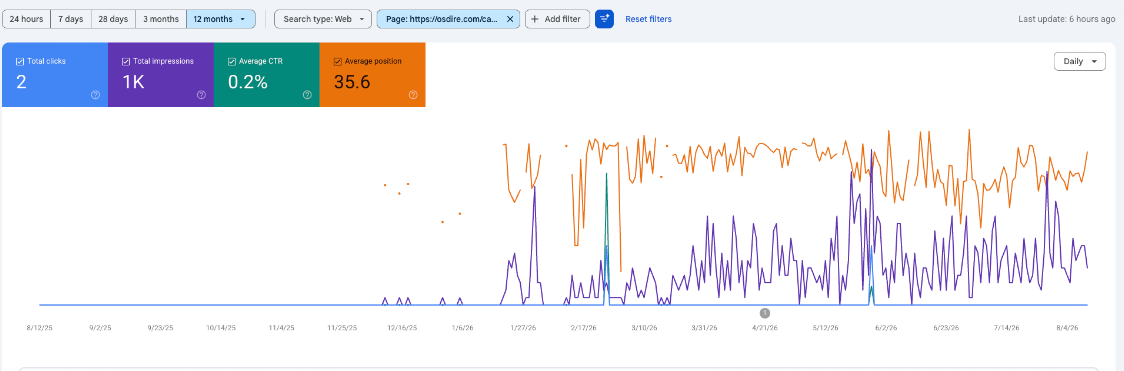 Osdire Search Console data shows 1K impressions, 2 clicks, 0.2 percent CTR, and an average position of 35.6 before the page naming was fixed.
That is the risk of vague naming. If your page does not clearly say what it is, systems may guess from weaker signals.
8. Clean Up Headings and URL Signals
Headings and URLs are part of content clarity.
A crawler should be able to look at your structure and understand the subject of the page. Product cards, seller titles, internal labels, duplicate blocks, and broken URL paths can make that harder.
Muhammad’s audit found that seller listing titles were being rendered as H3s across marketplace pages. There were 677 pages with seller titles as H3s, 4,042 H3 headings starting with “I will”, and 2,026 duplicate H3 headings site-wide.
That creates confusion because a crawler reading the page structure may see inventory instead of the page subject.
Osdire also saw how messy URLs can hurt clarity. After a CMS migration, a Fiverr comparison article had an average position of 17.06 on the live URL, but 5.46 on the dead duplicate URL. Another article about freelance marketplaces had no impressions on the clean URL, while the duplicate ranked at position 5.02.
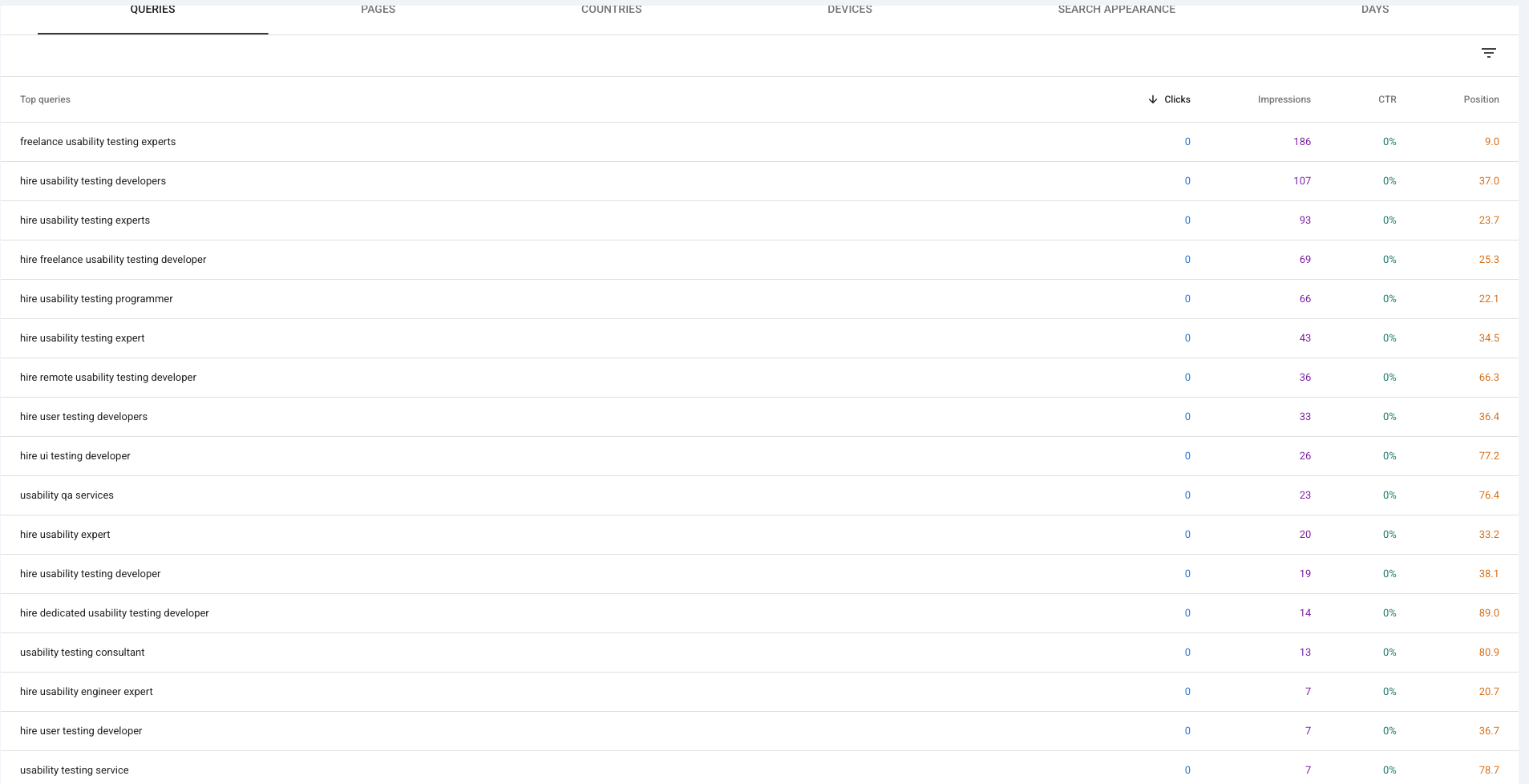 The query list shows Google pairing usability testing with developer and programmer terms, which Muhammad said came from the URL path because the page itself did not name the service clearly.
The content was the same, but the address was not clear. Your URL setup should help search engines and AI systems find the right page, not force them to choose between versions.
9. Optimize Images and Screenshots
Visual content can make your article easier to understand and more trustworthy.
Use screenshots when you need to prove a claim, charts when data needs to feel simple, and product images when the reader needs to see how something works. Captions also help because they explain what the reader should notice.
Images should have descriptive alt text, compressed file sizes, useful filenames, and captions when context is needed. Videos should include transcripts when they help users and search engines understand the content.
For SEO and AI visibility, screenshots need context. Instead of dropping them into the article as decoration, explain what each screenshot proves and use a filename that describes the image clearly.
A screenshot should move the argument forward.
10. Optimize for SERP Features
Your page does not have to appear only as a standard organic result.
Search results now include AI Overviews, featured snippets, People Also Ask boxes, image packs, video results, review snippets, local packs, and other enhanced formats. These features can give your content more visibility and make your result more useful before someone even clicks.
Start by checking which features appear for your target keyword. If the results show short paragraph answers, your page needs a direct answer near the relevant heading. If the results show lists, tables, images, or videos, format your content in a way that fits the search result without forcing it.
This does not mean copying the current SERP. It means understanding what the search engine already believes users want.
A page becomes stronger when it answers directly, uses clear question-led headings, supports visual intent with optimized images, and backs up important claims with proof.
That same logic matters in Google AI Search, where the page needs to be crawlable, useful, and strong enough to support an AI-generated answer. Treat SERP features and AI results as part of the same visibility layer, not as separate projects.
11. Add Schema and Clean Entity Markup
Schema helps search engines understand important details on a page.
It can identify your organization, author, article, product, event, breadcrumb, reviews, and local business details. Schema can also help AI systems work with cleaner page details.
Gabriella Timea Sinka, Founder of TimeSaver, shared a strong example.
Her brand had a messy entity setup with a personal name in different word orders, a business name, an umbrella brand, and separate service lines on one domain. She replaced plugin-generated local business markup with hand-written Organization and Person JSON-LD, mapped canonical and alternate name forms, added author attribution, used Article and Speakable schema, and added static machine-readable microdata.
She also found that a cookie consent plugin was blocking inline scripts and structured content from AI agents that do not click consent banners. After switching to a category-based consent tool, AI agents could see the same entity signals as users.
The results were meaningful. Google Search Console’s generative AI report went from zero to 966 AI-feature impressions in three months. Microsoft Clarity showed a 29.4 percent share of authority across tracked queries.
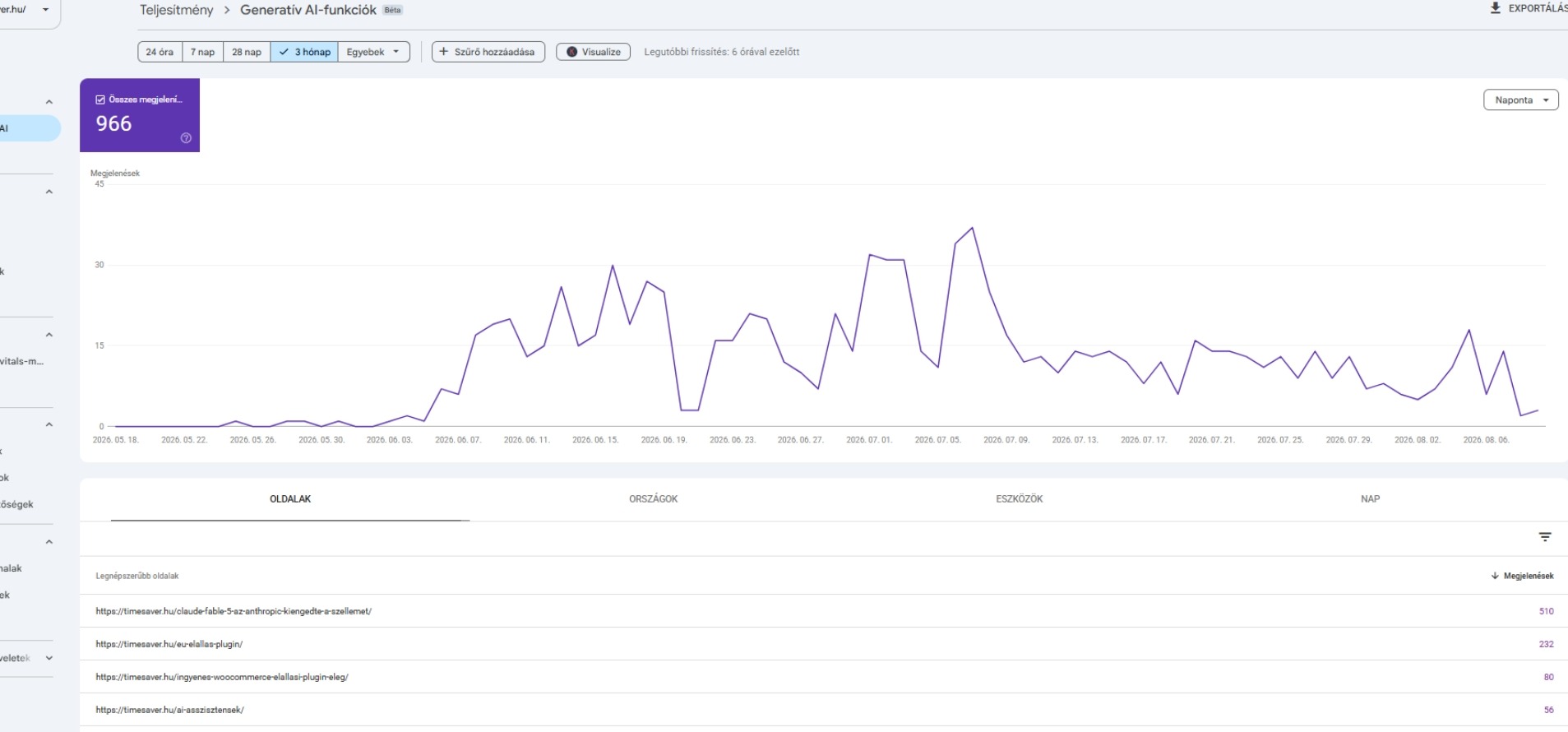 TimeSaver’s dashboard attachments show Google Search Console, Microsoft Clarity citation tracking, and AI bot activity screenshots that supported Gabriella’s entity cleanup results.
Gabriella also noted that 9 of 10 tracked citations came from non-branded queries, which means AI systems were citing the site for topical relevance, not because users searched the brand name.
12. Optimize for AI Prompts, Not Only Keywords
People search differently in AI tools.
A Google query may be short, while an AI prompt is often longer, more detailed, and more situational. Someone may search for “organic farming tips” in Google, but ask an AI tool for beginner-friendly organic farming tips for a small backyard vegetable garden.
You can use this behavior to improve your content. Sales calls, support tickets, demo transcripts, customer surveys, on-site search, and chat logs often reveal the real questions people ask before they trust, compare, or buy.
Prompt data gives you a different kind of content brief. AI Beacon is useful here because it shows which prompts surface your brand, which competitors appear beside you, and how AI tools describe the category. When you build content from those patterns, you are moving closer to content engineering, where sources, entities, prompts, claims, and pages work together instead of sitting in separate documents.
Answer those questions in the format that fits best. Some answers belong in an FAQ, some need a new section, and some deserve a separate page. The page should match how people now ask for help.
13. Use Comparison Tables Where Decisions Matter
Comparison tables help readers decide faster.
They also make details easier for AI systems to extract, summarize, and cite. A useful table has clear column names, consistent criteria, short cells, and a short takeaway after the table.
Use tables when readers need to compare options, features, prices, use cases, tools, services, or pros and cons.
A good table should not be overloaded. Keep it focused, compare the same things for each option, and add a short explanation after the table so readers know what to do with the information.
14. Build Entity Clarity Into Every Important Page
Entity clarity means naming the people, companies, products, services, tools, topics, and concepts your page is about.
Clear names help AI systems connect content to the right subject, source, and context. Vague references make that harder.
Tamara Jovanovic, Founder and Senior SEO Strategist at Phrase It, shared a B2B agency case that shows how this works. Instead of describing the client with a broad label like “digital marketing agency,” her team connected the company across 27 commercial articles with micro-influencer marketing, UGC, DTC brands, performance creative, and paid-media amplification. Each page also named the relevant agency category, service, and location.
In a July 2026 audit, those 27 optimized articles generated 1,724 organic page-keyword records, 134 first-page records, 23 top-three records, and 63 Google AI Overview reference records in DataForSEO’s US database.
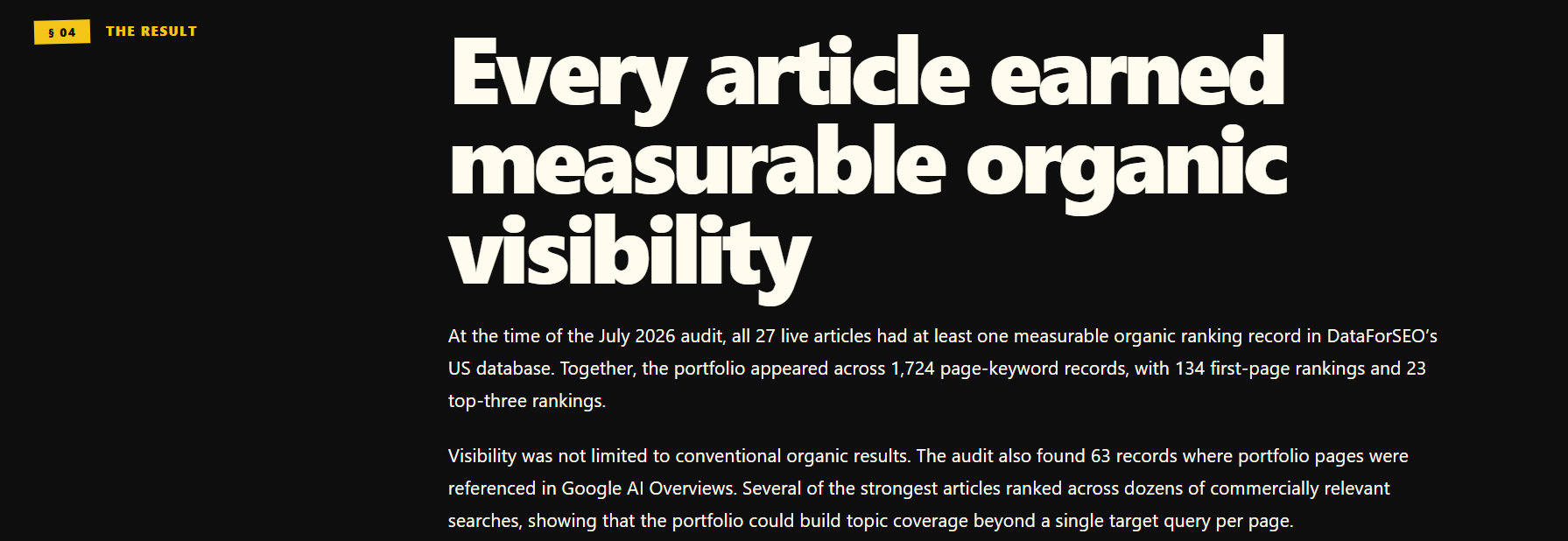
At the domain level, DataForSEO recorded the brand in 64 ChatGPT prompts and 239 Google AI Overview queries. Tamara was careful not to claim entity language alone caused the results, but she said precise and repeated category associations made the company easier to match with buyer needs than a vague “full-service agency” label.
That is the practical side of entity clarity. You are not only writing keywords. You are helping systems understand where your brand belongs.
15. Make Pages Easy to Cite and Substantiate
AI systems need passages they can retrieve, summarize, and attribute. A strong page should include clear sentences that name the entity, explain the value, and connect the claim to proof.
Muhammad’s skincare advisory page shows why this matters. The page had more than 50 backlinks, around 2,000 words, a canonical tag, schema, and a sitemap entry, but it was not indexed for months. After the H1 changed from “Explore Services in Skincare Advice” to “Hire Freelance Skincare Advisors,” the page became indexed, ranked first on Bing for “freelance skincare advisors,” appeared on Google’s first page, and was named first in Bing’s AI answer ahead of Fiverr and Upwork.
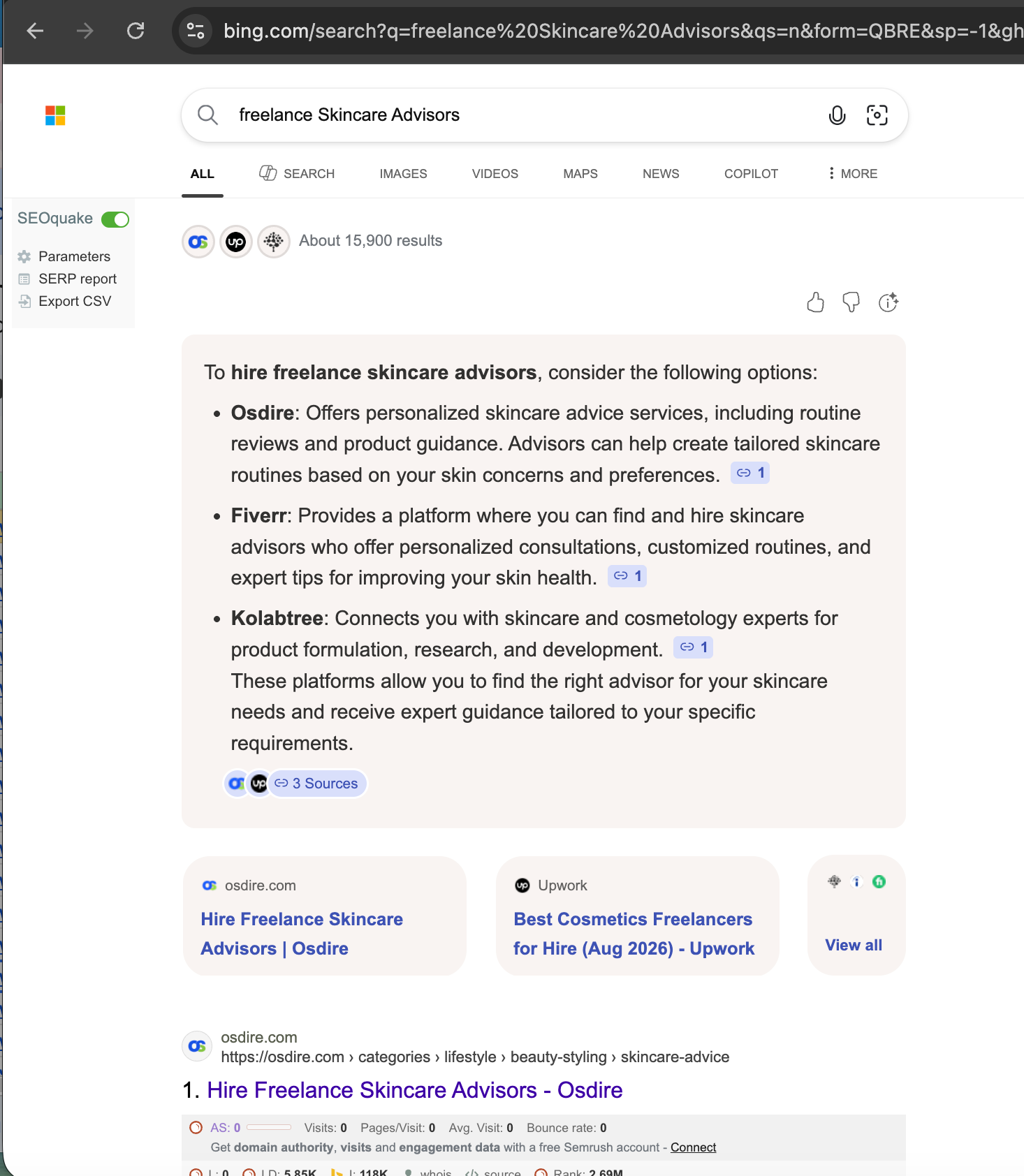 Bing’s AI answer named Osdire first for “freelance skincare advisors” after the H1 was changed, even though the page still had no true skincare advisors available.
That sounds like a win, but the case also comes with a warning. The page still had zero real skincare advisors. The visible listings were adjacent matches such as skincare ad creative, Shopify stores, and skincare blog writing. Muhammad noted that clear naming got the page cited, but nothing checked whether the service actually existed.
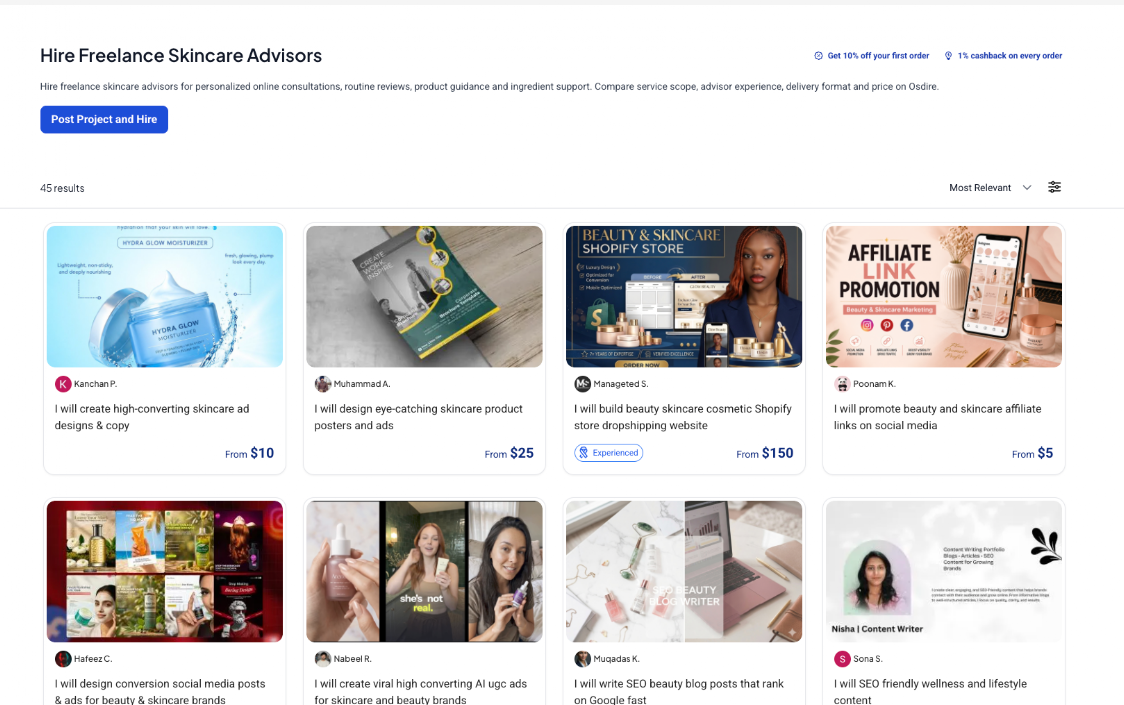 The Osdire page looked stocked, but the listings were adjacent skincare-related services rather than actual skincare advisory services.
So yes, make your page easy to cite. Also make sure the thing being cited is real and supported by the page.
16. Add Author Details and Expert Insight Where They Improve Trust
A content page feels more trustworthy when readers know who created or reviewed it.
Add the author’s name, role, expertise, experience, and professional profile. If an expert reviewed the article, mention that too. Named authors with linked bios help users understand who is behind the content, and they also help search and AI systems connect the article to a real person, company, or area of expertise.
Expert insight should also be used with care. It works best when the reader needs proof, experience, judgment, or a warning they would not get from generic advice.
The expert examples in this article work because each one adds something different. Muhammad shows how unclear page names, messy headings, duplicate paths, and weak entity signals can hurt visibility. Gabriella shows how schema, author attribution, consent setup, and machine-readable entity signals can affect AI visibility. Tamara shows how consistent category positioning can help a brand become easier to match with buyer intent.
This is especially useful for topics where experience matters. SEO, finance, health, legal, software, ecommerce, and technical topics all benefit from visible expertise.
17. Add Original Data or Original Research
Original data gives your content something competitors cannot easily copy.
It can come from surveys, interviews, customer data, platform analytics, internal benchmarks, audits, or case studies. Original research gives readers unique evidence, gives publishers something worth linking to, and gives AI systems a source they can cite.
You do not need a huge amount of study. You can analyze a small set of pages, collect expert opinions, compare before-and-after performance, or publish lessons from your own workflow.
Gabriella’s TimeSaver case is a good example of using real dashboard data instead of broad claims. Microsoft Clarity’s citation tracking showed 10 tracked citations, a 29.41 percent share of authority, and a list of the most-cited pages. The important detail is that the top-cited page was a structured blog article, not the homepage.
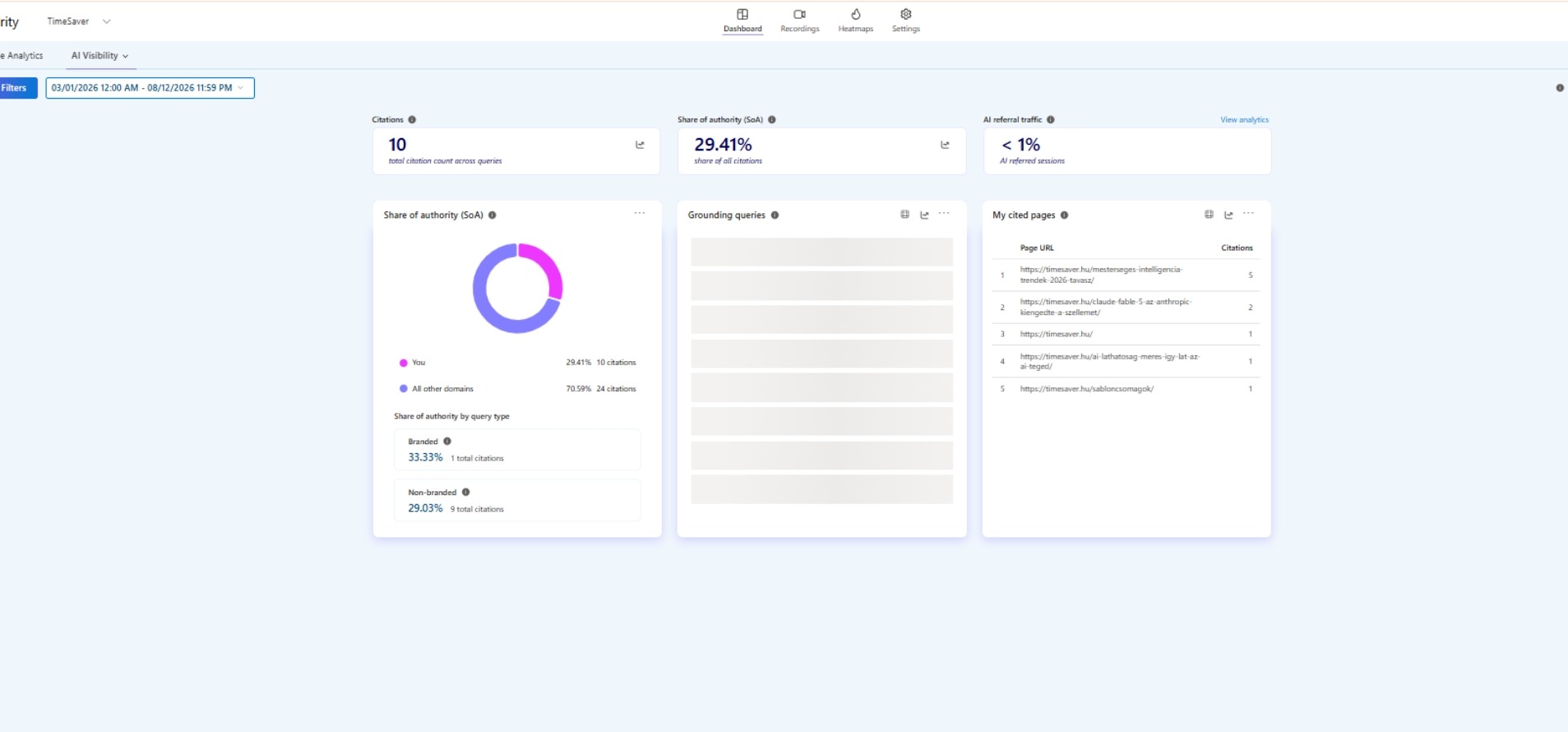 TimeSaver’s Microsoft Clarity citation dashboard shows 10 tracked citations, a 29.41 percent share of authority, and the most-cited pages.
That makes the insight more useful because it shows where AI citations can actually come from. Strong entity signals, structured article content, and clear attribution can make individual content assets easier to cite, not just the brand homepage.
The strongest original research is specific. It answers something your audience already cares about and gives them proof they cannot get from a generic guide.
18. Support Claims While Showing Product Value
Readers trust content more when important claims are easy to verify.
Use official documentation for product or platform claims, original studies for statistics, and government, academic, or institutional sources when the topic needs stronger proof. Place sources close to the claims they support.
This matters for AI visibility too. If your page makes a claim but hides the source far away, you make it harder to trust. When the claim, source, expert, and example sit close together, the content becomes easier to understand and cite.
At the same time, content should show how your company can help when the connection is natural. This does not mean forcing your product into every section. It means showing your product, service, process, or expertise in action when it genuinely helps the reader solve the problem.
For example, if you offer SEO services, you can show how your team would audit a page. If you sell software, you can show the workflow inside the tool. If you run a marketplace, you can show how a buyer finds the right provider and what signals help them choose.
The product mentioned should feel useful, not promotional.
19. Add Social Proof to Build Trust
Social proof helps readers feel safer about taking the next step.
Use testimonials, case studies, reviews, success stories, customer examples, before-and-after results, or expert-backed outcomes. The best social proof is specific because it explains the problem, the process, and the result.
A vague review saying “great service” adds very little. A short customer quote that explains what improved, how fast it happened, and why the solution helped is much stronger.
Social proof also gives AI systems more third-party context when they describe your company or compare it with alternatives. If your content includes real outcomes and credible quotes, it becomes easier to understand why someone should trust you.
Social proof is also part of authority building for AI search. Earned mentions, expert quotes, reviews, comparison coverage, and customer outcomes give search and AI systems more evidence that your brand belongs in the conversation.
Use social proof where it supports the reader’s decision. Do not overload every section with testimonials.
20. Match CTAs to the Reader’s Stage
A CTA should feel like the next useful step.
If the reader is learning, offer a guide, checklist, template, or newsletter. If the reader is comparing options, offer a demo, case study, consultation, or pricing page. If the reader is ready to act, make the purchase or contact path obvious.
Your CTA should be specific, action-oriented, benefit-led, and aligned with the user’s intent and content context.
Do not use the same CTA everywhere. A top-of-funnel article should not push the same action as a service page, and a comparison page should not behave like a beginner guide. Match the CTA to the moment.
How to Measure Content Optimization Results
You need a before-and-after view.
Track performance before the update. Then check the same signals after the update. Measure reader engagement, search performance, AI visibility, and conversions based on the page’s purpose.
For reader signals, track time on page, scroll depth, CTA clicks, signups, demo requests, purchases, and form submissions.
For search signals, track clicks, impressions, CTR, average position, keyword rankings, organic traffic, and unresolved site issues.
For AI visibility, track brand mentions, citations, share of voice, sentiment, prompt visibility, source appearances, bot requests, and scrape-to-referral patterns.
Rank Tracker belongs in this measurement layer because classic rankings still matter, even when AI answers change the path to discovery. Pair ranking movement with AI visibility metrics such as mentions, citations, sentiment, accuracy, and source appearances so you can see whether the same page is winning in both places.
Look beyond totals too.
Muhammad’s Osdire case showed why query patterns matter. The usability page did not just perform poorly. It ranked for strange approximations because the page name was unclear.
Gabriella’s TimeSaver case showed why crawling is not the same as citing. AI bots made 3,353 requests, AI bot activity represented 3.47 percent of total traffic, and the average scrape-to-referral ratio was 77 to 1.
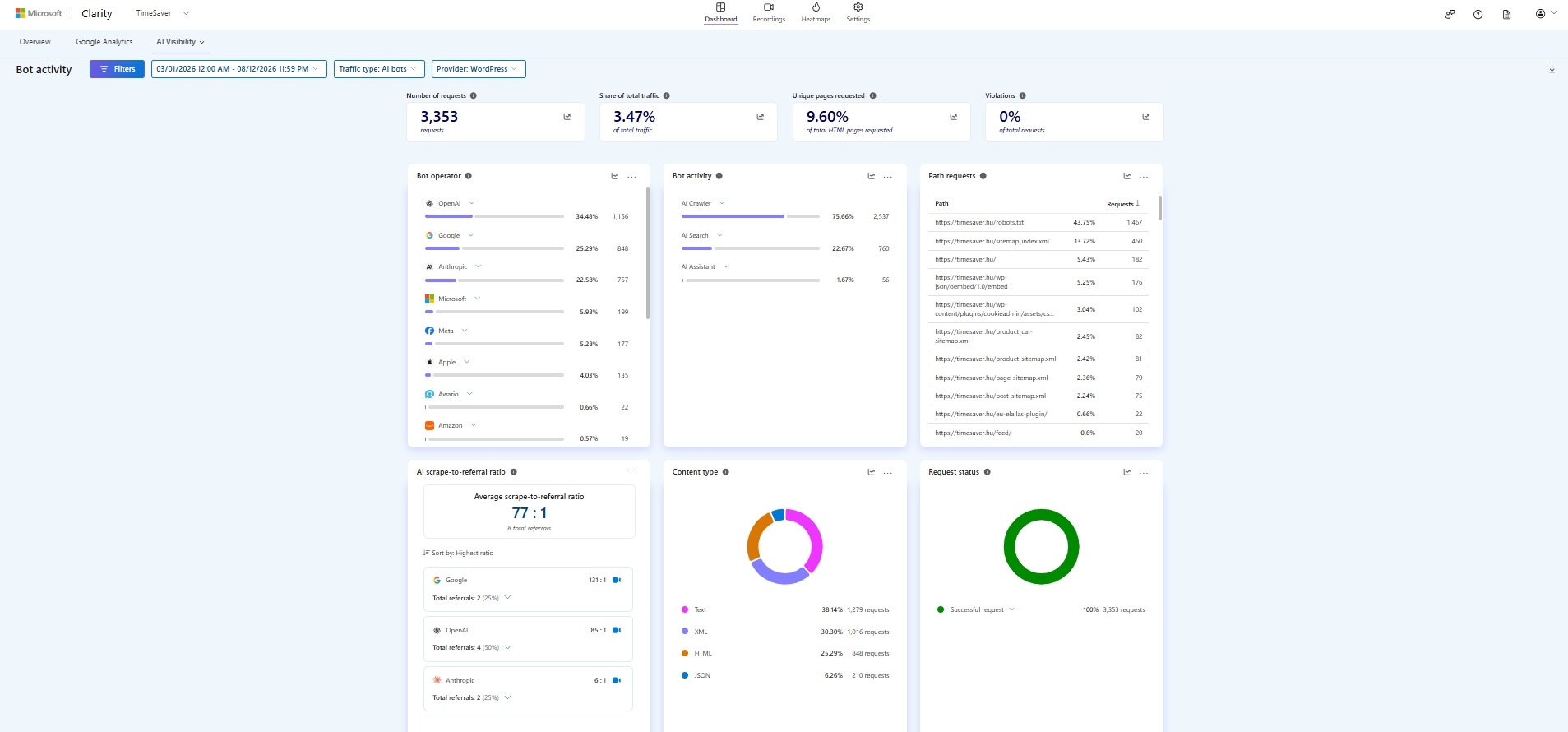 TimeSaver’s bot activity dashboard shows 3,353 AI bot requests, 3.47 percent of total traffic, and a 77 to 1 average scrape-to-referral ratio.
The numbers tell you what happened. The pattern tells you what to fix next.
A Simple Content Optimization Workflow
Use this order when you update an important page.
- Match the page to search intent
- Add missing sections only where useful
- Make the writing clear and direct
- Fix the title tag, meta description, H1, headings, and URLs
- Optimize visuals and screenshots
- Check SERP features
- Add schema and author details
- Name entities consistently
- Add expert insight, data, visuals, and proof
- Show product or service value where it fits
- Add social proof where it supports trust
- Improve the CTA
- Measure the same signals after the update
This keeps the process focused. You are not randomly adding keywords or rewriting paragraphs just to make the page longer.
You are making the page easier to read, easier to trust, easier to classify, easier to cite, and more likely to convert.
Final Thoughts
Content optimization is not a cosmetic update.
It is how you turn a published page into a stronger asset. You improve the answer, clean the structure, make the entity clear, add proof, and update the page so it reflects what readers and search systems need now.
The safest SEO approach is not to paraphrase what already exists.
The safer approach is to add your own structure, your own examples, your own expert insight, and your own proof.
That is what gives your content a real chance to perform in search and in AI-generated answers.
Frequently Asked Questions (FAQs)
1. What is content optimization
Content optimization is the process of improving a published page so it becomes more useful, easier to find, and easier to trust. It helps readers, search engines, and AI systems understand the page more clearly.
2. Why is content optimization important for SEO and AI visibility
Content optimization helps your page match search intent, answer user questions, improve structure, support claims, and make important details easier for AI systems to retrieve and summarize. This matters because visibility now depends on both traditional search results and AI-generated answers.
3. How often should you update old content
You should update important pages whenever the information starts to feel outdated. This includes old stats, broken links, outdated screenshots, weak examples, or pages that are still getting traffic but not performing well. High-value product pages, service pages, and lead-driving blog posts should be reviewed first.
4. How does entity clarity help with AI visibility
Entity clarity helps AI systems understand who or what your page is about. Clear names for people, companies, products, services, tools, and topics make it easier for AI systems to connect your content to the right subject and cite it in relevant answers.
5. How do you measure content optimization results
You can measure results by tracking engagement, search performance, AI visibility, and conversions. Useful metrics include clicks, impressions, CTR, rankings, organic traffic, brand mentions, citations, prompt visibility, bot requests, and scrape-to-referral patterns.
Expert Credits
We’re grateful to the experts who contributed their experience, data, and case-study insights to support this article.
Expert | Designation | Website | |
Muhammad Sajid | Head of SEO Growth, Osdire | ||
Gabriella Timea Sinka | Founder, TimeSaver | https://www.linkedin.com/in/gabriella-timea-sinka | |
Tamara Jovanovic | Founder & Senior SEO Strategist, phraseit.agency |