Content engineering is the process of building systems that help you create, optimize, publish, update, and measure content in a repeatable way.
It is not just writing with AI.
It is not just prompt engineering either.
A content writer creates the article. A content strategist decides what should be covered. A content engineer builds the workflow that helps the whole team produce better content with fewer mistakes.
For us, that is where content is heading now. If you want your content to perform across Google, AI Overviews, ChatGPT, Gemini, Perplexity, and other AI answer engines, you need more than a good draft. You need a system behind the draft.
What Is Content Engineering?
Content engineering means you treat content like a system, not a one-time task.
Instead of depending only on a writer, editor, or AI tool to figure everything out from scratch, you build a process that supports every stage of content creation. That includes research, briefing, drafting, editing, SEO optimization, publishing, performance tracking, and future updates.
This is especially important now because AI can produce content very quickly. But speed alone does not make content useful. If your inputs are weak, your output will be weak too.
So, content engineering gives your team a better foundation.
It helps you answer things like:
- Where should the facts come from?
- Which brand rules should AI follow?
- Who approves claims before publishing?
- How do we know when content needs an update?
- What happens if two internal documents say different things?
When you get these parts right, content becomes easier to scale without losing accuracy, consistency, or trust.
That is the real value of content engineering.
The Two Types Of Content Engineering
There are two common ways to understand content engineering.
- The first is structured content engineering. This is used when teams organize content into reusable blocks, taxonomies, metadata, templates, and content models. It is common in help centers, documentation hubs, product catalogs, ecommerce sites, and large publishing systems.
- The second is AI workflow content engineering. This is what most SEO and content teams are focused on right now. It is about building AI-assisted workflows that help with research, briefs, drafts, optimization, formatting, publishing, and content updates.
Both are useful.
But for brands working with AI content, the second one is becoming more important every day. So, in this article, we will discuss that only.
This is because AI does not automatically understand your business. It needs structured information, clear rules, and a workflow that prevents mistakes before they reach your website.
Why Content Engineering Matters Now
AI has changed the speed of content production.
You can create outlines, drafts, meta descriptions, product summaries, FAQ sections, and social snippets in minutes. That sounds useful, but it also creates a bigger risk.
More content does not always mean better content.
In fact, Gartner’s 2026 consumer research found that 49% of U.S. consumers believe generative AI has made content quality worse. That is a serious signal for brands. If people are already more skeptical of AI-generated content, you cannot afford weak facts, generic wording, outdated claims, or content that feels disconnected from your real business.
This is where content engineering becomes useful.
Kevin Dam, CEO and Founder of Aemorph, explains it well. He says AI can amplify errors and outdated information if the company does not have a centralized hub for brand voice, standards, product info, messaging, FAQs, personas, case studies, compliance, and expertise. His key point is simple: AI should never become the source of truth. It should consume the source of truth.
That is the mindset brands need now.
AI should not decide what is true about your company. Your approved knowledge base should decide that.
Then AI can help create, organize, and improve content using the right information.
The Four Core Parts Of Content Engineering
Content engineering usually has four main parts:
- Pipeline design
- Skills and prompts
- Knowledge management
- Orchestration and governance
You do not need a huge system from day one. But you do need to understand how these parts work together.
1. Pipeline Design
Pipeline design means breaking your content process into clear stages.
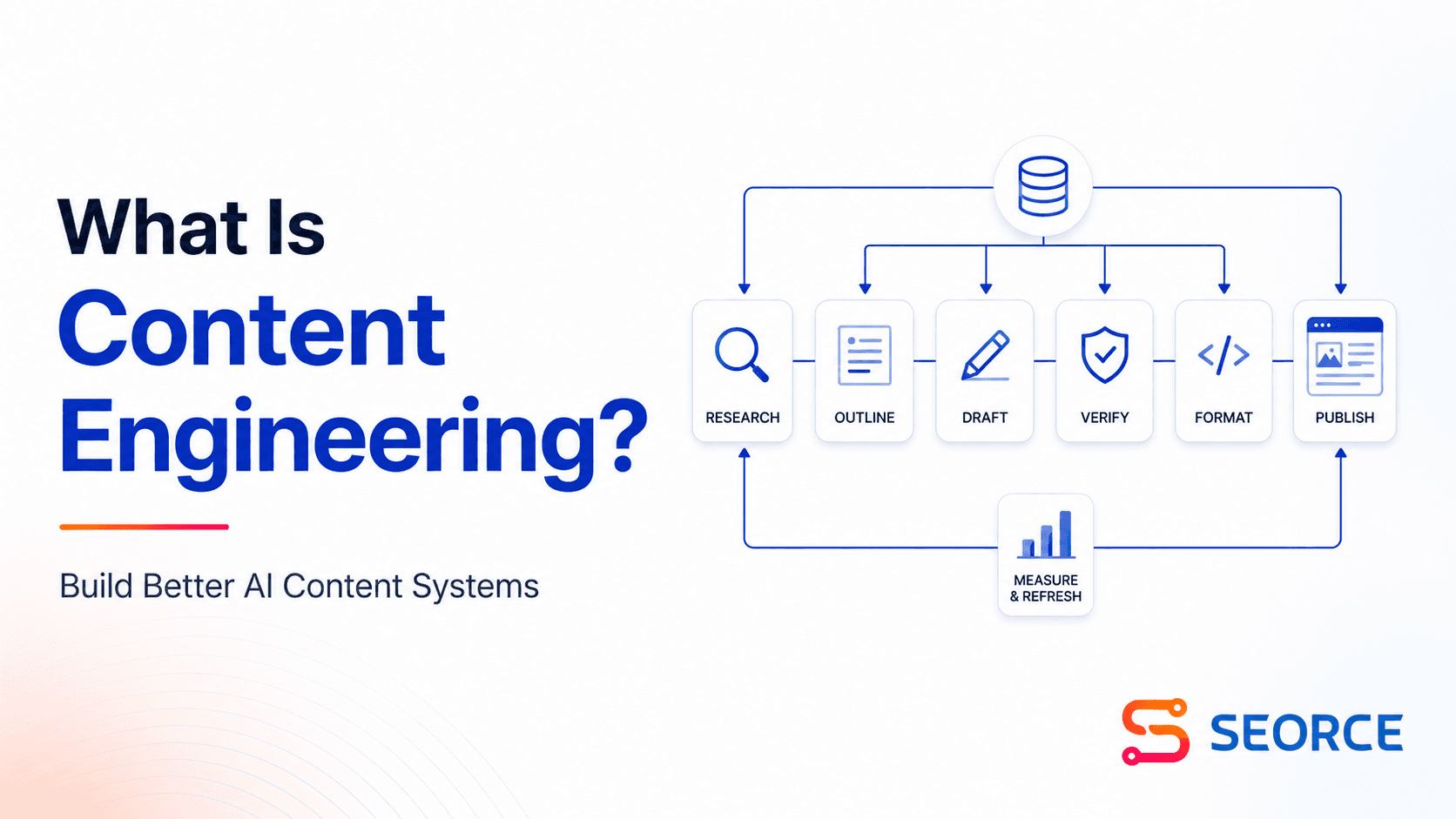
A basic content workflow may look like this:
- Research
- Outline
- Draft
- Verify
- Format
- Publish
- Measure
- Refresh
The important part is not just having these stages. The important part is connecting them properly.
For example, your research stage should feed the outline. Your outline should guide the draft. Your draft should go through claim verification. Your verified draft should be formatted for your CMS. Your published page should be tracked for rankings, traffic, conversions, and AI visibility.
For the research stage, your team can also use AI-powered keyword research to go beyond search volume and understand relevance, user intent, engagement potential, and conversion value.
Our Content Studio can support this stage by helping teams create content from a defined brand setup instead of starting from a blank prompt every time. When your brand voice, audience, positioning, and content rules are already configured, the pipeline becomes easier to repeat and easier to control.
This makes your workflow easier to control.
It also helps your team find problems faster. If the draft is poor, you can check whether the brief was weak. If the brief was weak, you can check whether the research was incomplete. If the facts are wrong, you can fix the knowledge base instead of editing the same mistake again and again.
A good content pipeline does not just create content. It creates content you can trust.
2. Skills And Prompts
Prompts are useful, but they are not enough.
A prompt is usually a one-time instruction. A skill is more repeatable. It can include your tone, structure, examples, formatting rules, SEO requirements, citation rules, and content type instructions.
That is why content teams should not depend only on random prompts.
You need reusable content skills for repeated tasks such as:
- Creating briefs
- Writing intros
- Building outlines
- Checking claims
- Formatting articles
- Creating FAQ sections
- Refreshing older pages
Each skill should have a clear input and a clear output.
For example, an outline skill should not just say, “Create an outline.” It should know your preferred heading style, search intent rules, internal linking needs, expert quote placement, and what kind of sections your brand usually includes.
Mykyta Nitchenko, SEO & Content Lead at Tips.GG, says most teams jump to prompt engineering and then wonder why AI outputs contradict each other. According to him, the real issue is upstream: what structured inputs does the model access before generating anything? His team uses terminology, editorial rules, product data, and locale constraints as hard parameters, not casual suggestions.
That is a much stronger approach.
Because if your AI workflow is only based on prompts, it can easily drift. But if it is based on structured rules, approved data, and reusable skills, the output becomes more consistent.
3. Knowledge And Source Of Truth Management
This is the most important part of content engineering.
Your AI workflow is only as good as the knowledge it uses.
A proper source of truth may include product details, brand voice, customer personas, approved claims, prohibited claims, pricing, service areas, FAQs, case studies, internal research, compliance rules, and expert insights.
But there is one important detail.
A source of truth should not just be a long document sitting in a folder.
Ries Goudriaan of Orai Media makes this point clearly. He says a reliable source of truth only works if it is machine-readable. His team keeps product information in one versioned data file that generates pages, including prices, provider names, and what changed since the previous month. Nobody manually types numbers into copy, so there is less space for AI to invent facts.
That is a strong lesson for every content team.
If your information is important, it should be structured. If it changes often, it should be versioned. If AI uses it, it should be easy to trace.
Heath Squier, Founder and Chief AI Officer at EVKII, uses a practical system of versioned “content cards.” These cards include approved product facts, audience definitions, brand voice, permitted claims, prohibited language, and the evidence behind each claim. Each card has an owner and a review date.
That is exactly how brands should think.
Do not give AI a messy folder and expect clean output. Give it approved, structured, current information.
4. Orchestration And Governance
Orchestration is how the workflow runs.
Governance is how you stop weak or risky content from going live.
Both are needed.
Orchestration can help you move content from research to draft to review to publishing. Governance makes sure the content follows your rules before it reaches readers.
That may include:
- Claim checks
- Source checks
- Brand voice checks
- Compliance checks
- Human approval
- CMS formatting checks
- Duplicate title checks
- Internal linking checks
This matters because AI-assisted content can move faster than human attention.
Ries Goudriaan says governance has to be a gate, not a guideline. His team runs scripts that block deployment when the system finds a leftover template line or a claim with no source behind it. He also points out that soft claims need rules too, because they can slip through more easily than numbers.
That is a very practical warning.
It is easy to check a number. It is harder to catch a vague claim that sounds harmless but is not true.
Nicolas Falourd, Founder of Large Wall Art, shares a similar lesson from using AI across a large product catalog. He says a source of truth has to be executable, not aspirational. His team uses machine-checkable files, including one JSON file for pricing, a registry for title uniqueness, and a ban-list of words the brand never uses. Their AI cannot publish content that violates those rules because automated QA blocks it.
That is content engineering at scale.
The rule is simple. If a standard matters, make it enforceable.
What Does A Content Engineer Actually Do?
A content engineer builds and improves the system behind content production.
They are not just writing articles. They are creating the workflows that help writers, editors, SEO teams, subject matter experts, and AI tools work from the same foundation.
A content engineer may work on AI-assisted pipelines, reusable writing skills, content templates, structured knowledge bases, editorial rules, CMS formatting, refresh workflows, SEO automation, and performance dashboards.
They may also help with things like:
- Building content briefs from SEO data
- Creating reusable prompt libraries
- Turning brand rules into checkable instructions
- Connecting AI tools with approved knowledge
- Setting up content QA workflows
- Tracking content decay
- Automating content refresh suggestions
So, the role sits between content, SEO, AI, data, and operations.
A good content engineer does not only help a team publish faster. They help the team publish with more control.
How To Do Content Engineering In Six Steps
You do not need to engineer your entire content operation at once.
Start with one workflow that already causes friction.
Maybe your briefs take too long. Maybe AI drafts need too much editing. Maybe product pages are inconsistent. Maybe old articles are not updated on time.
Pick one problem and build a better system around it.
Step 1: Build Your Source Of Truth First
Before you create prompts, build your knowledge base.
This should include approved information your content team and AI tools can safely use. Keep it organized, current, and easy to reference.
Kevin Dam recommends separating knowledge management from content creation. First, maintain an authoritative knowledge base with verified business information. Then use AI to draft content only from that approved information. After that, a human editor should review the content for accuracy, context, and search intent before publishing.
That order matters.
The right order is to build your knowledge base first, use AI only after that, and keep human approval as the final step before publishing.
This keeps your content workflow fast without making it careless.
Step 2: Break Your Workflow Into Stages
Do not ask AI to handle everything in one step.
That usually creates generic output.
Instead, break the process into smaller stages. Let one stage handle research. Let another stage create the outline. Let another stage draft the article. Then use separate checks for accuracy, formatting, SEO, and brand voice.
This gives your team more control.
It also makes editing easier because you can see where the issue started. A weak draft may not be a writing problem. It may be a research problem, a brief problem, or a source-of-truth problem.
When your workflow is broken into stages, you can improve each part separately.
Step 3: Create Reusable Skills
Once your workflow is clear, turn repeated tasks into reusable skills.
For example, you can build a skill for writing SEO briefs. You can create another skill for checking claims. You can create one for formatting articles for your CMS. You can create one for refreshing old content based on performance data.
Each skill should include your standards.
That means examples, structure rules, tone preferences, prohibited language, required sections, citation expectations, and formatting needs.
This is how you reduce randomness.
Instead of every writer or AI tool producing content differently, your team works from the same system.
Step 4: Add Verification And QA Gates
AI should help draft content, but it should not publish without review.
This is especially important for industries where wrong information can damage trust. Pricing, service areas, legal claims, medical claims, financial information, technical details, and product comparisons all need extra care.
Jennifer Bagley of CI Web Group follows a clear rule: AI drafts, humans approve. For HVAC, plumbing, and electrical clients, her team documents service areas, core services, brand voice, and customer FAQs before creating content. That keeps AI-assisted content accurate, locally relevant, and useful instead of generic.
She also warns that if nobody owns brand voice and factual accuracy, a company can end up with content that ranks but damages trust when customers notice wrong details about pricing, service area, or process.
That is the risk many brands miss.
Ranking is not enough. The content also has to be correct when a real customer reads it.
Step 5: Connect Formatting, Schema, And CMS Rules
Content engineering does not end after the draft.
Your system should also prepare the content for publishing.
That may include title tags, meta descriptions, heading structure, internal links, FAQ sections, schema markup, image instructions, author details, and CMS formatting.
This saves time and improves consistency.
It also helps your SEO team avoid repetitive cleanup. When formatting rules are part of the workflow, your content becomes easier to publish and easier to maintain.
This is where teams should think beyond writing and start thinking about publishing systems. A strong content workflow should not leave your team copying, pasting, reformatting, and rebuilding the same SEO elements manually every time.
Step 6: Measure, Refresh, And Improve
A content workflow should not stop after publishing.
You need a feedback loop.
That means tracking how the content performs and knowing when it needs to be improved. You can look at rankings, impressions, clicks, conversions, traffic drops, AI visibility, citations, engagement, and content freshness.
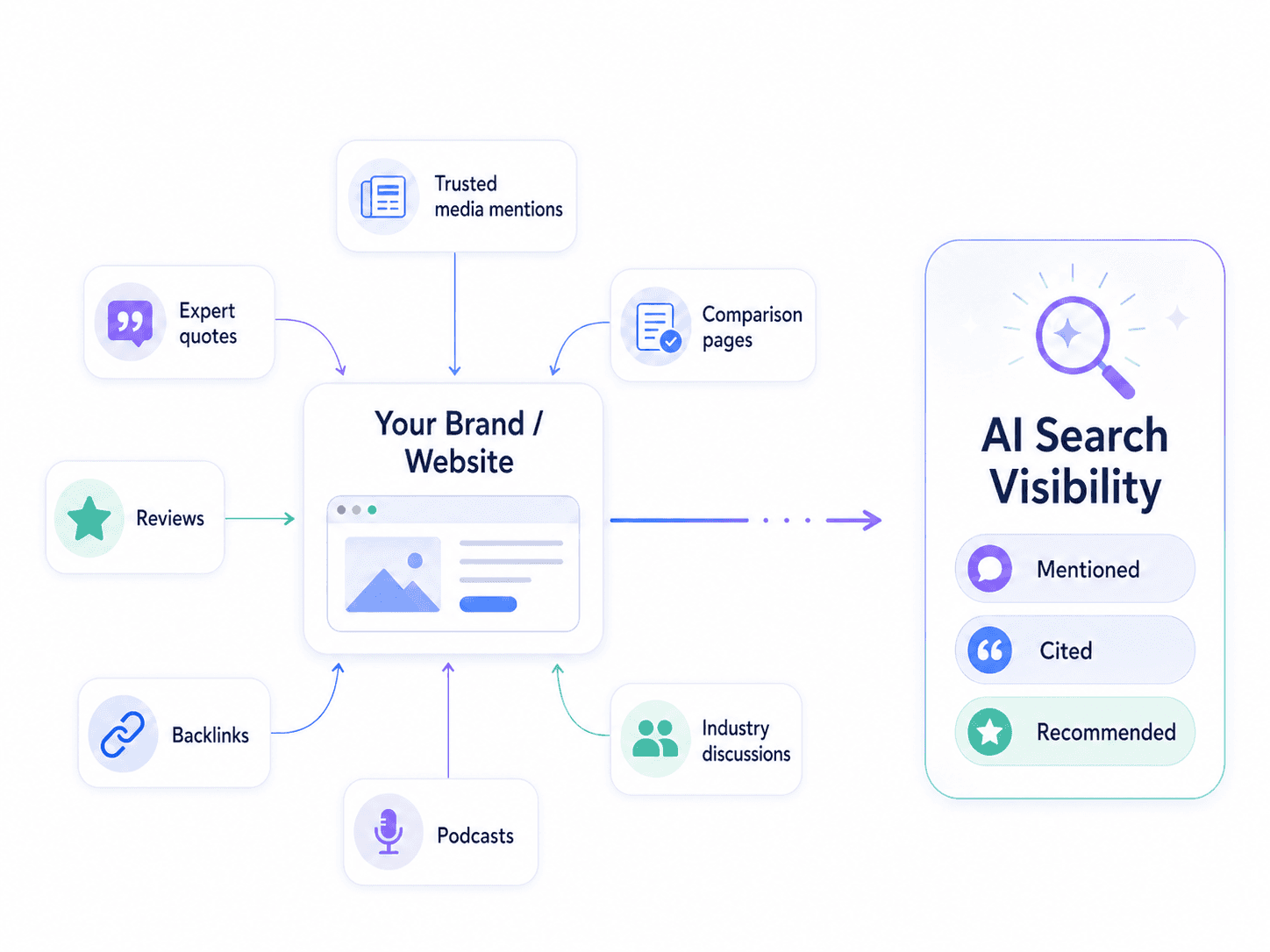
For the AI side of that feedback loop, AI visibility helps you understand how often, how accurately, and how positively your brand appears in AI-generated answers.
The stronger your measurement system is, the easier it becomes to decide what to update next.
Ries Goudriaan also recommends publishing provenance, not just facts. His sites include methodology pages and visible last-measured dates. This builds reader trust, but it also creates internal discipline. If you show when something was last checked, your team has a reason to actually keep checking it.
That is a smart habit.
Content engineering is not only about creating new content. It is also about keeping existing content reliable.
The simple rule is to engineer the repeatable parts while keeping humans responsible for judgment.
How SEORCE Content Studio Supports Content Engineering
Once your six-step workflow is clear, the next challenge is execution.
This is where our Content Studio helps. It turns content engineering into a practical workflow by connecting your brand knowledge, content structure, AI optimization, and publishing process in one system.
With Content Studio, you can:
- Configure your brand voice, positioning, audience, proprietary data, competitor context, and compliance rules once.
- Generate content that is brand-specific, not generic AI output.
- Use LLM-optimized templates for blogs, landing pages, product pages, comparison pages, case studies, FAQs, and knowledge base content.
- Check every piece for AI citation readiness before it reaches review.
- Apply internal linking rules and push approved content directly to your CMS.
So instead of managing AI content through scattered prompts, docs, and manual checks, Content Studio gives your team a structured system.
Your content becomes easier to create, easier to review, and better prepared for both search engines and AI citation models.
What Type Of Content Should You Engineer?
Content engineering works best when the content has repeatable patterns.
For example, product descriptions, comparison pages, local SEO pages, content clusters, glossary pages, release notes, help articles, weekly digests, and content refreshes can all benefit from a system.
These content types usually have clear structures, repeated fields, and facts that can be checked.
That makes them easier to engineer.
But not every content type should be heavily automated. If the topic needs deep expertise, original opinion, sensitive judgment, or legal and medical accuracy, you should keep stronger human control in the process.
AI can still help, but it should not lead the workflow without expert review.
If you are building content for AI search, our guide on optimizing your website for Google AI Search explains why one strong, useful page is better than creating many thin pages for every search variation.
The simple rule is to engineer the repeatable parts, but keep humans responsible for judgment.
Common Content Engineering Mistakes
The biggest mistake is thinking content engineering means “use AI to write more content.”
That is too shallow.
The real value comes from better inputs, better workflows, better checks, and better updates.
Common mistakes include:
- Starting with prompts before fixing the knowledge base
- Giving AI access to messy internal documents
- Using outdated product or pricing information
- Having no owner for important facts
- Treating brand guidelines as optional notes
- Skipping human review
- Publishing without claim checks
- Measuring output volume instead of content quality
Heath Squier warns against giving a model broad access to a messy drive and calling that knowledge management. Retrieval cannot fix outdated pricing, contradictory positioning, or an old sales deck that quietly became policy.
Mykyta Nitchenko makes another important point. Scaling works better when you think in content types, not individual articles. Each content type should have its own schema, required fields, editorial constraints, and SEO parameters. Without that layer, scaling just creates inconsistency faster.
That is exactly where many AI content workflows fail.
They produce more, but they do not produce better.
What Tools Do You Need For Content Engineering?
You do not need a complicated stack in the beginning.
Start with the tools that help you organize knowledge, build workflows, check quality, publish content, and measure performance.
A simple setup may include:
- A knowledge base for approved company information
- A workflow tool for moving content through stages
- AI tools for briefs, drafts, checks, and formatting
- SEO tools for keyword and performance data
- A CMS for publishing
- Analytics tools for measuring results
- Version control for important files and rules
As your workflow grows, you can add automation tools, databases, APIs, internal dashboards, content inventories, and QA scripts.
But the tool is not the main thing.
The system is.
A basic workflow with clean data and clear rules will usually perform better than a complex AI stack built on messy information.
How To Build Content Engineering Into Your Team
You do not need to hire a large team immediately.
Start with one person who understands content, SEO, AI tools, workflows, and quality control. This person should be able to look at your current process and find where the system breaks.
Maybe writers waste time hunting for product facts. Maybe editors keep fixing the same tone issues. Maybe old pages are never refreshed. Maybe your AI drafts sound fine but include unsupported claims.
Start there.
Turn that problem into a repeatable workflow. Then add rules, checks, owners, and measurement.
Over time, your team can build more workflows around more content types.
This is how content engineering becomes part of your content operation without overwhelming your team.
Final Thoughts
Content engineering is not about replacing writers with AI.
It is about building a better system around content.
When your source of truth is clear, your workflows are structured, your rules are enforceable, and your experts are involved, AI becomes much more useful. It helps your team move faster without losing accuracy, trust, or brand consistency.
The smartest brands will not just create more content.
They will create stronger content systems.
Do not start with prompts. Start with the information, rules, and workflow your content depends on.
That is how you do content engineering properly.
Expert Contributors
1. Ries Goudriaan
Founder and Owner, Orai Media
- Website: http://hostingshortlist.com/
- LinkedIn: https://www.linkedin.com/in/ries-goudriaan/
2. Kevin Dam
CEO and Founder, Aemorph
- Website: https://aemorph.com/
- LinkedIn: https://www.linkedin.com/in/kevindam/
3. Heath Squier
Founder & Chief AI Officer, EVKII
- Website: https://evkii.com/
- LinkedIn: https://www.linkedin.com/in/heathsquier/
4. Mykyta Nitchenko
SEO & Content Lead, Tips.GG
- Website: https://tips.gg/
- LinkedIn: https://www.linkedin.com/in/mykyta-nitchenko-b07302231/
5. Nicolas Falourd
Founder, Large Wall Art
- Website: https://large-wall-art.com
- LinkedIn:
6. Jennifer Bagley
CEO, CI Web Group
- Website: https://www.ciwebgroup.com/
- LinkedIn: https://www.linkedin.com/in/jenniferbagley
.png&w=256&q=60)
.png&w=256&q=60)

.png&w=3840&q=60)
.png&w=3840&q=60)