
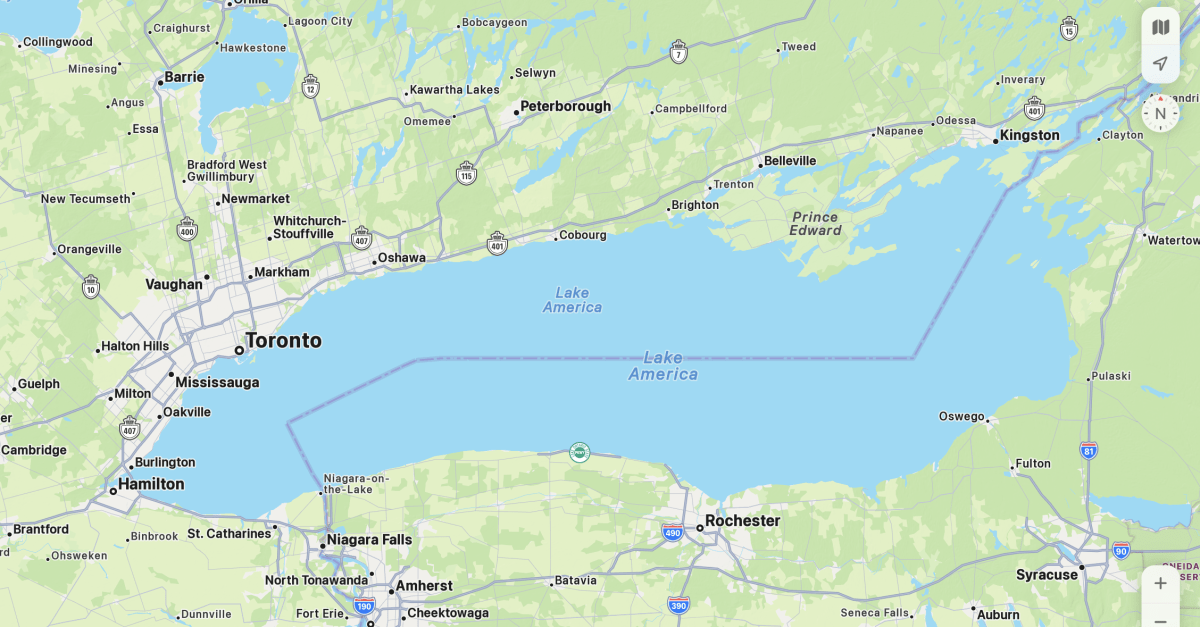
In a surprising move, both Google and Apple have renamed Lake Ontario to Lake America on their respective map platforms. This change follows an executive order signed by President Donald Trump amid a trade dispute with Canada. The decision, reported by The Verge and Wired, highlights how political directives can reshape digital representations of geography.
Why Tech Giants Complied with a Controversial Order
The renaming of Lake Ontario is not merely a technical update; it is a manifestation of deeper geopolitical tensions. With President Trump's executive order, Google was quick to update its maps, while Apple took a more cautious approach, implementing the change later. This discrepancy in timing between the two tech giants underscores different corporate strategies in responding to political pressures. On one hand, Google's rapid compliance may reflect a strategy to maintain favor with U.S. governmental directives, while Apple's delay suggests a more measured approach, possibly weighing public perception and international implications.
Rethinking Digital Sovereignty in Mapping
This name change raises critical questions about digital sovereignty and the power of tech companies in controlling geographic narratives. Maps are not just tools for navigation; they are powerful symbols of identity and history. By altering the name of a major geographical feature, Google and Apple have effectively participated in a political act that could influence public perception and international relations. As Wired reported, this is not an isolated incident, as both companies previously renamed the Gulf of Mexico in response to similar pressures.
Implications for the Future of Tech and Politics
Moving forward, this incident could set a precedent for how tech companies handle politically motivated changes. The willingness of these corporations to alter digital maps based on executive orders might empower future administrations to use similar tactics to influence global narratives. Additionally, the differing responses from Google and Apple might affect their reputations among users who view these changes as either compliance with or resistance to political pressure.
The broader implications extend beyond the borders of the United States and Canada. International users of these platforms might question the neutrality and accuracy of digital maps if names can be changed at the behest of national governments. This concern becomes particularly relevant in regions with ongoing territorial disputes, where digital representations can sway public opinion and diplomatic negotiations.
Ultimately, the renaming of Lake Ontario to Lake America by major tech companies underscores the complex interplay between technology, politics, and geography. As these corporations navigate the intricate landscape of international relations, their actions could redefine digital sovereignty and influence global perceptions of political boundaries.