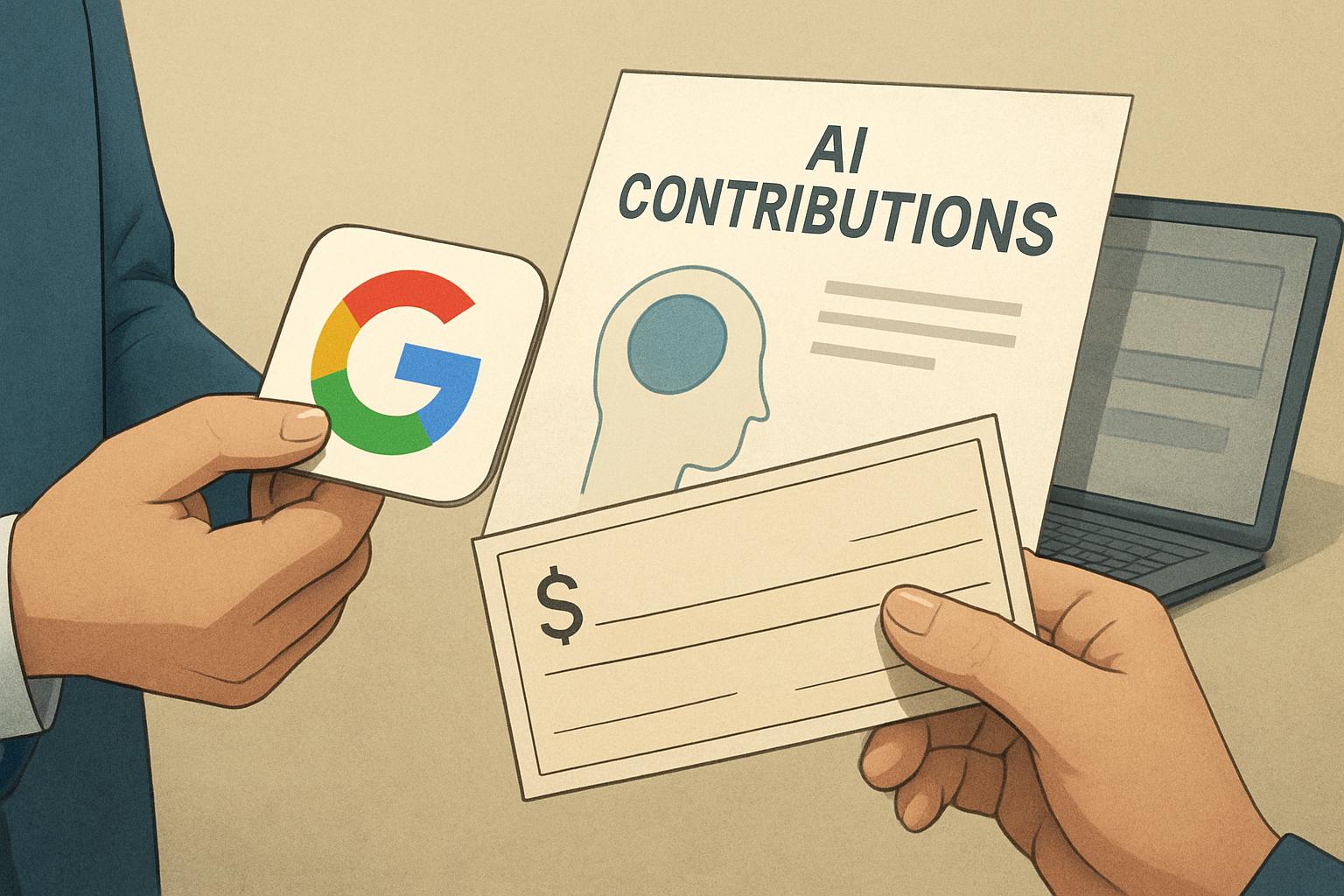
Google is piloting a program to pay publishers when their content significantly contributes to AI-generated answers, as reported by Search Engine Journal. This initiative, confirmed by Google, is still in its early stages and involves at least dozens of publishers.
How Google's payment pilot works
In this new pilot program, Google pays participating sites when their content plays a substantial role in creating answers for the Gemini app, AI Overviews, and AI Mode. However, content that only verifies facts or is added afterward does not qualify for payment. Participants receive a Search Console panel that displays monthly earnings but does not detail how contributions are calculated.
According to Digiday, the pilot's payment mechanism is somewhat opaque, which has raised concerns among some publishing executives. They worry that accepting payments might weaken their bargaining position in future negotiations with Google.
Implications for publishers
Participation in Google's payment pilot could potentially impact publishers' negotiation leverage. An executive mentioned that Google might use the pilot as evidence of compensation already provided, which could complicate talks for better terms. This adds a layer of complexity for publishers deciding whether to join the program.
Additionally, the new Search Console panel tracks impressions but not clicks, making it challenging for publishers to assess the direct impact of their contributions on user engagement.
Cloudflare's new setting for AI training
Simultaneously, Cloudflare has introduced a new Disallow AI Training setting, allowing site owners to block AI training without affecting search engine crawling. This option modifies the robots.txt file, publishing a no-training preference while still allowing Googlebot, Applebot, and Bingbot to crawl for search purposes.
This update from Cloudflare provides transparency and aligns with Google and Apple's training opt-out options. However, Microsoft has not yet implemented support for a robots.txt no-training preference but plans to address this by early 2027.
What publishers and site owners should do
Publishers considering the Google payment pilot should weigh the potential benefits against the risk of reduced negotiation power. It's crucial to monitor how this program evolves and whether Google offers more transparency in its payment calculations.
Site owners using Cloudflare should check their current settings and consider updating to the Disallow AI Training option to ensure their content is used according to their preferences without hindering search engine visibility.
What to watch for next
Google's payment pilot is in its infancy, and further developments are anticipated. Publishers should look for updates on the program's transparency and any changes to the impression-tracking mechanism. Meanwhile, Cloudflare's alignment with Google and Apple suggests potential updates from Microsoft regarding AI training preferences in early 2027.