
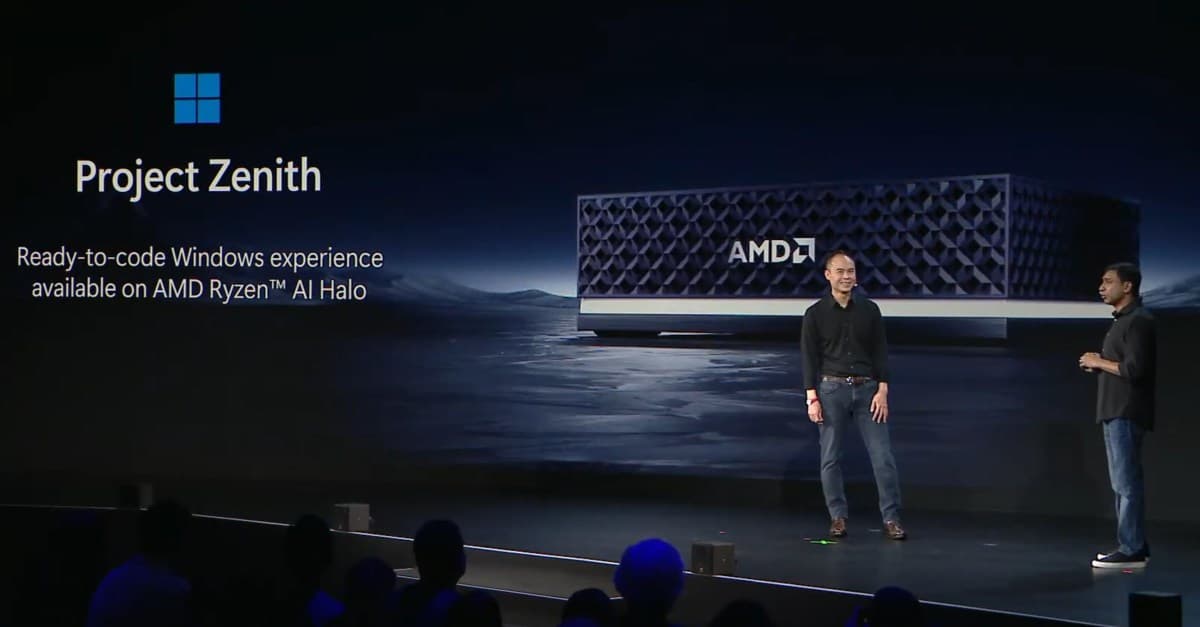
In the ever-evolving landscape of technology, the balance between innovation and practical application continues to challenge industry leaders. Microsoft's recent unveiling of Project Zenith, a developer-centric Windows experience, promises a streamlined, distraction-free environment. Yet, beneath the surface, the effectiveness and real-world impact of such initiatives warrant closer scrutiny.
Microsoft's Bold Promise: Distraction-Free Development
Project Zenith, as announced by Microsoft, is specifically designed for developers, boasting a preconfigured setup with 64GB or more of unified memory. This infrastructure aims to support developers in running massive models locally, thereby accelerating their experimentation process. Logan Iyer, CVP of Windows platform and developer at Microsoft, suggests that this project is a step towards a more focused developer experience. However, while the intent is clear, the actual benefit to developers remains to be seen.
The promise of a distraction-free environment is appealing, yet questions linger about how these devices will integrate into existing workflows. Will this setup genuinely enhance productivity, or will it simply add another layer of complexity to developers' toolkits? The Verge's coverage points to a potentially significant development, but the true value will only be measured by its adoption and practical utility over time.
Cost Efficiency vs. Long-Term Viability
On a different front, Coinbase's implementation of Code Connect has reportedly slashed token costs by 22.5%, according to a report on the Figma Blog. This efficiency gain underscores the potential for strategic tool deployment to drive cost savings. However, while the immediate financial benefits are clear, the broader implications on system sustainability and adaptability remain a critical consideration.
The reliance on such systems can lead to questions about dependency and the ability to scale or pivot as technologies evolve. As companies like Coinbase reduce costs, they must also assess whether these savings translate into long-term strategic advantages, or if they come at the expense of flexibility and innovation.
Autonomous Tech: A Double-Edged Sword
AWS's introduction of Claude Fable 5.1 exemplifies the industry's shift towards more autonomous and intelligent systems. Built to handle high-stakes, long-running tasks, Claude Fable 5.1 represents a move towards reducing human intervention in complex workflows. This evolution, while promising, raises important questions about the future roles of developers and IT professionals.
As these systems become more capable, the traditional roles and responsibilities within tech organizations could undergo significant transformations. While such advancements may lead to enhanced efficiency and the ability to tackle more ambitious projects, they also challenge the workforce to adapt and evolve alongside these technologies.
The Road Ahead: Navigating Uncertainty
As these technological advancements unfold, the path forward is fraught with both opportunities and uncertainties. Microsoft's Project Zenith, Coinbase's cost-cutting with Code Connect, and AWS's Claude Fable 5.1 all illustrate varying approaches to leveraging technology for strategic gains. However, the key to success will lie in how these innovations are integrated into broader organizational strategies.
Companies must remain vigilant, constantly evaluating the trade-offs between short-term gains and long-term sustainability. As technology continues to redefine the landscape, the ability to adapt quickly and strategically will determine the winners in this dynamic field. The onus is on industry leaders to ensure that their innovations not only promise efficiency but also deliver tangible value and maintain their relevance over time.