Google can now detect AI-generated content at a massive scale.
By October 2026, SynthID had watermarked more than 180 billion images and videos. That makes one question much harder to ignore.
Could Google eventually use AI watermarks in Search?
For now, Google still focuses on quality, originality, usefulness, and spam, not whether AI helped create the content.
But watermarks could still become valuable for provenance, verification, and abuse detection.
That is where things get interesting.
We’ll here break down how Google could use these signals, whether rankings could ever be affected, and what SEOs should watch next.
What Google’s AI Watermarks Can Actually Detect
Google’s SynthID doesn’t guess whether content looks AI-generated. It detects invisible digital signals embedded during AI generation.
Here's what it can identify across different formats like:
- Images and videos contain hidden pixel-level watermarks that can survive common edits, including cropping, filtering, and compression.
- Audio carries inaudible signals that can remain detectable after noise, MP3 compression, or speed adjustments.
- Text uses subtle changes in token probabilities. Light editing may preserve the watermark, but extensive rewriting or translation can weaken detection.
Interestingly, SynthID Detector can pinpoint likely watermarked areas in images and specific segments in audio, rather than simply flagging an entire file.
In October 2026, Google expanded the detector globally in English for supported images, videos, and audio.
But there's an important limitation. No detectable watermark doesn't prove content was human-made. It only means the system couldn't identify a supported watermark signal.
Some techniques can also bypass detection without fully removing the watermark. The distinction is explained in more detail through research on AI watermark removal and bypassing.
Likewise, finding a watermark cannot tell you whether the content is accurate, original, or trustworthy.
Google Has Not Announced an AI-Watermark Ranking Factor
Google has not publicly confirmed SynthID or any other AI watermark as a direct organic Search ranking factor.
There is no announced ranking boost or penalty tied specifically to watermark detection.
Its official AI-generated content guidance focuses on accuracy, quality, relevance, and responsible AI use. It does not identify watermark presence as a ranking signal.
Google also states that using AI provides no special ranking advantage. However, this guidance concerns AI-generated content broadly, not watermark detection specifically.
That distinction is important.
A lack of public confirmation doesn't prove Google never uses watermark data internally. It simply means there is no publicly established link between AI watermarks and direct organic ranking changes.
Where Watermarks Could Become Useful to Google Search
Google is already making AI verification part of Search. At Google I/O 2026, it announced SynthID verification through Google Lens, AI Mode, and Circle to Search.
These features can help you check whether an image contains a supported AI watermark.
Beyond direct verification, watermarks could support two important Search functions.
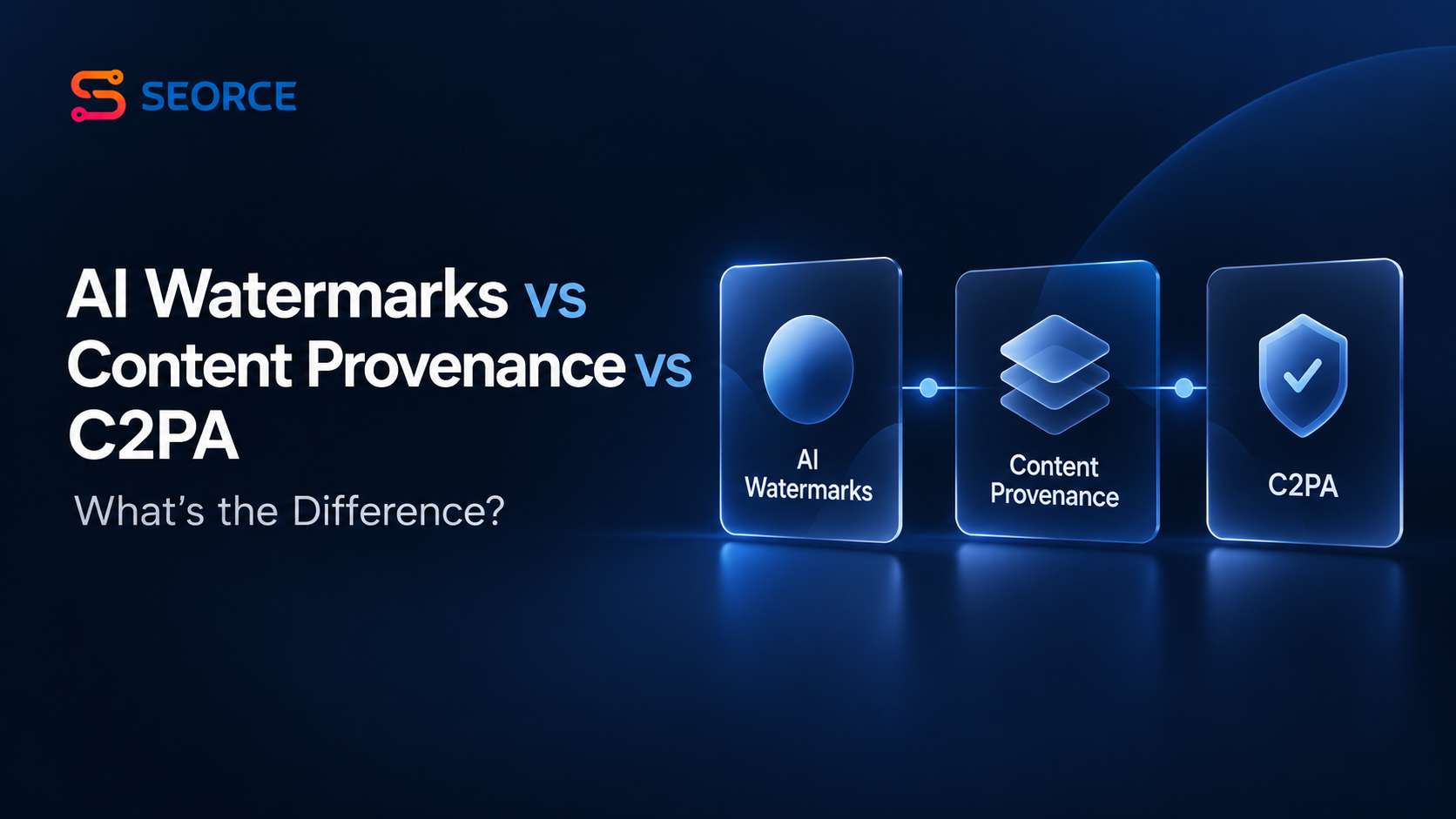
- Content transparency: Google's About this image can surface SynthID watermark information. Separately, C2PA Content Credentials use metadata to document a file's origin and editing history. Unlike SynthID, C2PA is not a watermark.
- Identifying misleading media: Imagine an AI-generated photograph circulating as genuine breaking news. A detectable watermark could help reveal its synthetic origin. However, that alone cannot establish whether the accompanying claim is misleading.
These verification methods can also behave differently when files are cropped, screenshotted, or re-exported. Our guide to AI watermarks, content provenance, and C2PA explains those differences and why they matter.
Together, these applications could make AI-generated media easier to verify within Search, without establishing any direct impact on organic rankings.
Why Penalizing Every Watermarked Page Would Be Misleading
Imagine publishing a product review based on firsthand testing, with original photos and expert insights.
You also include one AI-generated illustration.
Should that single watermarked image put the entire page's rankings at risk?
A watermark on one asset says nothing about the quality of the surrounding content. The review could still offer valuable insights that competing pages lack.
Meanwhile, a completely human-written page could contain inaccurate information or offer little original value. Penalizing only watermarked pages would overlook that distinction.
Google's people-first content guidance emphasizes usefulness, reliability, and firsthand expertise.
A blanket watermark penalty would ignore those qualities.
Evaluating the page's actual value would be more meaningful than judging it by how one image was created.
The Bigger Ranking Risk Is Scaled AI Abuse
Publishing hundreds of AI-generated pages isn't automatically spam.
The real risk depends on why those pages exist.
Google's scaled content abuse policy targets large amounts of content created primarily to manipulate Search rankings rather than help users.
Here are three practices that could violate this policy.
- Mass-generated location pages with city names swapped into nearly identical templates, primarily to capture local rankings without offering useful local information.
- Bulk-rewritten articles scraped from other websites and republished at scale without original insights or meaningful improvements.
- Networks of thin content spread across multiple sites to target thousands of keywords while hiding the scale of production.
Google warns that violating its spam policies can cause pages or entire sites to rank lower or disappear from Search results.
Before scaling content production, check whether each page offers genuinely useful information that readers cannot already find across your other pages.
For teams managing AI-assisted content at scale, our Content Studio brings brand context, content planning, and editorial quality checks into one workflow. These checks can support the process, while human review remains essential for ensuring each page offers real value.
Could Watermark Detection Become One Signal Among Many?
A watermark could become more useful when combined with other evidence. But its meaning would depend on how Google interprets it within a broader evaluation.
Here's how that could work across different processes.
Process | Potential Role of Watermarks |
AI detection | Confirm the presence of a supported watermark without judging the content's purpose. |
Spam assessment | Supplement evidence of deceptive publishing practices or manipulation patterns. |
Search ranking | Potentially provide context about content provenance alongside other signals, rather than trigger automatic penalties. |
Google already uses SpamBrain to identify spam.
However, there is no public confirmation that SynthID data contributes to its assessments.
Consider an AI-generated chart. One publisher clearly labels it as an illustration, while another presents it as actual research data.
Both charts could contain detectable SynthID watermarks, yet one might present fabricated data as genuine research.
Even if Google eventually considers watermark data, its usefulness would depend on the surrounding evidence, not simply the presence of a watermark.
The discussion also extends to AI-powered answers, where provenance could eventually influence how sources and media are assessed. We've explored those possibilities in how AI watermarks could change Search, SEO, and AI visibility.
What SEOs and Publishers Should Watch
Google's AI verification tools are evolving, but not every update deserves an SEO strategy change.
Here are three developments worth monitoring:
- Changes to Search policies: Follow Google Search Central updates for any explicit mention of SynthID, watermark signals, or content provenance in ranking and spam guidelines.
- New verification capabilities: Watch whether Google's SynthID verification tools expand to more AI models, content formats, or Search features.
- Watermark-specific performance reporting: Google's September 2026 Search Console update introduced multimodal search reporting. However, it doesn't measure watermark impact. Watch for future reporting that connects provenance information with Search visibility.
For now, prioritize documented changes over speculation. Only adjust your SEO strategy when new evidence justifies it.
Final Takeaway
Google is expanding AI watermark detection, but there's no confirmed direct ranking impact.
For now, watermarks are more useful for verifying content origins than deciding Search positions. Their future role in ranking remains uncertain.
Focus on useful, original content and verified Google updates, not speculation.
FAQs (Frequently Asked Questions)
1. Does Google Use AI Watermarks as a Ranking Factor?
No. Google has not publicly confirmed SynthID or other AI watermarks as direct organic Search ranking factors.
2. Can Google Detect AI-Generated Content Using SynthID?
Yes. SynthID can detect supported AI-generated text, images, videos, and audio through embedded watermark signals.
3. Can AI-Watermarked Content Rank on Google?
Yes. A watermark doesn't automatically prevent content from ranking. Google emphasizes usefulness, relevance, and content quality.
4. Can Google Penalize Websites for Publishing AI Content at Scale?
Yes, if the content violates Google's scaled content abuse policy. Publishing at scale isn't automatically spam, but producing content primarily to manipulate rankings can trigger penalties.
5. Could AI Watermarks Influence Google Rankings in the Future?
Possibly. Watermarks could eventually provide additional context for content evaluation, but Google hasn't confirmed any direct ranking impact.